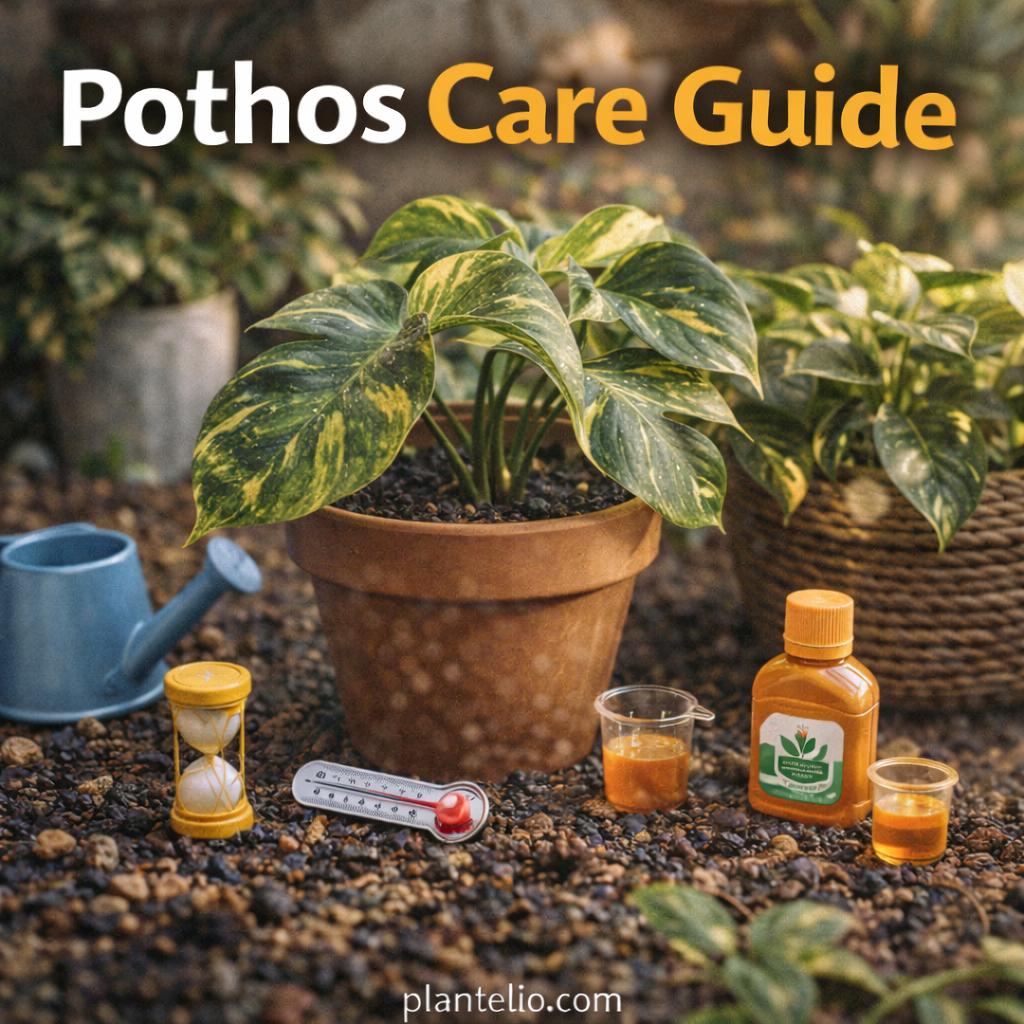
Pothos Care Guide: Build a Routine for Your Indoor Vine
A pothos hanging above a bookshelf and a pothos beside a bright window can need different care, even when they came from the same shop. Start with the container, the actual light reaching the leaves and the way the potting mix dries. This guide helps you build a routine for your own plant rather than follow a universal weekly watering schedule.
Identify the plant and choose a safe position
This guide covers Epipremnum aureum, including green and variegated pothos cultivars. Similar heart-shaped vines can be other species, so keep the nursery label if you have it. Pothos can trail from a basket or climb a support; choose a position where you can reach the pot to inspect and drain it.
Pothos contains irritating calcium oxalate crystals. Keep leaves, fallen pieces and cuttings away from children and pets that may chew them. Wear gloves if sap irritates your skin. A high shelf is only useful if trailing vines remain out of reach.
Make a first-week care record
Before changing the soil or adding fertilizer, photograph the whole plant and one growing tip. Note the pot size, whether it has drainage holes, any outer decorative pot and the date you last watered. Check the mix in more than one place. A dry surface with damp material below calls for a different decision from a light pot that is dry through the root zone.
| Check | What to record | What it helps you decide |
|---|---|---|
| Container | Drainage holes; standing water inside the cover pot | Whether excess water can leave the roots |
| Light | Direct sun on leaves; shade from curtains or furniture | Whether the location needs adjustment |
| Mix | Surface and deeper moisture; pot weight | Whether watering is needed now |
| Vines | New leaves, bare sections and damaged tips | Whether the plant is growing or declining |
Water according to the pot
Allow the mix to dry between waterings, then water the root zone evenly and let excess water drain. Empty the saucer or outer pot. Do not replace drainage with tiny daily drinks: these can wet only part of the mix while leaving another part dry.
Use a calendar to remind yourself to check, not to require watering. A basket near a window may dry sooner than a larger floor pot. If a vine droops while the mix is still wet, more water is not an automatic solution. Check drainage and the root condition if decline continues. See the Pothos Watering Guide for a step-by-step inspection.
Evaluate light through new growth
Bright indirect light is a useful starting point. Observe the leaves at different times of day; window direction alone does not describe light inside a room. Move a plant gradually when increasing light, especially if it has been in a shaded corner.
Compare new leaves along the same vine rather than expecting existing leaves to change. Photograph spacing and leaf appearance over time. Survival in a dim room does not mean the plant will keep the same growth or variegation. Use the light guide to review placement before adding fertilizer for slow growth.
Keep soil, feeding and repotting connected
Choose a container mix that wets evenly, drains and leaves air around roots. Read the bag for added fertilizer before feeding. Follow the label of the product you actually own, including its dilution and application instructions; a different concentrate can require a different dose. Feeding cannot compensate for a waterlogged pot.
Repot for evidence such as a crowded root system or a mix that no longer functions well, rather than because a fixed number of months has passed. Choose the next container around the root system, not the length of the trailing vines. A long vine does not necessarily need a large pot. More details are in the soil, fertilizer and repotting guides.
Manage the shape without promising instant fullness
Lay out a vine before pruning so you can distinguish the main stem from a leaf stalk. Decide which sections you want to keep and which could become stem cuttings. Pruning and rooting take time; a newly planted cutting does not immediately replace a bare section. For the process, use the propagation guide.
Check leaf undersides and stem joints while handling the plant. Record the location and spread of damage before trying several treatments. The yellow-leaf guide and root-rot guide address specific problems. Brown tips or yellow leaves alone do not identify a cause.
What should you review next?
Repeat the same photographs and moisture checks. Keep a short note of each change, such as moving the basket or removing trapped water. Evaluate new growth and whether damage is spreading; an already damaged leaf is not a reliable test of recovery. If the plant is stable, resist changing every part of its routine at once.
Source and scope
The species information and general light, drainage, pruning and toxicity points are supported by NC State Extension’s Epipremnum aureum profile. The checklist is a practical observation framework, not a report of a Plantelio growing trial or a guaranteed treatment. Reviewed October 11, 2026.




27 comments