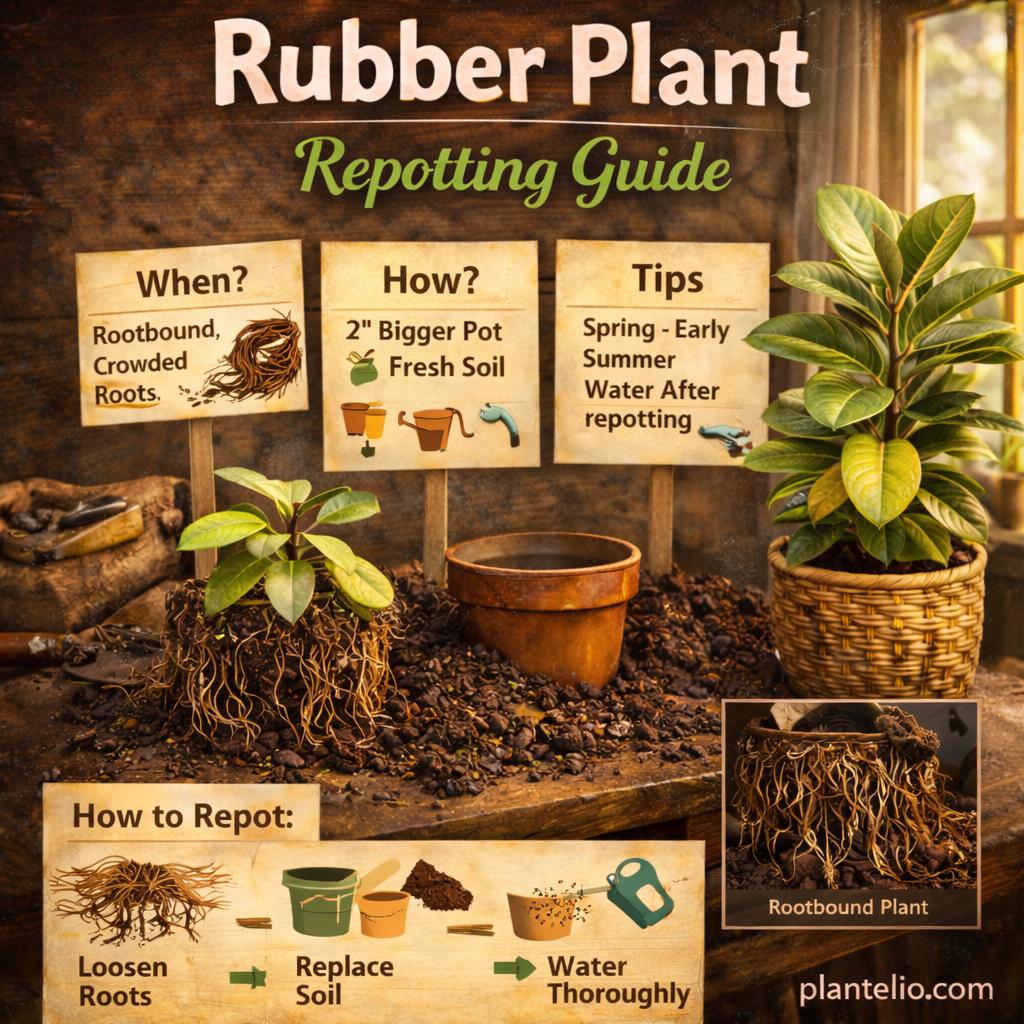
Rubber Plant Repotting Guide: When and How to Repot Ficus Elastica
Rubber Plant Repotting Guide (Ficus Elastica)
Repotting a rubber plant (Ficus elastica) is essential for maintaining healthy growth. Over time, roots fill the pot, soil nutrients become depleted, and drainage can worsen.
Knowing when and how to repot a rubber plant helps prevent root problems and encourages faster growth.
When Should You Repot a Rubber Plant?
Most rubber plants should be repotted every 1–2 years. Younger plants grow faster and may require more frequent repotting.
Signs your rubber plant needs repotting:
- Roots growing out of drainage holes
- Water draining too quickly
- Soil drying extremely fast
- Plant becoming top-heavy
- Growth slowing down significantly
Best Time of Year to Repot Rubber Plants
The best time to repot a rubber plant is during the spring or early summer. During this period, plants recover faster from root disturbance.
Avoid repotting in winter unless absolutely necessary.
Choosing the Right Pot Size
When repotting, choose a pot that is 2–5 cm (1–2 inches) larger in diameter than the current pot.
- A pot that is too small restricts root growth
- A pot that is too large can cause overwatering problems
Always use a pot with drainage holes.
Best Soil Mix for Rubber Plants
Rubber plants prefer soil that is both nutrient-rich and well-draining.
Recommended soil mix:
- 2 parts potting soil
- 1 part perlite
- 1 part pine bark
This mixture allows roots to breathe and prevents waterlogging.
How to Repot a Rubber Plant (Step-by-Step)
- Water the plant lightly one day before repotting.
- Gently remove the plant from the pot.
- Loosen compacted roots carefully.
- Trim any damaged or rotten roots.
- Add fresh soil to the new pot.
- Place the plant at the same depth as before.
- Fill around the roots with soil.
- Water lightly to settle the soil.
Repotting Shock: What to Expect
After repotting, rubber plants may show mild stress symptoms.
- temporary leaf drooping
- slower growth for several weeks
- minor leaf drop
These symptoms usually disappear once the plant adapts to its new environment.
Aftercare Following Repotting
Proper aftercare helps the plant recover quickly.
- Place the plant in bright indirect light
- Avoid fertilizing for 4–6 weeks
- Water moderately
- Avoid moving the plant frequently
FAQ
How often should I repot a rubber plant?
Most rubber plants need repotting every 1–2 years depending on growth speed.
What size pot should I use when repotting?
Choose a pot that is about 2 inches larger than the previous container.
Can I repot a rubber plant in winter?
It is possible, but not ideal. Spring and early summer are better for recovery.
Should I water after repotting?
Yes, lightly watering helps settle the soil around the roots.









3 comments