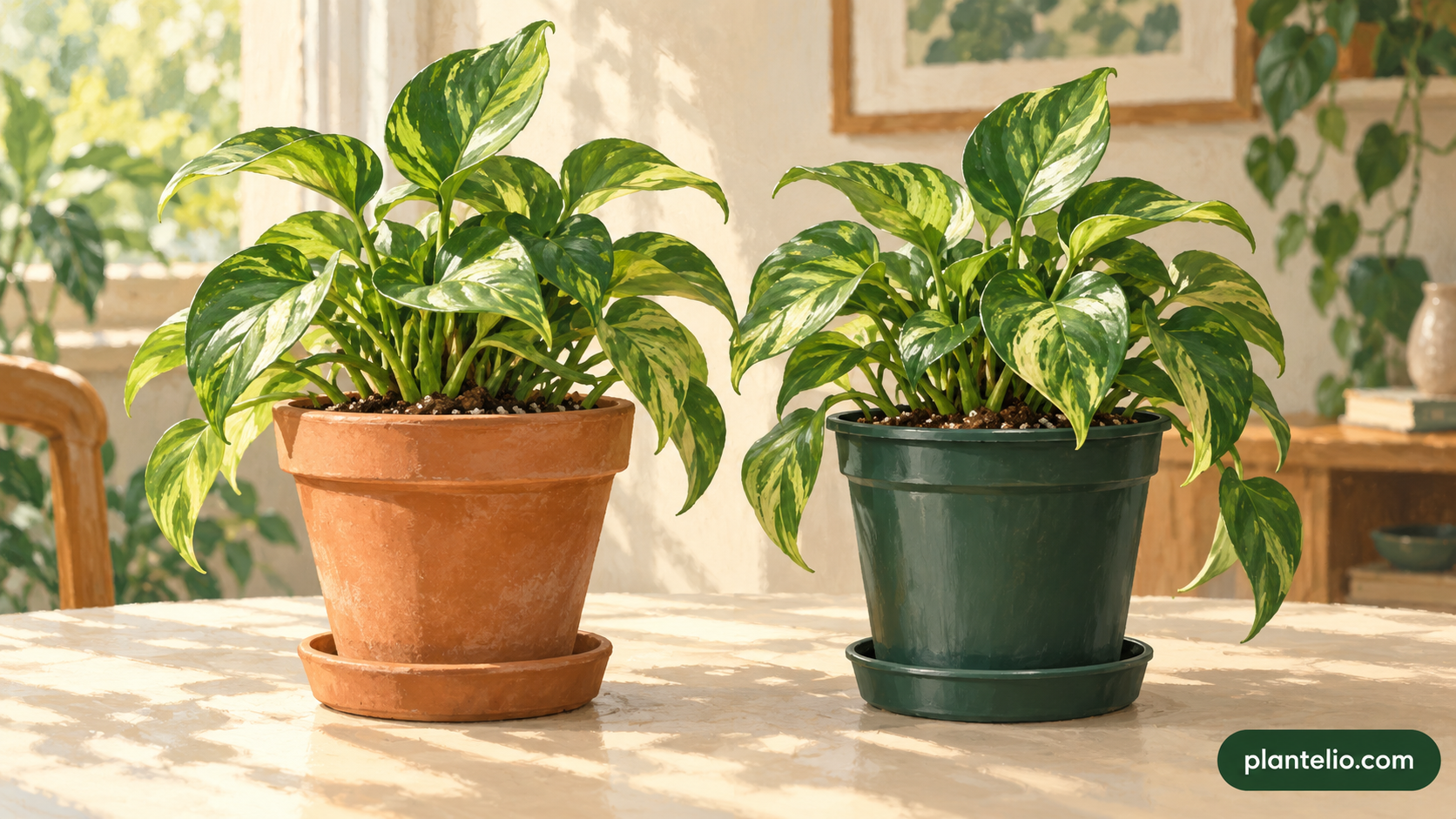
Terracotta vs Plastic Pots for Indoor Plants
Terracotta and plastic pots can both work indoors. The useful question is how the container fits your plant, room and watering routine. Start by comparing pots with drainage holes and similar dimensions.
The main difference is water loss through the sides
Unglazed terracotta is porous. Water can move into the clay and evaporate through the walls, so the mix often dries sooner than it would in a comparable plastic container. Plastic is less porous. Glazed pottery behaves differently from bare terracotta, so an orange-colored pot is not enough information on its own.
Illinois Extension’s container material guide explains why porous materials lose water more quickly. This is a tendency, not a promise that every clay pot will dry before every plastic one.
Compare everyday handling
- Terracotta: relatively heavy and breakable; check whether you can comfortably carry the planted pot to your watering area.
- Plastic: light and usually easy to handle; check that the container is stable with the plant inside.
- Both: inspect the base for actual drainage openings and plan where runoff will go.
The University of Maryland’s container overview describes these practical differences. Neither material replaces suitable potting mix or careful watering.
Which should you choose?
Use your own observations as a starting point. If the current mix stays wet longer than the plant tolerates, first check light, drainage, pot size and watering. Terracotta may be one part of a better setup, but changing the pot alone will not identify the cause. If you regularly discover an overly dry root ball, consider whether faster drying would make care harder.
Make a short comparison sheet before buying: material, inside diameter, depth, weight when planted, drainage and how you will lift it. Keeping these details together helps avoid choosing a much larger pot while thinking you have only changed the material.
After switching materials
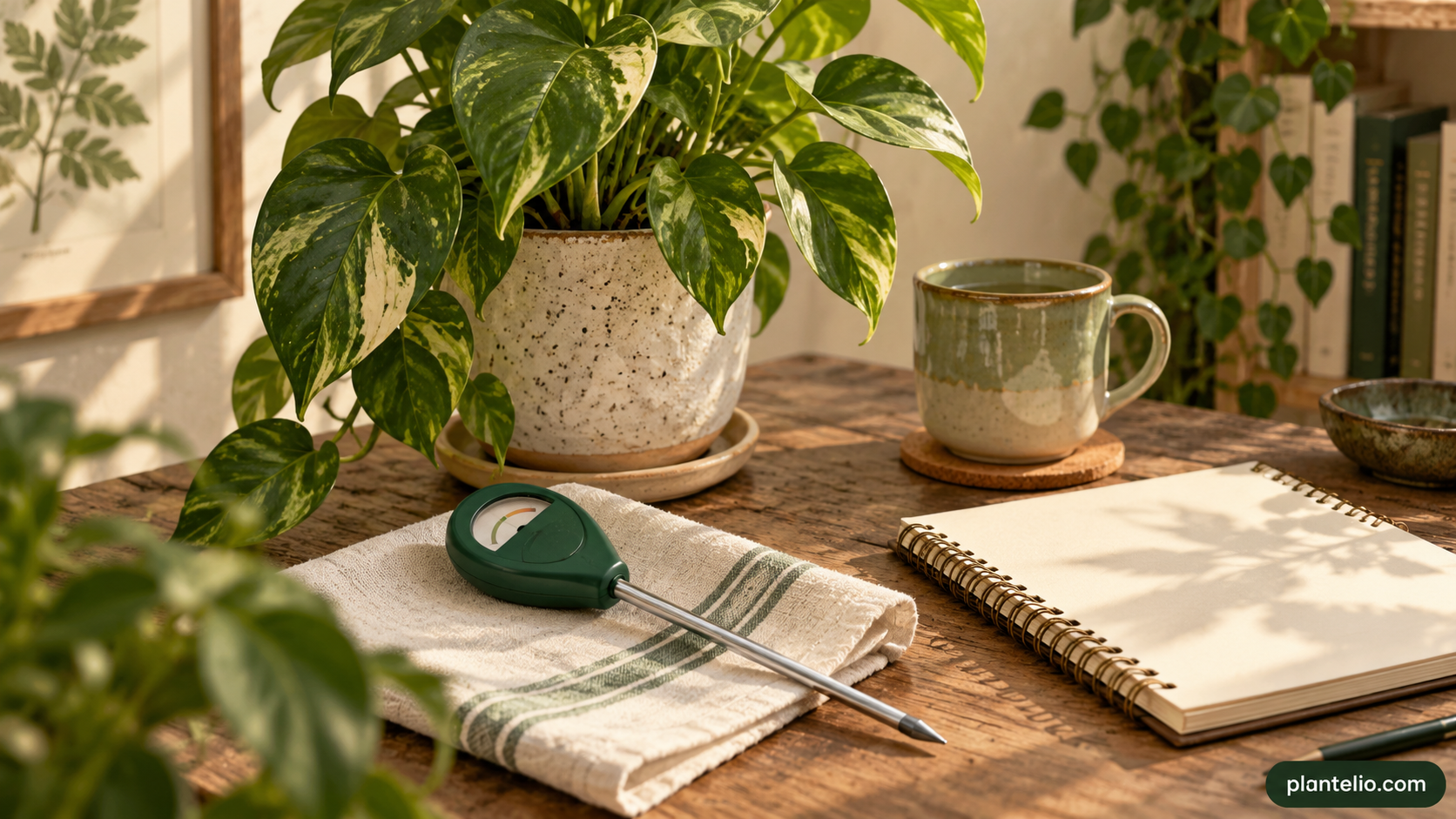
Do not carry the old watering interval over automatically. Check moisture in the mix and learn the new pot’s weight after watering and as it dries. Record what you find over several checks; do not water just because another plant in a different pot is due.
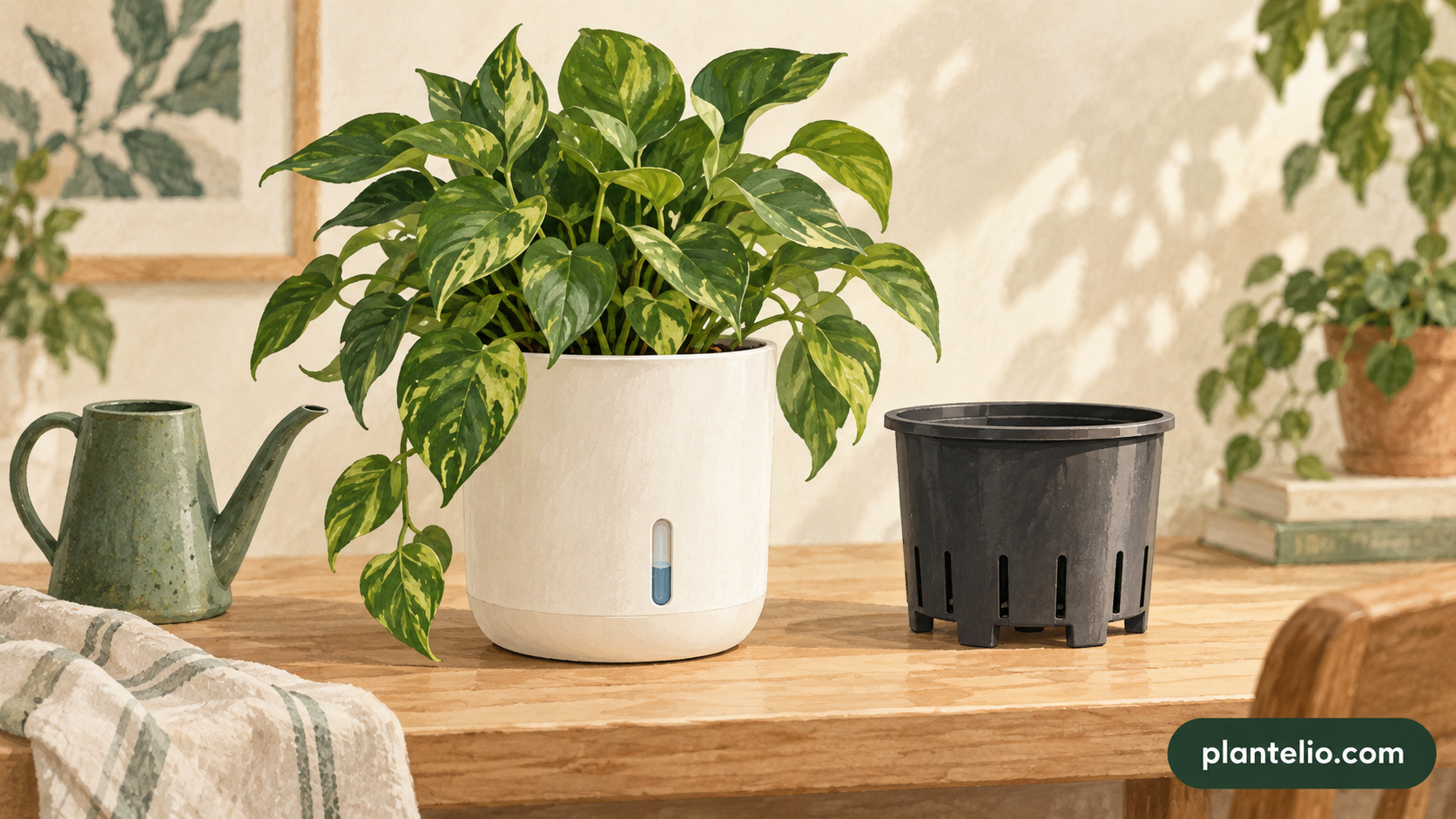
If your preferred decorative container has no holes, use a removable inner pot and empty collected water. The nursery pot versus decorative pot guide covers this setup. A pot can suit your room and still let you inspect the growing container easily.










Post Comment