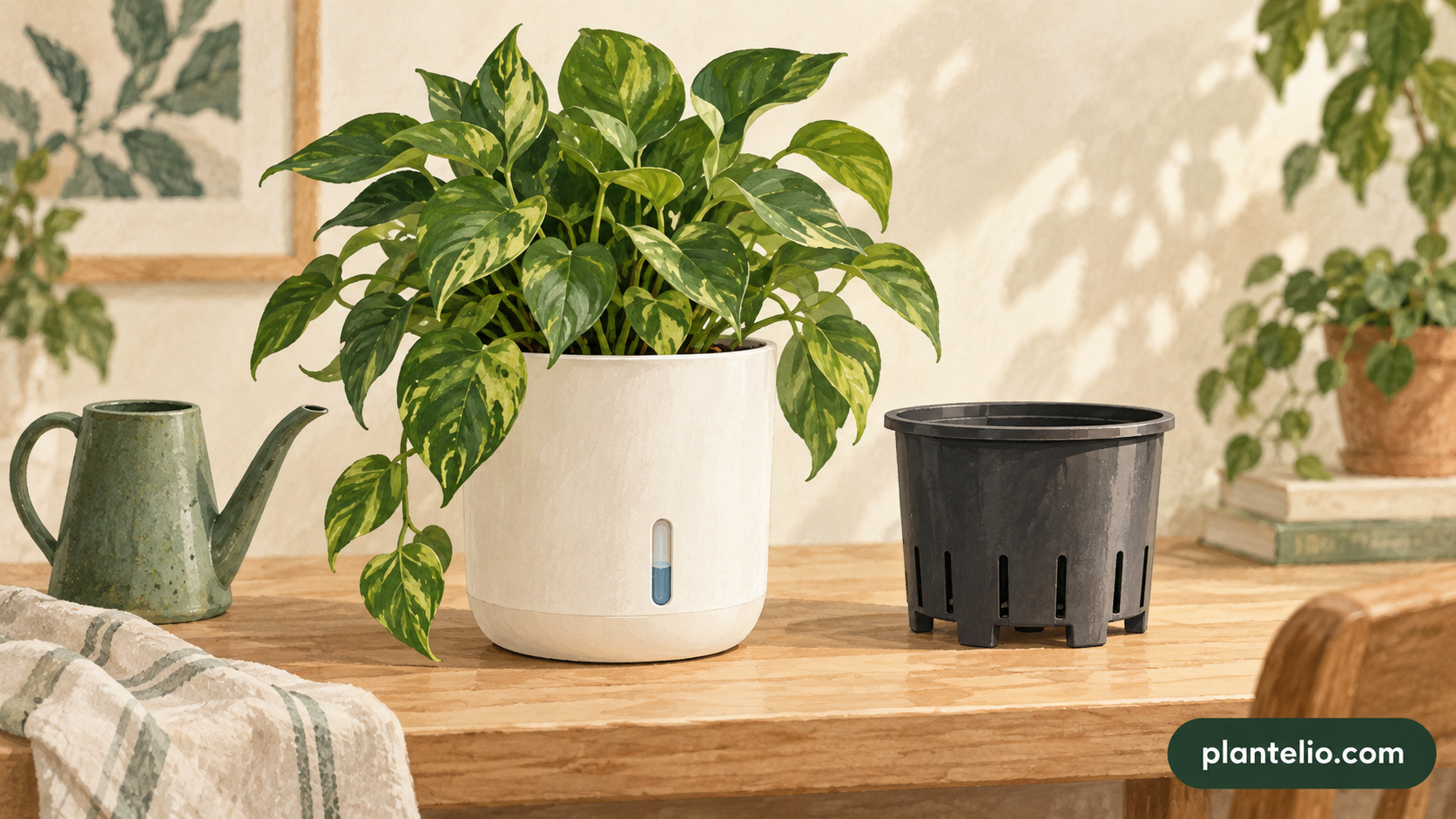
Self-Watering Pots: Questions to Ask Before Switching
Self-watering pots can make a watering routine easier, but the name does not mean a plant can be left indefinitely. Before switching, check both the plant’s needs and the instructions for the exact container. A useful pot is one you can understand, inspect and maintain.
Does the watering pattern suit this plant?
Illinois Extension’s container guidance describes systems that move water from a lower reservoir into the growing medium through capillary action. A wick or a column of growing medium can provide that connection. Such containers can suit plants that benefit from steadier moisture; they are generally a poor match for plants that need substantial drying between waterings, including many cacti and succulents.
Start with the plant you own, not a photograph on the box. Write down its identity, current pot size and where it will live. A reservoir is a delivery system, not a diagnosis for unexplained wilting.
Read the setup instructions before buying
Use this practical shopping checklist:
- Can you see the water level without lifting a heavy plant?
- Can you reach the fill opening in the intended location?
- How do you empty and clean the reservoir?
- Does the maker specify a growing medium, wick arrangement or initial top-watering period?
- What prevents accidental overfilling, and where would excess water go indoors?
Illinois Extension’s self-watering container explanation illustrates why the reservoir, water-moving connection and overflow provision matter. Designs differ, so do not transfer refill instructions from another model.
Trial one plant before changing the collection
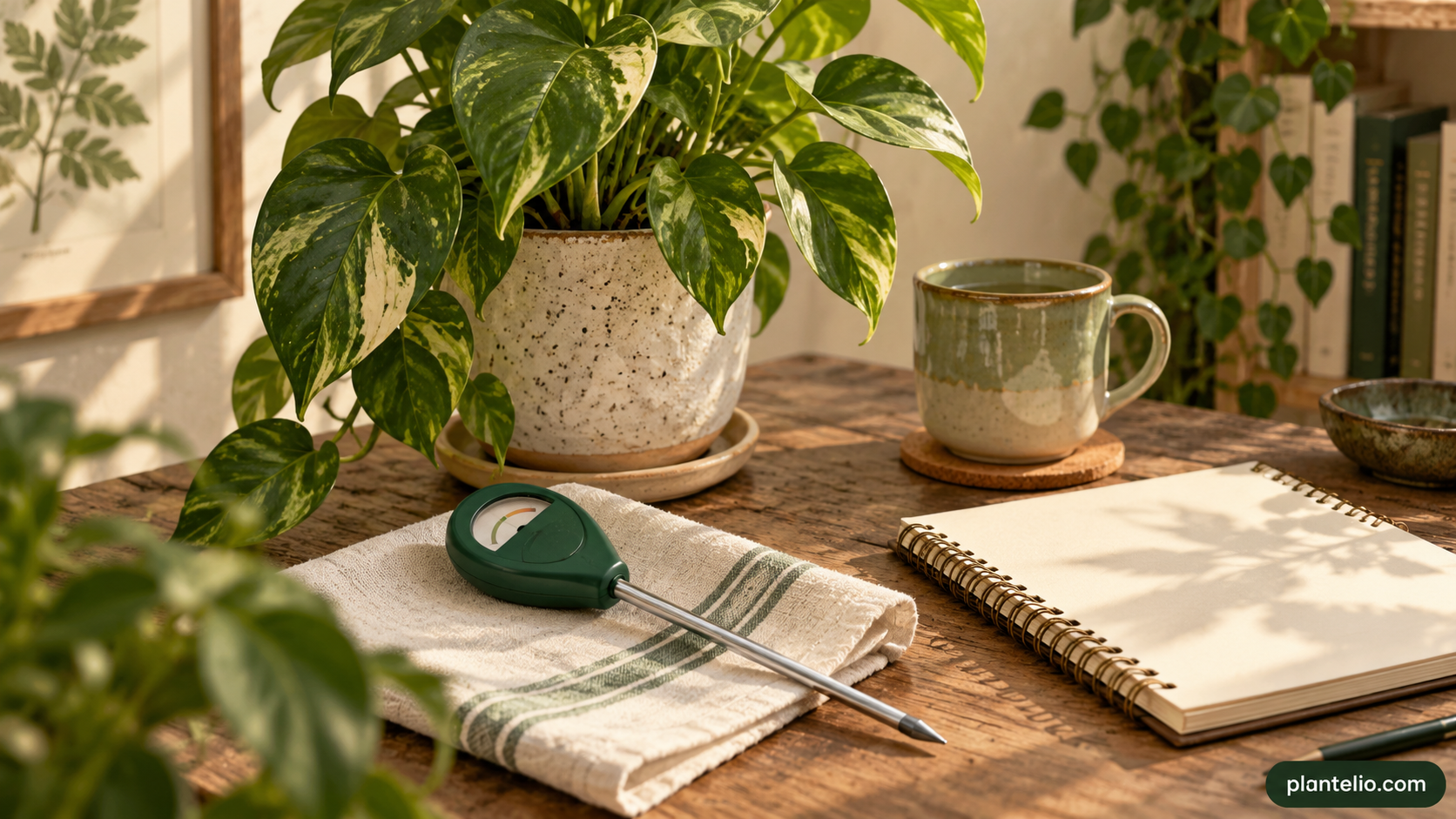
Keep the instructions beside a short refill record. Note when you add water, the indicated level and what you observe in the growing medium. Continue to check soil moisture; a water-level display describes the reservoir, not every part of the root zone.
Do the trial while you are home. Avoid introducing an unfamiliar system immediately before a trip. Once you understand its routine, add the exact refill instructions and a photo of the fill point to your plant-sitter checklist. That gives a helper a clear task instead of the vague instruction to keep the pot full.

Post Comment