
Monstera Watering Guide: How Often and How Much to Water Monstera
There is no single number of days or millilitres that works for every indoor Monstera. The useful question is whether this plant’s root zone needs water today, and whether water reaches the mix evenly when you give it. This guide shows how to build that decision from observations.
Set up the pot before choosing a routine
Identify the growing container inside any decorative cover. Check that it has drainage holes and that water can leave them. A cover can hide collected water, so inspect it after watering rather than assuming an empty visible saucer means the roots are not sitting in water.
Note the container size, the growing medium and the plant’s position. Learn the feel or weight of the pot after it has been watered and drained. Later, compare it as the mix dries. With a large plant, do not risk lifting an unstable container; use accessible moisture observations and a consistent checking method instead.
Combine observations before watering
Monstera deliciosa should have some drying between waterings. A surface check alone can be misleading in a deep container. Examine accessible mix below the surface without digging through roots, and compare that observation with the pot’s weight and recent watering record.
| What you find | What to do next |
|---|---|
| Mix is drying and the pot is lighter than after watering | Assess whether watering is needed using your established baseline. |
| Surface is dry but the pot remains heavy and deeper mix is moist | Check again later; do not water solely because the surface changed colour. |
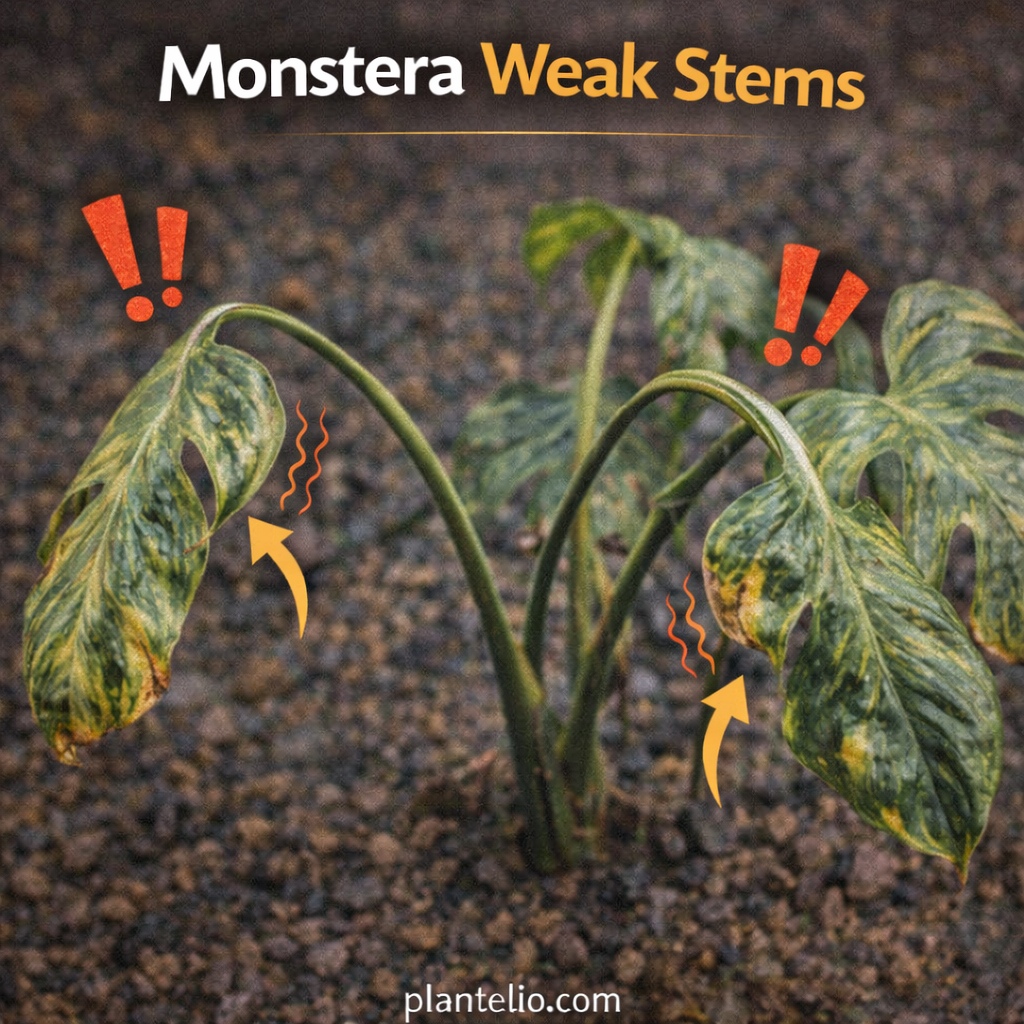
| Plant wilts while the mix remains wet | Check drainage and the plant’s condition before adding more water. |
| Water immediately runs through but much of the mix stays dry | Investigate uneven wetting rather than assuming drainage proves thorough watering. |
These observations are a framework, not an automatic diagnosis. See the separate dry-pot checklist and wet-pot checklist if the plant is already showing symptoms.
Water evenly and check the result
- Protect the floor and arrange a safe way to collect drainage.
- Pour slowly onto the growing medium across accessible areas of the container.
- Pause if water pools on the surface and observe how it enters the mix.
- Allow excess water to leave the drainage holes.
- Empty the saucer or decorative cover, then inspect the moisture pattern.
- Record what you did and any unusual behaviour.
A fast stream from a drainage hole can follow a gap beside the pot rather than wetting the entire root zone. If this happens repeatedly, inspect the mix and its condition. Do not solve it by leaving the container permanently standing in water. The amount applied should be guided by the container and the result, rather than copying a volume from another plant.
Use a calendar to remember checks
A reminder is useful for checking the plant; it is not an instruction to water regardless of moisture. At each check, write “watered” or “checked, still moist.” Those two entries make a record much more informative than a list of watering dates alone.
For example, a hypothetical log might show the mix still moist on Monday, lighter and drying on Thursday, and watering on Friday after another check. The lesson is the sequence of observations, not that Friday is the correct watering day. Your container may behave differently.
Reassess when the room or pot changes
Water use can change with light, temperature, growth, container size and the growing medium. Review the routine after moving the plant, repotting it or changing its exposure. Seasonal labels do not describe every indoor room: heated rooms, grow lights and changes in window light can alter the pattern.
Compare the current drying behaviour with your records before deciding to shorten or lengthen the interval. A sudden change also deserves investigation. Check for collected water, altered drainage, changed surroundings and a decline in the plant’s condition.
When symptoms continue
Do not judge watering success only by whether one damaged leaf looks better immediately. Existing damage may remain. Watch for new damage, persistent wilting and the condition of later growth. Continued decline in wet mix calls for a broader investigation; more water or fertilizer is not a dependable response.
Keep water management separate from humidity management. Spraying leaves does not establish that the root zone is adequately watered. Record any water-source changes if you are investigating deposits or leaf damage, but do not assume a single symptom proves that the water supply is responsible.
A record you can reuse
At each check, record the date, moisture observation, pot weight where safe, plant condition, action and drainage result. Add a note when the plant is moved or repotted. A plant care log helps you distinguish a changing pattern from an isolated observation. Use the main Monstera care guide to review the rest of the growing setup.
References
Species context: NC State Extension: Monstera deliciosa. General guidance: University of Maryland Extension: Watering Indoor Plants and Diagnose Indoor Plant Problems. The example log is illustrative and does not report a personal growing trial.










11 comments