How to Keep a Useful Plant Care Log
A useful plant care log answers three questions: what did you notice, what did you do, and what happened next? It does not need to record every leaf or turn your collection into a daily paperwork task. Start with one plant whose care you want to understand better.
Give Each Plant a Stable Identity
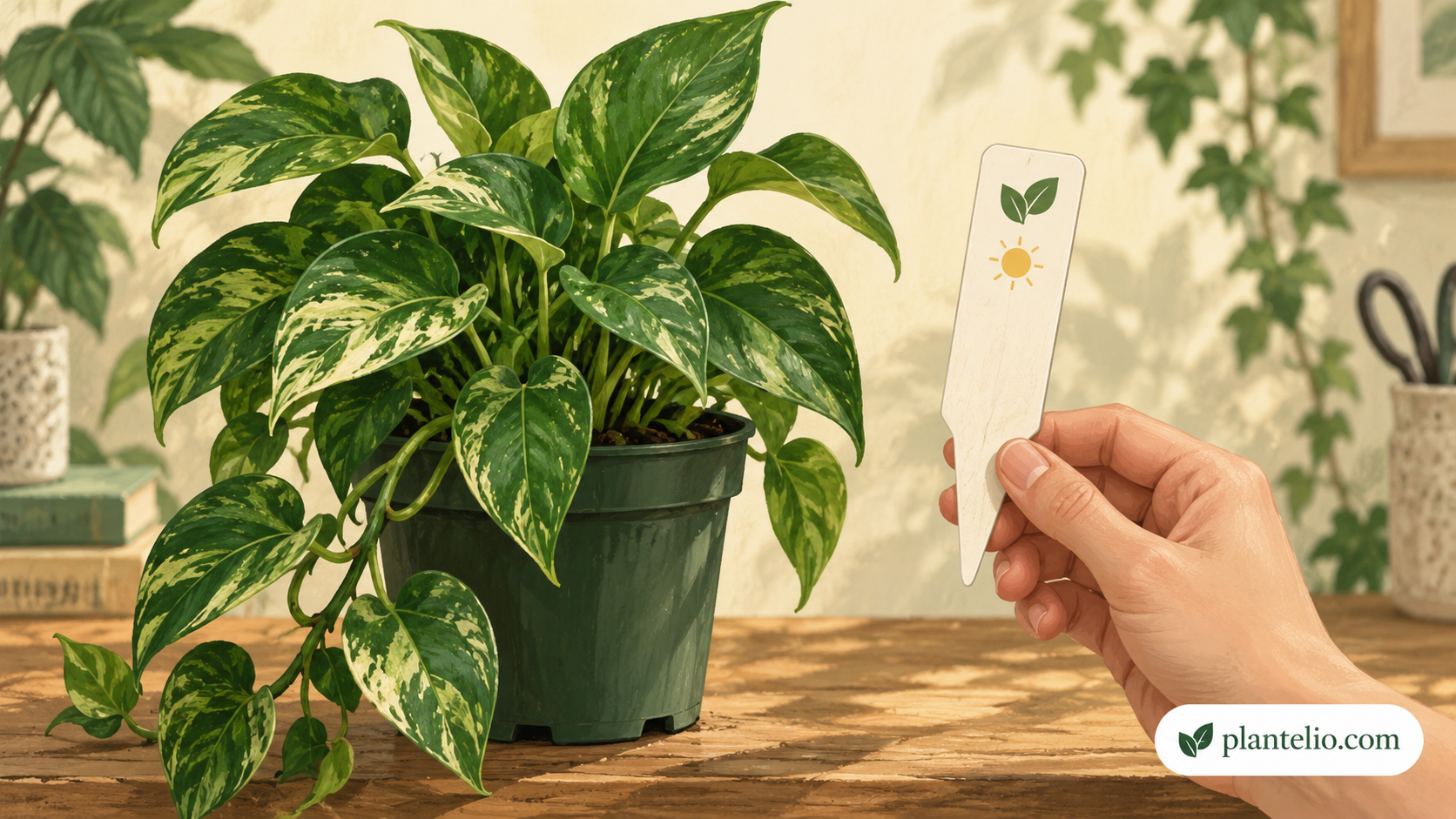
Use a short name or number that will still make sense after the pot or room changes. Record the plant’s identification, arrival date if known, container and current location. For two similar pothos plants, “Pothos A, desk” is easier to follow than two records both called “green plant.”
Keep identification uncertainty visible. Write “identity unconfirmed” instead of building a care plan around a guess. Our first-week checklist gives a starting point for a new arrival.
Copy This Short Entry Template
- Date and plant: which individual did you inspect?
- Observation: moisture, visible change or a location change.
- Action: what you actually did, including “no action.”
- Follow-up: what you will compare at the next check.
- Photo: optional filename or link.
Illustrative entry: “September 30, Pothos A. Surface dry; deeper mix still damp. No water added. Recheck moisture before the next watering decision.” This is an example of record structure, not a report from a plant we tested.
Separate What You See from What You Suspect
“One lower leaf yellow” is an observation. “Needs fertilizer” is an interpretation. Put suspected explanations in a separate note so you can revise them when more evidence appears. Photograph the same area from a similar angle when comparing a mark; otherwise changes in lighting can make comparison confusing.
Use Reminders to Inspect
University of Maryland Extension advises watering according to need rather than a fixed schedule, because growing medium and room conditions affect demand. Let a reminder prompt a check, then record the result. Source: Watering Indoor Plants
Use our moisture-checking routine if you need a repeatable observation. Review several entries together before changing the plan. A drying pattern after a move is worth investigating, but the log alone cannot prove that the move caused it.
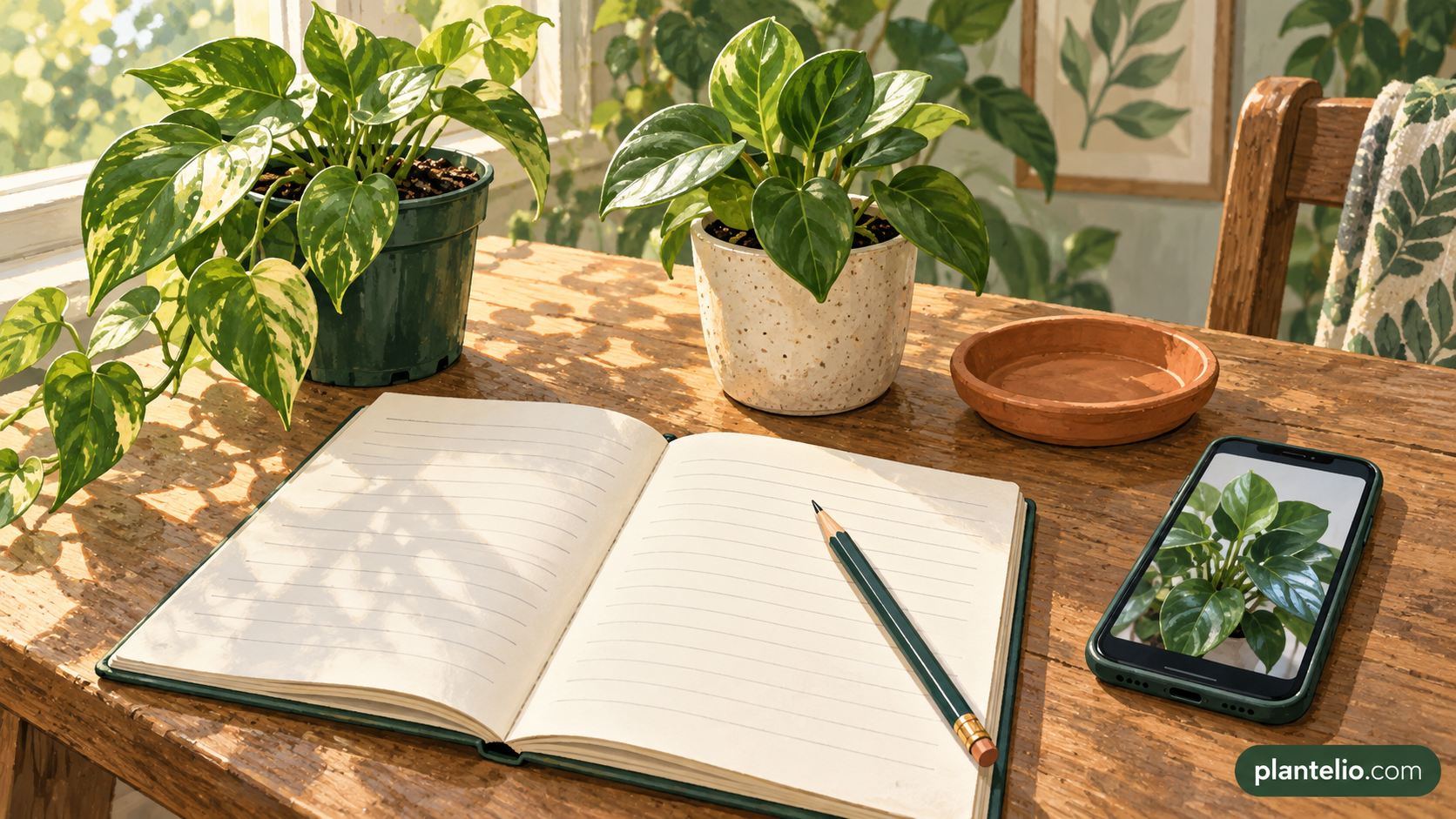
Choose paper, a notes app or a spreadsheet you will actually use. Keep the fields short enough that making a useful entry feels easier than trying to remember last week’s care.










12 comments