
Pothos Light Requirements: Assess Windows, Shelves and Grow Lights
“Low-light tolerant” is not a promise that pothos will grow well anywhere. To choose a position, inspect the light at the leaves and compare new growth over time. This guide gives you a room survey and a simple placement record for Epipremnum aureum.
Start at leaf height
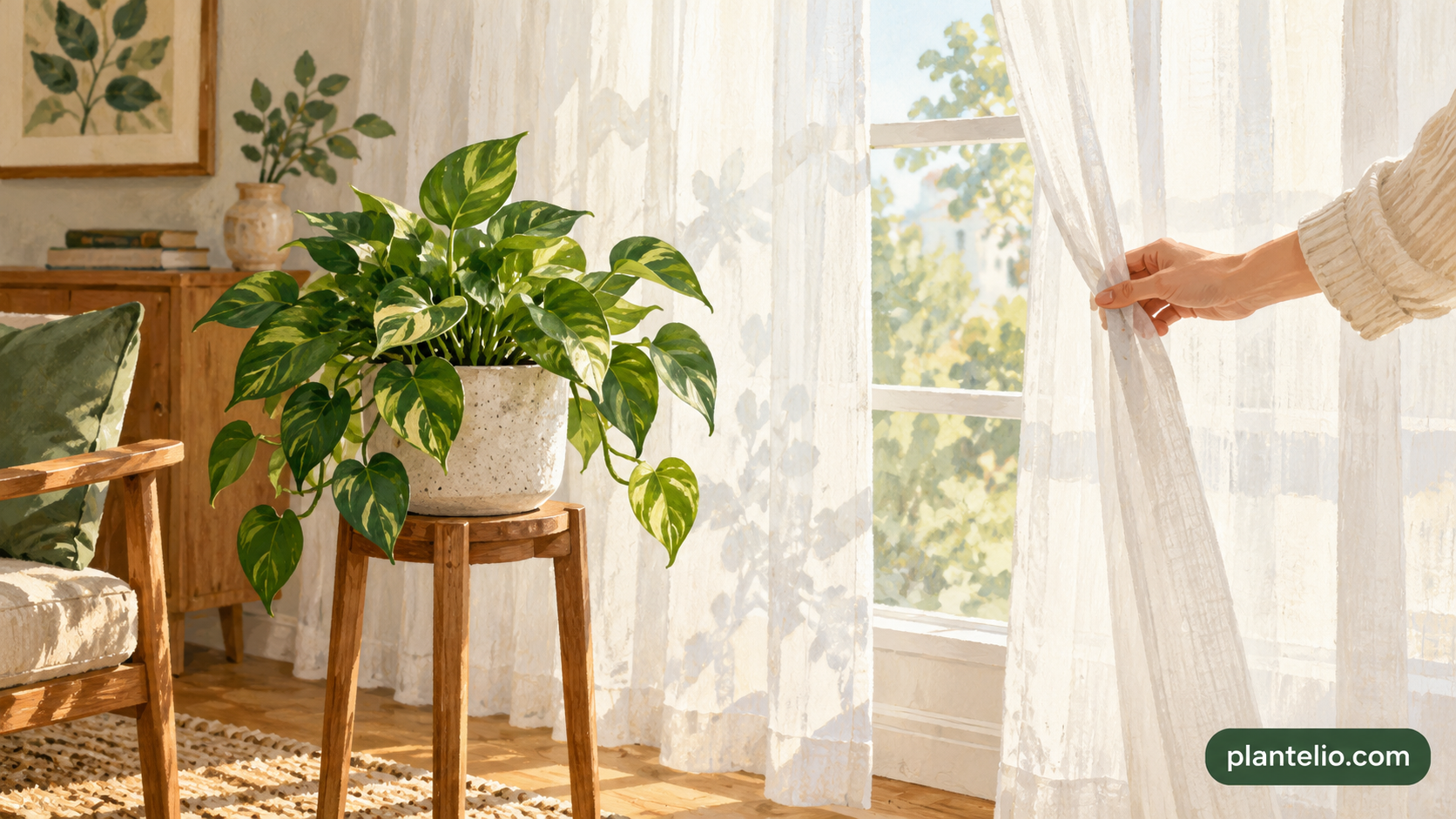
Check the location in the morning, around midday and later in the day. Note whether a beam of sun lands directly on the leaves, whether a curtain filters it and whether furniture shades the vines. A hanging basket can have a bright lower vine and a shaded crown near the ceiling.
Record the actual position as well as the window direction. Nearby buildings, trees and curtains can make two windows facing the same direction behave differently. Do not choose a fixed distance from a window without looking at the light that reaches the plant.
| Location | What to inspect | What to record |
|---|---|---|
| High shelf | Shade over the crown; light on hanging vines | Whether both areas receive light |
| Window ledge | Direct beams and nearby heating or cold glass | Times of exposure and changes after moving |
| Interior corner | How much window light actually reaches leaves | New growth before and after a placement change |
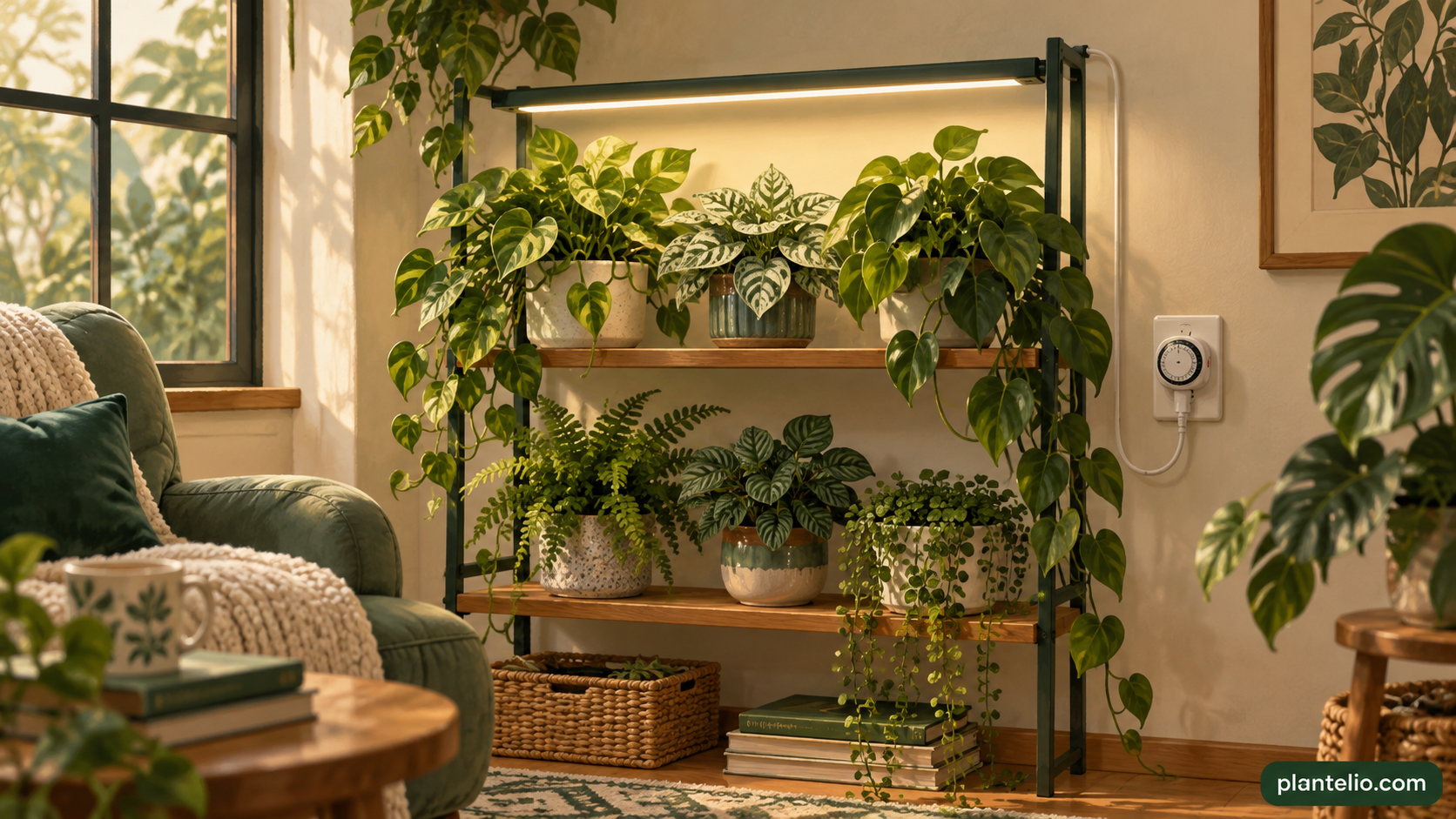
| Under a grow light | Coverage across the crown and vine tips | Lamp model, distance and operating times |
Distinguish survival from useful growth
Pothos can persist in dim conditions, but a plant remaining alive does not demonstrate that the location supports the growth you want. Decide what you are assessing: new leaves, leaf spacing, a fuller pot or a particular variegated appearance.
Select one vine and photograph its growing end. Count fully opened new leaves and compare spacing along that same vine. Avoid comparing a small trailing indoor plant with a mature climbing plant outdoors; those are different growing situations. The growth guide and small-leaf guide discuss growth observations.
Move gradually and keep a baseline
If you decide the current position is too dim, choose a brighter location without immediately exposing a shade-grown plant to strong sun. Take a baseline photograph first and note the move date. Recheck for direct beams at different times; a position that looked sheltered in the morning may be exposed later.
Existing damaged leaves do not need to become perfect for the change to be useful. Compare new growth and whether fresh damage appears. If damage spreads after a move, review the exposure and other changes, including heat, drafts and moisture, before deciding that light alone is the cause.
Read variegation carefully
Label the cultivar if you know it, then compare new leaves within that plant. Pattern differences between individual leaves are not a precise light meter. Likewise, a pale or brown patch cannot diagnose light stress by itself. Note whether the damage occurs on the exposed side and when it appeared.
Keep photographs taken under similar lighting so that changes in the photograph do not masquerade as changes in leaf color. If you are assessing a lamp or window move, avoid changing fertilizer and the potting mix simultaneously unless another problem needs attention.
Use grow-light instructions for the actual lamp
Lamps vary in output and coverage. Use the manufacturer’s guidance for placement, safe clearance and operating time as a starting point, then record the setup and inspect the plant’s response. One distance or number of hours cannot describe every lamp.
Look at the whole plant, not just the leaf nearest the fixture. A long vine may extend beyond the illuminated area. Consider how you will arrange the vine without crushing stems or placing leaves against a hot fixture. Keep a regular dark period rather than leaving the lamp on continuously.
If you use a light meter, measure at the leaf position and record the instrument, time and conditions. A single reading is a snapshot, not the total light received all day. Use repeated readings consistently to compare locations rather than treating an uncalibrated phone reading as a precise plant requirement.
Recheck watering after a move
Changing position can change the way the pot dries. Keep the moisture inspection from the watering guide; do not automatically add an extra weekly watering because the new spot is brighter. Inspect the deeper mix and remove trapped runoff as before.
Keep a placement log with the move date, exposure notes, watering checks and photographs of the same vine. Review new growth across several observations. If light looks reasonable but the plant is declining, return to the care guide and examine the container, roots and pests as well.
Sources and scope
General indoor-light factors are explained by University of Maryland Extension: Lighting for Indoor Plants. Species guidance is provided by NC State Extension: Epipremnum aureum. The survey and log are practical planning tools, not a Plantelio lamp trial or a guarantee of growth. Reviewed October 11, 2026.











8 comments