
Grow Light Watts, Lumens and PPFD: Reading the Label
A large number on a grow light box is useful only when you know what it describes. Power use, visible brightness and light arriving at a plant are different measurements. Compare the label’s terms before deciding whether two lamps suit the same shelf.
Separate the units
Iowa State University Extension’s lighting guide defines watts as electrical power use, lumens as light output weighted to human vision, and PPFD as the flow of plant-useful photons reaching an area each second. The standard PPFD unit is micromoles per square metre per second.
These values answer different questions. A wattage figure alone does not state the PPFD at your leaves. A reading at one point also does not tell you how evenly an entire shelf is illuminated. Avoid turning one prominent label number into a complete performance verdict.
Ask where the measurement was taken
When a manufacturer supplies a PPFD map, check the stated distance, measured area and fixture setting. Keep those conditions beside the numbers. A map taken at one height should not be treated as a measurement of your own setup at another height.
Use the centre and edge information when it is provided. Record missing conditions as missing; do not fill them in from a photograph. If a product only gives a large “equivalent” wattage, look for its actual power specification and the manufacturer’s explanation of the comparison.
Make a small comparison sheet
- Exact model and fixture dimensions.
- Actual electrical power specification.
- Any supplied PPFD map, with distance and coverage area.
- Mounting instructions, dimming settings and operating limits.
- Whether the fixture physically fits the intended plant arrangement.
This is a practical way to organise product information, not a ranking of brands. Check the data available for each candidate before spending money, and avoid declaring a winner when the test conditions differ.
Connect the label to your plant’s location
The room’s daylight remains part of the setup. Describe the window contribution with our guide to bright indirect light at home. Then use species-specific care guidance and the lamp’s installation directions to plan its position.
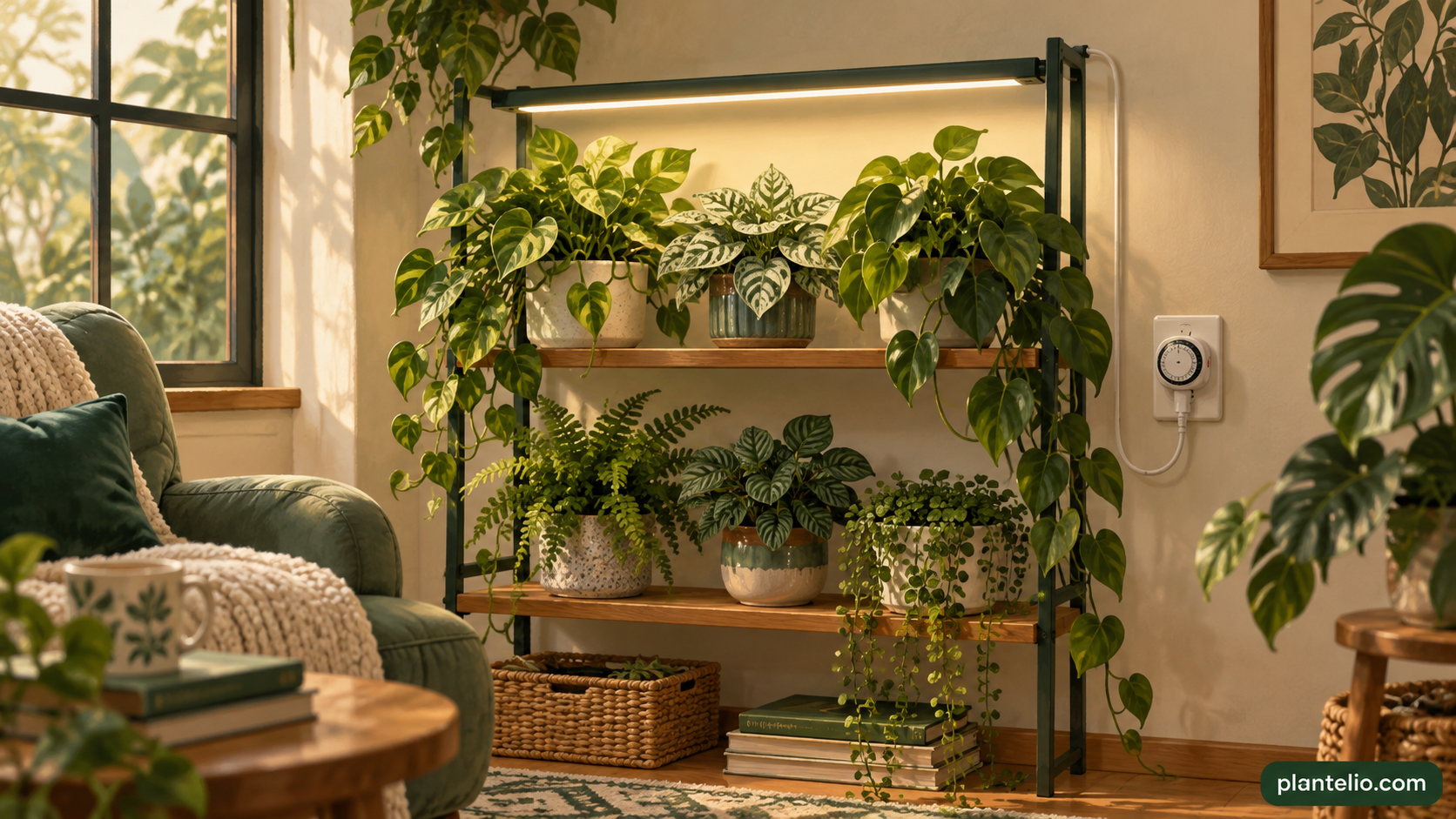
Duration is a separate choice from intensity. Our grow light timer guide explains how to make the daily schedule repeatable. Keep the fixture model, position and timing together in your notes so future adjustments have a clear starting point.

Post Comment