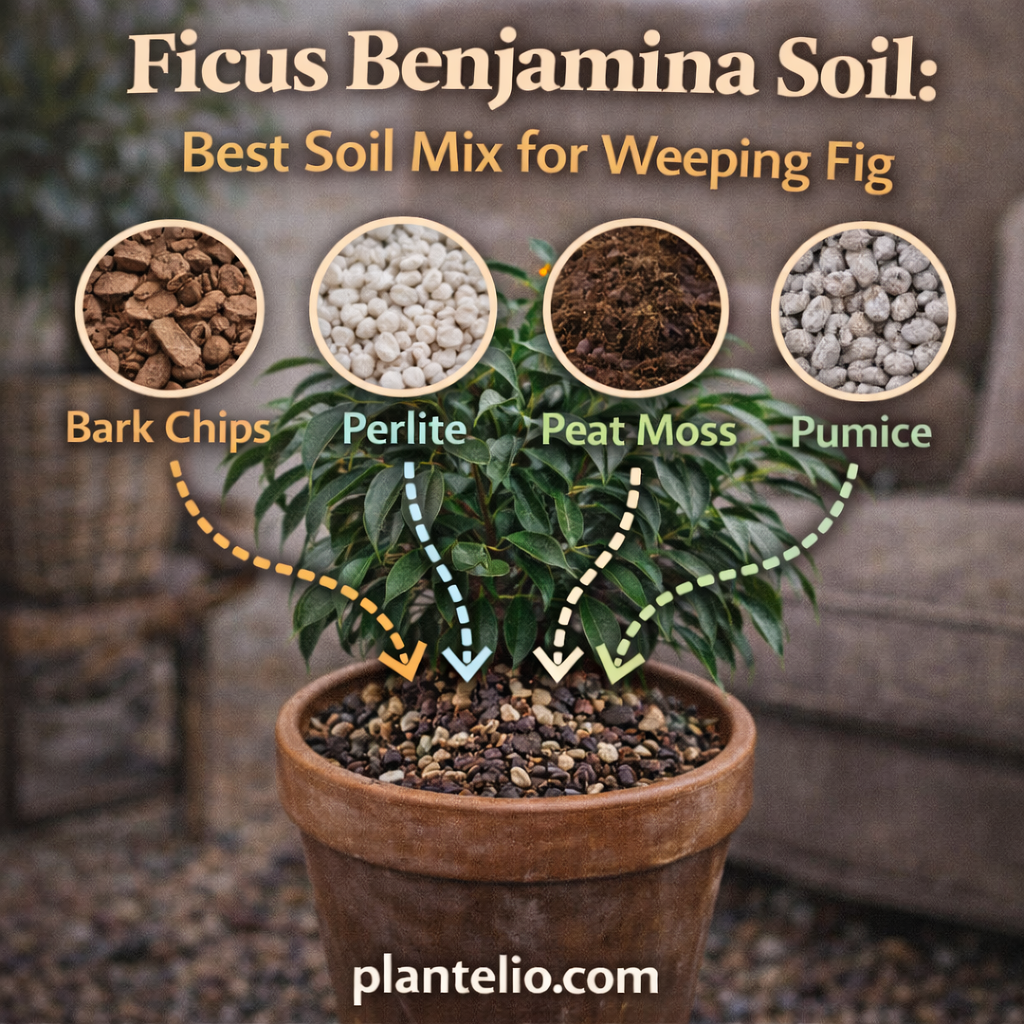
Ficus Benjamina Soil: Best Soil Mix for Weeping Fig
Ficus Benjamina Soil
Choosing the right Ficus Benjamina soil is essential for maintaining a healthy indoor tree. Also known as the Weeping Fig, this plant prefers well-draining soil that allows roots to breathe while retaining moderate moisture.
Poor soil conditions can lead to root rot, yellow leaves, and leaf drop.
Best Soil for Ficus Benjamina
Ficus benjamina grows best in loose and well-draining soil.
- High-quality indoor potting mix
- Soil mixed with perlite for drainage
- Organic-rich potting soil
DIY Ficus Benjamina Soil Mix
You can prepare a suitable soil mix at home.
- 2 parts indoor potting soil
- 1 part perlite
- 1 part coco coir or peat moss
This mixture helps maintain proper drainage and root aeration.
Importance of Soil Drainage
Ficus benjamina roots are sensitive to excess moisture.
- Poor drainage causes root rot
- Wet soil damages roots
- Well-aerated soil promotes healthy growth
Soil for Potted Ficus Benjamina
When grown indoors, soil structure becomes even more important.
- Use pots with drainage holes
- Avoid heavy garden soil
- Repot every 1–2 years
Signs of Poor Soil Conditions
- Yellow leaves
- Slow growth
- Leaf drop
Many problems are related to watering practices. Learn more in Ficus Benjamina Watering Guide.
Related Ficus Benjamina Guides
- Ficus Benjamina
- Ficus Benjamina Care Guide
- Ficus Benjamina Watering Guide
- Ficus Benjamina Leaves Falling
- Ficus Benjamina Yellow Leaves
FAQ
What soil is best for Ficus Benjamina?
A well-draining indoor potting mix with perlite is ideal.
Can Ficus Benjamina grow in regular potting soil?
Yes, but adding perlite improves drainage and root health.
Does Ficus Benjamina need airy soil?
Yes, loose soil allows roots to receive oxygen and prevents root rot.
How often should Ficus Benjamina be repotted?
Repotting every 1–2 years helps maintain healthy soil conditions.












4 comments