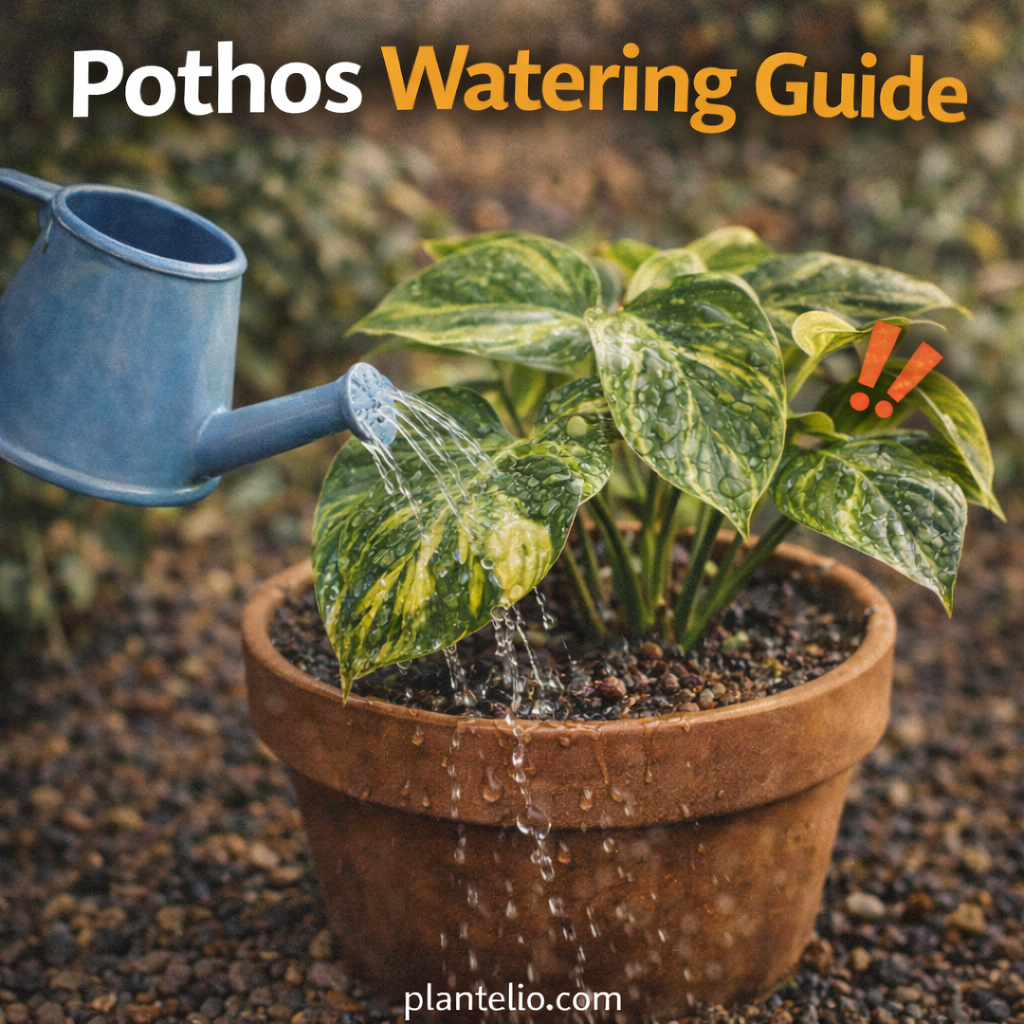
Pothos Watering Guide: How Often to Water Pothos Plants
A drooping pothos does not tell you, by itself, whether to add water. First check the pot. This guide gives you a repeatable inspection and watering method for a pothos growing in container mix; a cutting rooted in a jar needs a different routine.
Check before you water
- Take the nursery pot out of its decorative cover, if possible. Look for water trapped underneath and make sure drainage holes are open.
- Check the mix below the surface in several accessible places without forcing a finger or probe through roots. Note whether it is dry, slightly damp or wet.
- Lift the pot safely. Compare its weight with how that same pot felt after watering and draining, rather than with a different plant.
- Inspect the leaves and stem bases. Record drooping, yellowing or soft tissue alongside the moisture finding.
For a hanging basket, lower it to a secure work surface before checking. A dry-looking rim can hide a damp center. If you cannot safely reach the pot, change the setup so that watering and drainage are manageable.
| Finding | Interpretation | Next step |
|---|---|---|
| Dry surface, damp deeper mix | The surface is not a complete picture | Recheck later; do not water just because the top looks dry |
| Dry root-zone mix and a light pot | Water may be needed | Water evenly, then drain and record the result |
| Wet mix with drooping leaves | More water could worsen the problem | Check trapped water and drainage; investigate continued decline |
| Water runs out but the mix remains dry | Water may have bypassed dry sections | Inspect wetting across the pot before counting this as a full watering |
Water the mix, then remove runoff
Use the plant’s current dryness to decide when to water. When it is needed, apply water slowly across the mix instead of pouring only beside one stem. Allow drainage, then check that the root zone actually became moist. The first trickle from a hole does not prove that every part of the mix was wetted.
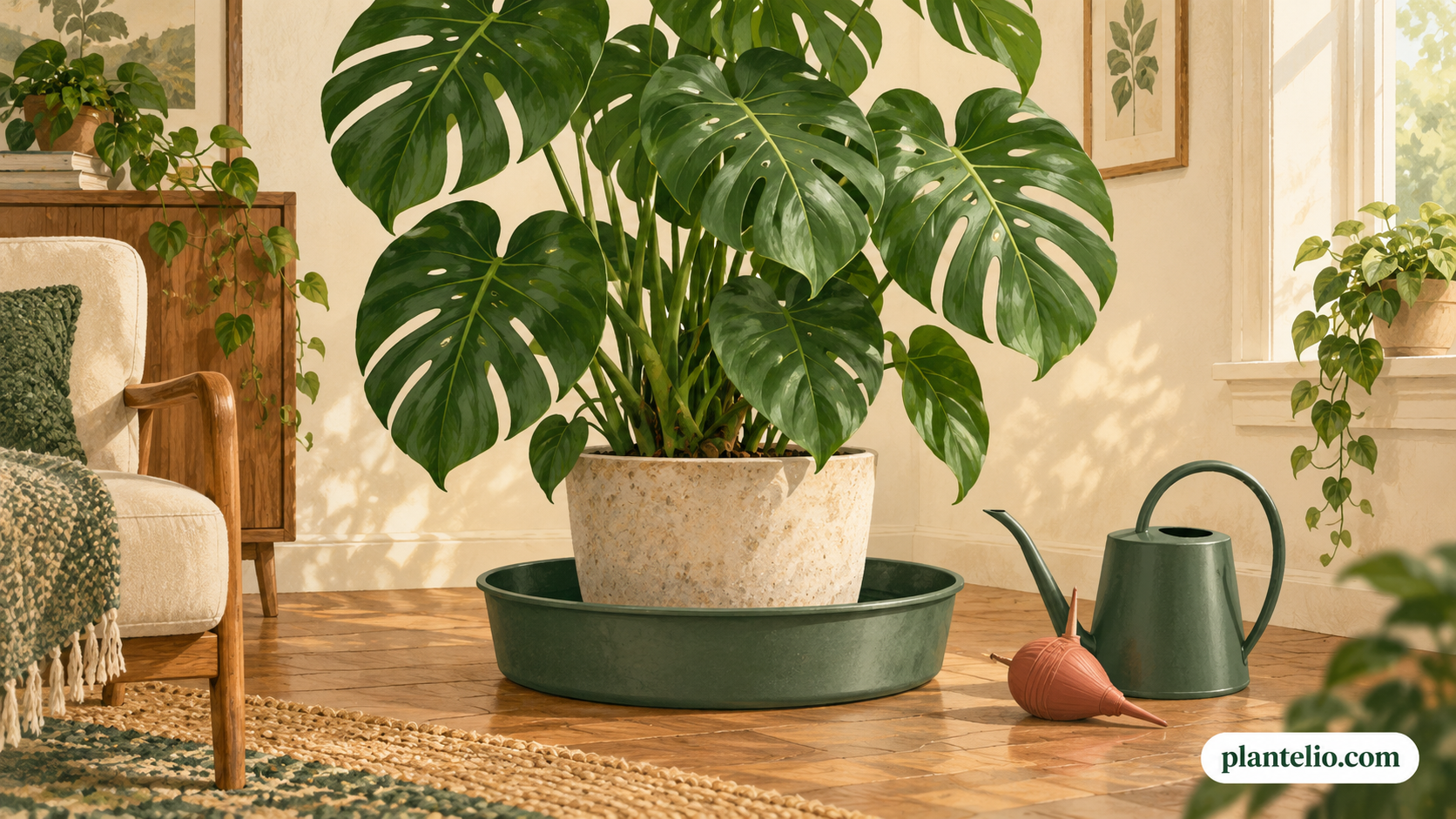
Empty the saucer and cover pot before returning the plant. Avoid leaving the basket over furniture while it is still dripping. If a container has no drainage, do not assume a small measured drink makes it safe indefinitely; consider a draining inner pot that you can remove for watering.
Understand uneven wetting
Look for a gap between the mix and pot wall, dry clumps or water escaping down one side. Record where you checked. Repeatedly pouring through the same channel can leave roots elsewhere dry, while extra water accumulates underneath.
Pause to inspect rather than adding an unmeasured series of drinks. If the mix repeatedly fails to wet or dry appropriately, review its condition and the root system. The Pothos Soil Guide and repotting guide help you assess the container setup.
Use a checking schedule, not a watering deadline
Write a reminder to inspect your pothos. A reminder is not an instruction to water a still-damp pot. After moving a basket, changing the pot or turning on indoor heating, check again before relying on your old interval.
Season names are only rough context. A warm room with supplemental light in winter can behave differently from a cool, shaded room in summer. Keep the actual moisture checks alongside the date. There is no single number of days that fits all indoor pothos containers.
Keep a short watering log
For each check, record the date, moisture below the surface, approximate pot weight, whether you watered and whether drainage worked. Add a note when you move the plant or change the mix.
Illustrative example: on Monday the top looks dry but the deeper mix is damp, so you do not water. On Thursday the mix is dry across the checked areas and the pot feels lighter; you water and empty the runoff. This example demonstrates a decision process, not a recommended three-day interval or a Plantelio growing trial.
What if the leaves still droop?
Recheck moisture before repeating the watering. Note whether the entire plant is affected or only one vine. Look for damage at that vine’s base and compare the newest leaves with older damage. Persistently wet mix, worsening yellowing or soft tissue deserves further investigation rather than another automatic drink. Use the root-rot guide for root concerns and the drooping guide for broader checks.
Do not judge success solely by an old damaged leaf becoming perfect. Track new growth and whether the problem spreads. Return to the main care guide if several parts of the setup need review.
Sources and scope
The moisture-check, pot-weight and drainage principles follow University of Maryland Extension: Watering Indoor Plants. Pothos-specific drying guidance is in NC State Extension’s species profile. This is a home observation routine, not a diagnostic test or a guaranteed recovery method. Reviewed October 11, 2026.


12 comments