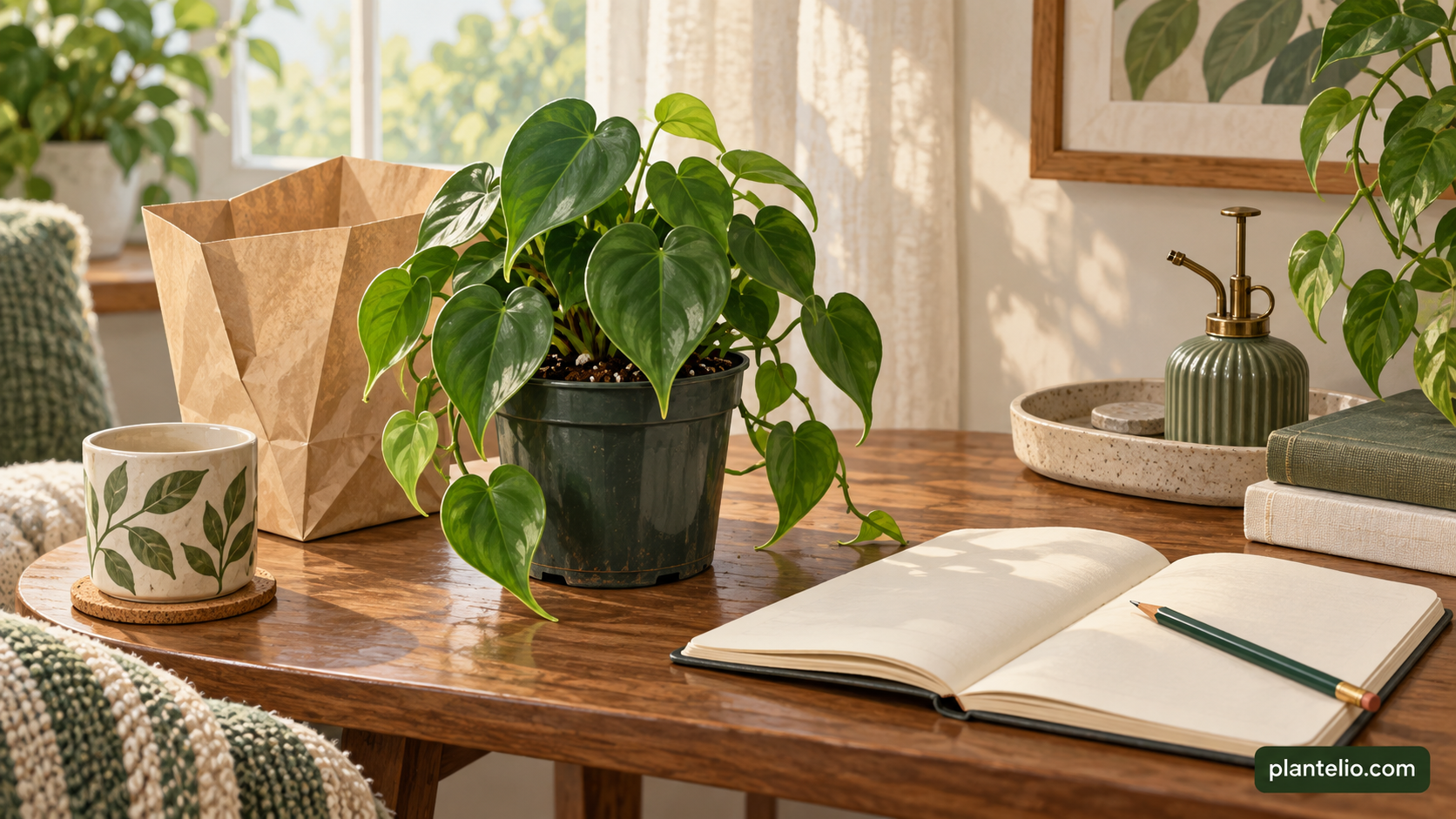
A New Houseplant’s First Week at Home
The first week with a new houseplant is a good time to learn its starting condition. You do not need a different treatment for every day. Instead, identify the plant, choose a suitable position and record what you observe before changing several things at once. This checklist is an observation routine, not a promise that every plant finishes adjusting in seven days.
Arrival: Make a Baseline Record
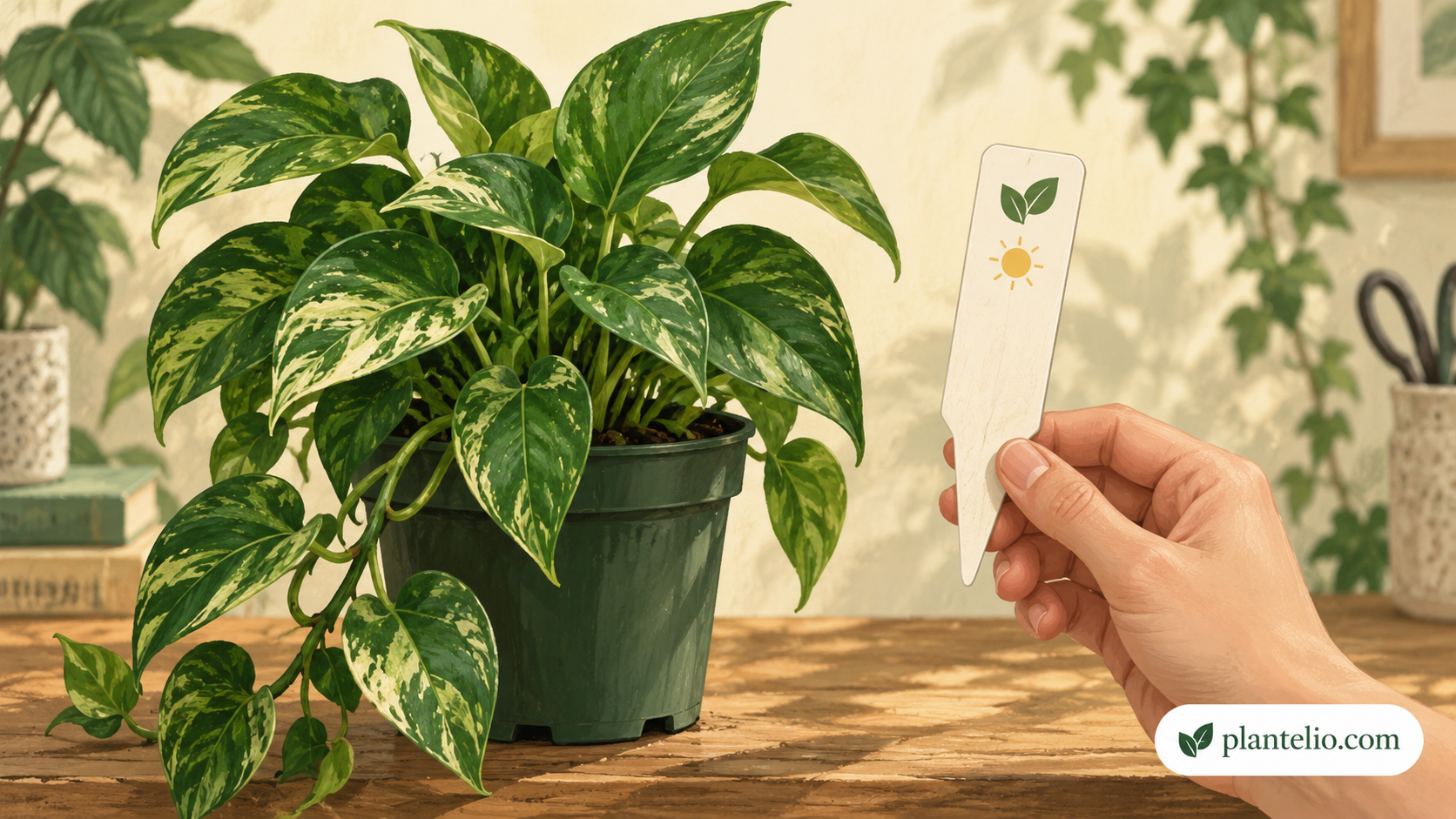
Keep the label and purchase details. Photograph the whole plant, a representative leaf and any existing marks. Write down the pot size and whether it sits inside another container. If the label only says “foliage plant,” ask the seller for an identification before following species-specific instructions.
Examine leaf undersides and the points where leaves meet stems. University of Maryland Extension recommends checking these areas when selecting plants and matching a plant to the conditions available at home. Source: Selecting Indoor Plants
Keep this settling-in routine alongside our new-houseplant quarantine guide. Reaching the end of this checklist is not, by itself, a reason to end isolation.
Choose a Place with a Reason
Match the location to the identified plant’s light needs. Notice when direct sun reaches that spot and whether an opening window creates a draft. Maryland Extension cautions that sudden changes in light and temperature can stress indoor plants. Avoid moving the plant from shelf to shelf simply to see where it looks best.
Record the location in terms you can repeat: “beside the east-facing window, outside the direct morning beam” is more useful than “bright room.” A photograph of the position helps if another person later takes over care.
During the Week: Observe Before Acting
Check moisture before deciding to water. Use a short log with four entries: date, moisture observation, visible changes and action. If a leaf mark was already present in your arrival photograph, you can distinguish it from a new change rather than guessing.
When you notice a problem, describe it precisely. “One lower leaf is yellowing” and “several stems are collapsing while the mix is wet” are different observations. Rapid deterioration deserves prompt investigation; do not wait for the week to end merely to complete the checklist.
At the End of the Week
- Confirm the plant’s identity and keep its care reference handy.
- Compare current photographs with the arrival record.
- Review whether the chosen location meets its needs.
- List any unresolved symptoms and the next inspection step.
Keep the useful notes and continue observing. An uneventful week is still valuable: it gives you a baseline for future watering, placement and growth decisions.











1 comment