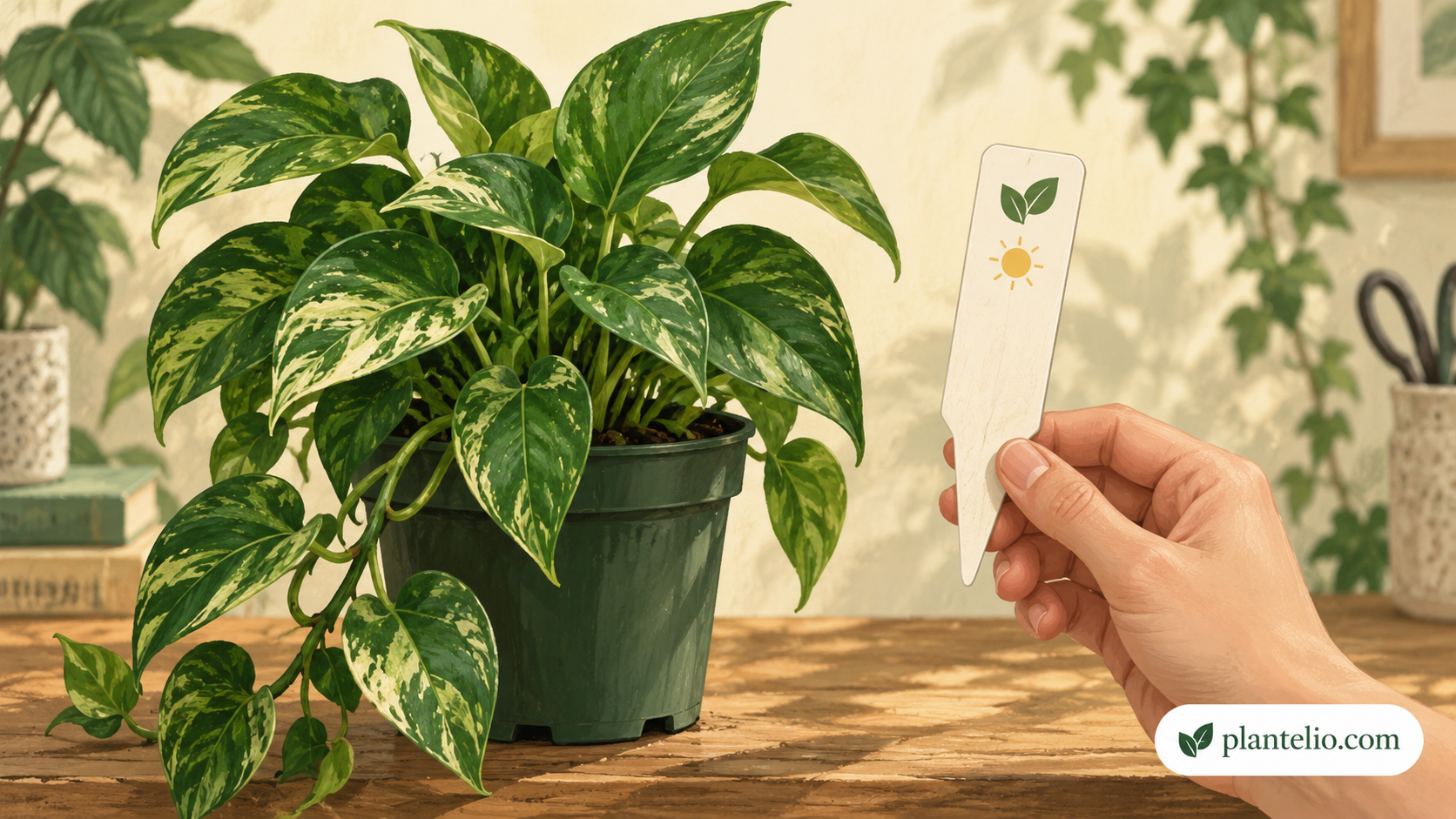
What to Check on a Plant Label Before Buying
A nursery plant label is a useful starting point when choosing a houseplant, especially if you read it before reaching the checkout. Treat it as a set of clues to match with your home, then ask about any detail that remains unclear.
Start with a name you can look up
Photograph both sides of the tag and check that it belongs to the pot you are holding. A broad description such as “green foliage” leaves too much uncertainty for later care research. Ask the seller for the plant’s botanical name and, where relevant, its cultivar. Copy the spelling rather than relying on memory.
If the label seems inconsistent with the plant, resolve the identity before following species-specific advice. Keep the tag after purchase so you can compare it with later notes.
Translate the light description into a location
The University of Maryland’s plant selection guidance recommends choosing plants that suit the conditions available in the home. Decide where this plant would actually stand. “Bright light” on a tag cannot tell you how much light reaches the back of your room.
Use our guide to recognizing bright indirect light at home to describe that position more precisely. Tell the seller about direct sun, curtains and distance from the window instead of asking whether the plant can live “indoors.”
Look for the information the tag leaves out
- Is the size shown the current sale size or an expected mature size?
- Will the plant eventually need support or more floor space?
- What moisture condition should trigger watering?
- Does a care symbol have an explanation on the reverse?
A weekly watering suggestion is not a measurement of your pot’s moisture. Ask what to check between waterings. Likewise, ask for the units and growing conditions behind a size estimate if these are missing.
Inspect the plant as well as the label
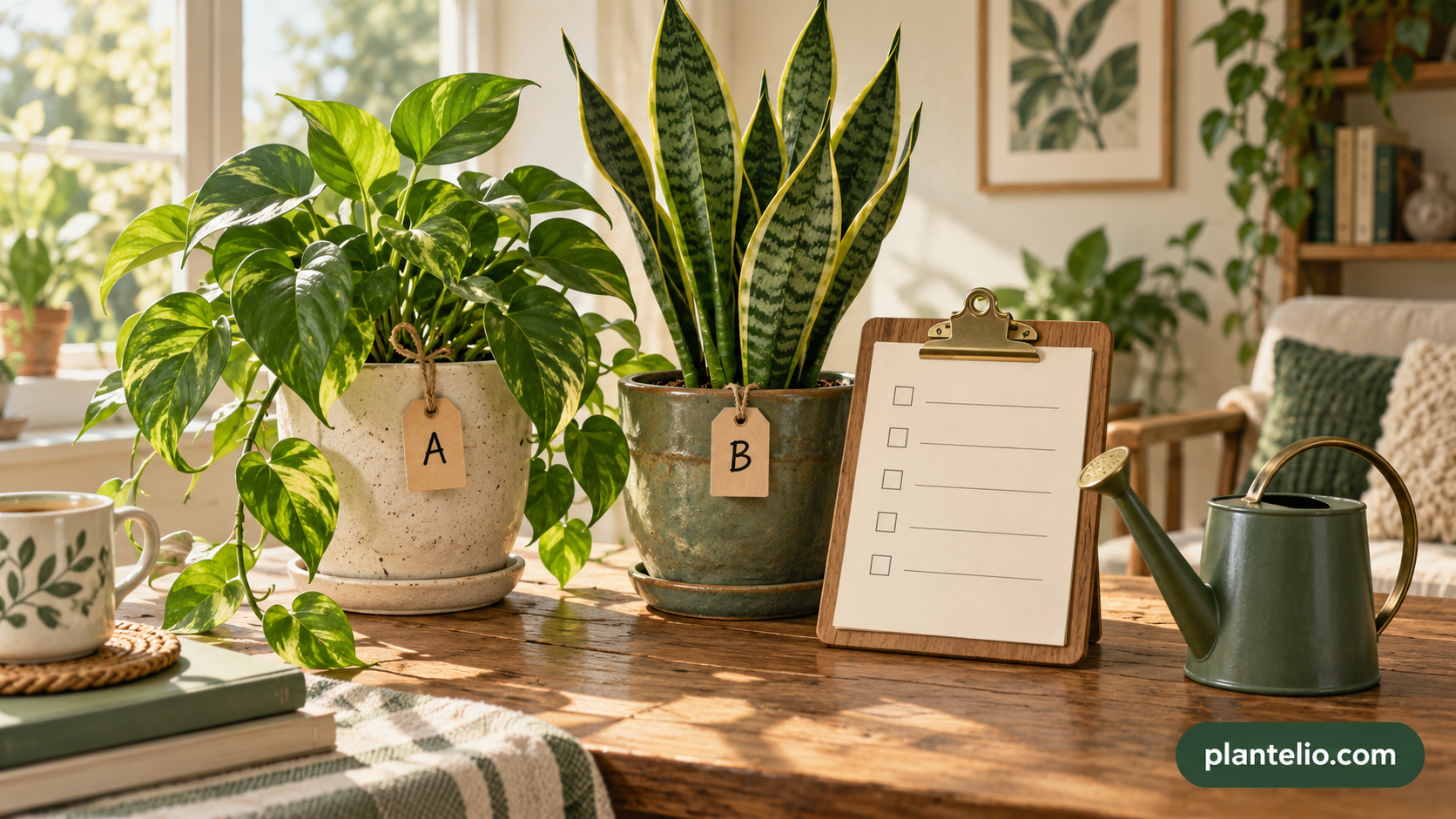
A well-written tag cannot confirm the condition of the individual plant. Maryland recommends checking purchases for signs of pests and disease. Follow our houseplant inspection checklist before bringing it home.
Finish with a short purchase note: confirmed name, intended location and unanswered questions. If those questions affect whether you can care for the plant, getting an answer before buying is easier than trying to reconstruct its identity afterward.

2 comments