Bottom Watering vs Top Watering: Which Method Fits Your Plant?
Top and bottom watering describe where water enters the pot. Neither method tells you when a plant needs water. Start with the species’ needs and check the potting mix, then choose a method you can carry out and monitor comfortably.
What Changes Between the Methods?
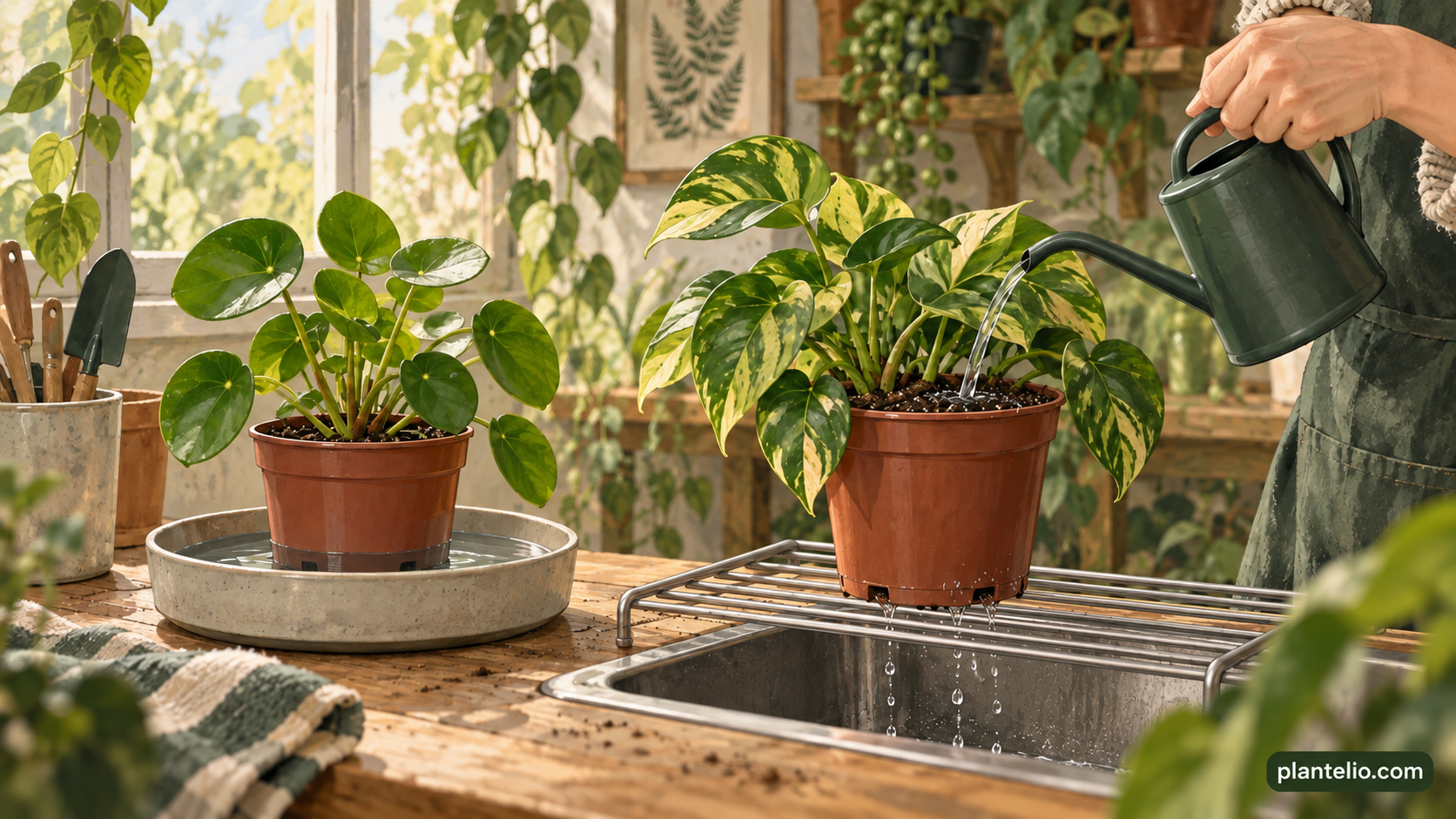
With top watering, water is applied to the growing medium and allowed to drain through the pot. With bottom watering, the container stands in water and the mix takes it up through the drainage openings. University of Maryland Extension describes both methods and advises removing excess water afterward. A houseplant should not remain standing in the runoff. Source: Watering Indoor Plants
Choose for Access and Handling
- Easy access to the mix: top watering lets you see where you are pouring. Position the spout where it can reach the growing medium.
- A small, removable inner pot: either approach may fit your workspace. Have somewhere ready for the pot to drain.
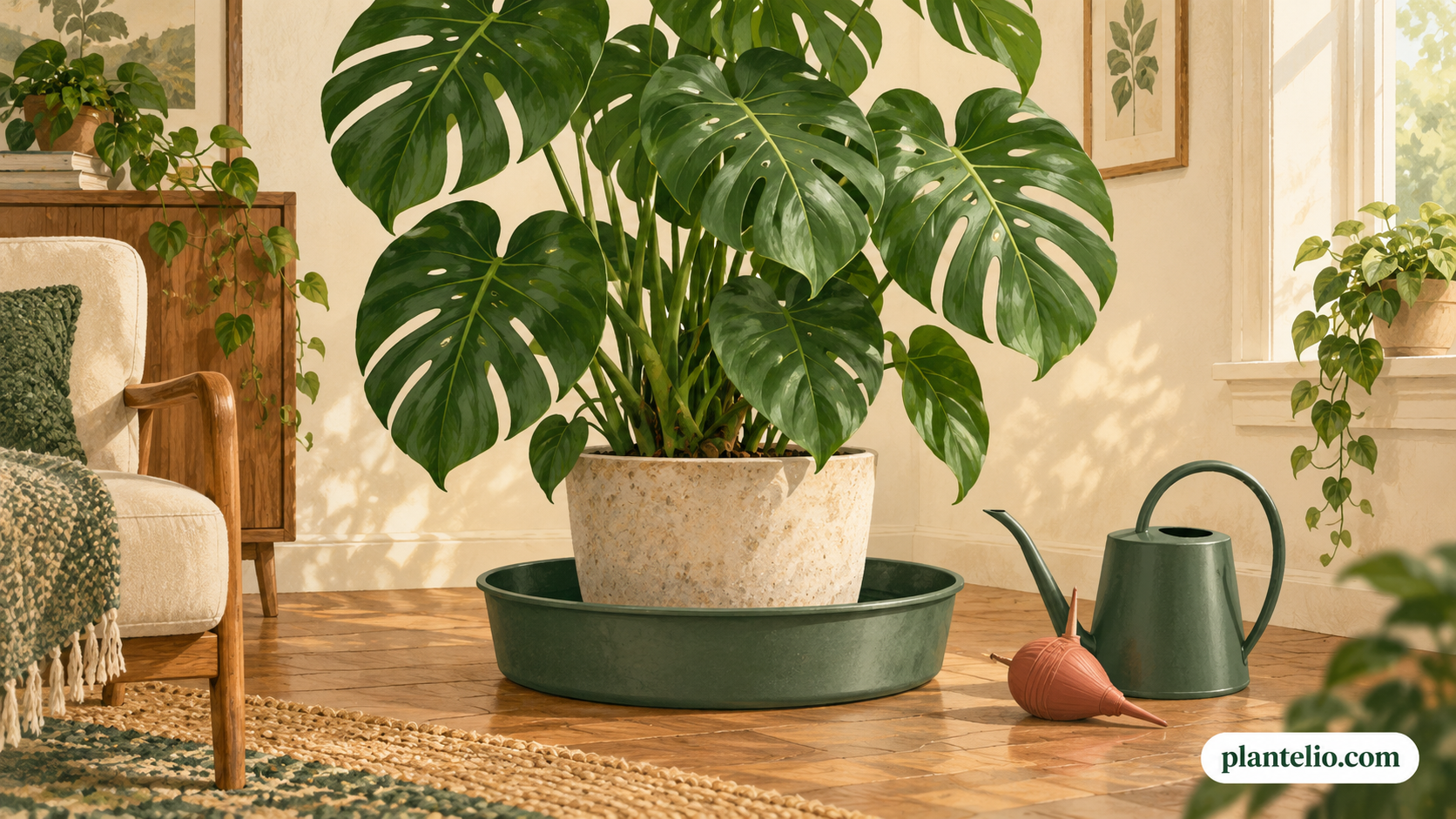
- A heavy container: plan safe access and runoff collection before choosing a method that requires lifting.
Do a dry rehearsal with the empty tray or watering can. Can you reach the pot, see the water level and remove collected water without tipping the plant? This simple check often makes the practical choice clearer than a general claim that one method is always better.
Check the Result, Not Just the Clock
A fixed soak time is not a reliable substitute for inspecting your own setup. After watering and draining, reassess the mix and the weight of a safely liftable pot. If the center still seems dry, investigate rather than repeating the same routine without checking. Our nursery pot and cover pot guide can help you arrange access.
Keep Salt Management in Mind
Water entering from below does not flush accumulated salts out through the bottom. Maryland Extension recommends top watering with clear water for leaching salt buildup, followed by drainage. That is a separate maintenance task, not a reason to water a plant that is already too wet.
Record which method you used and what happened. The useful comparison is whether the root zone became appropriately moist and excess water was removed, not which method wins a universal ranking.


Post Comment