A Repotting Workspace Checklist
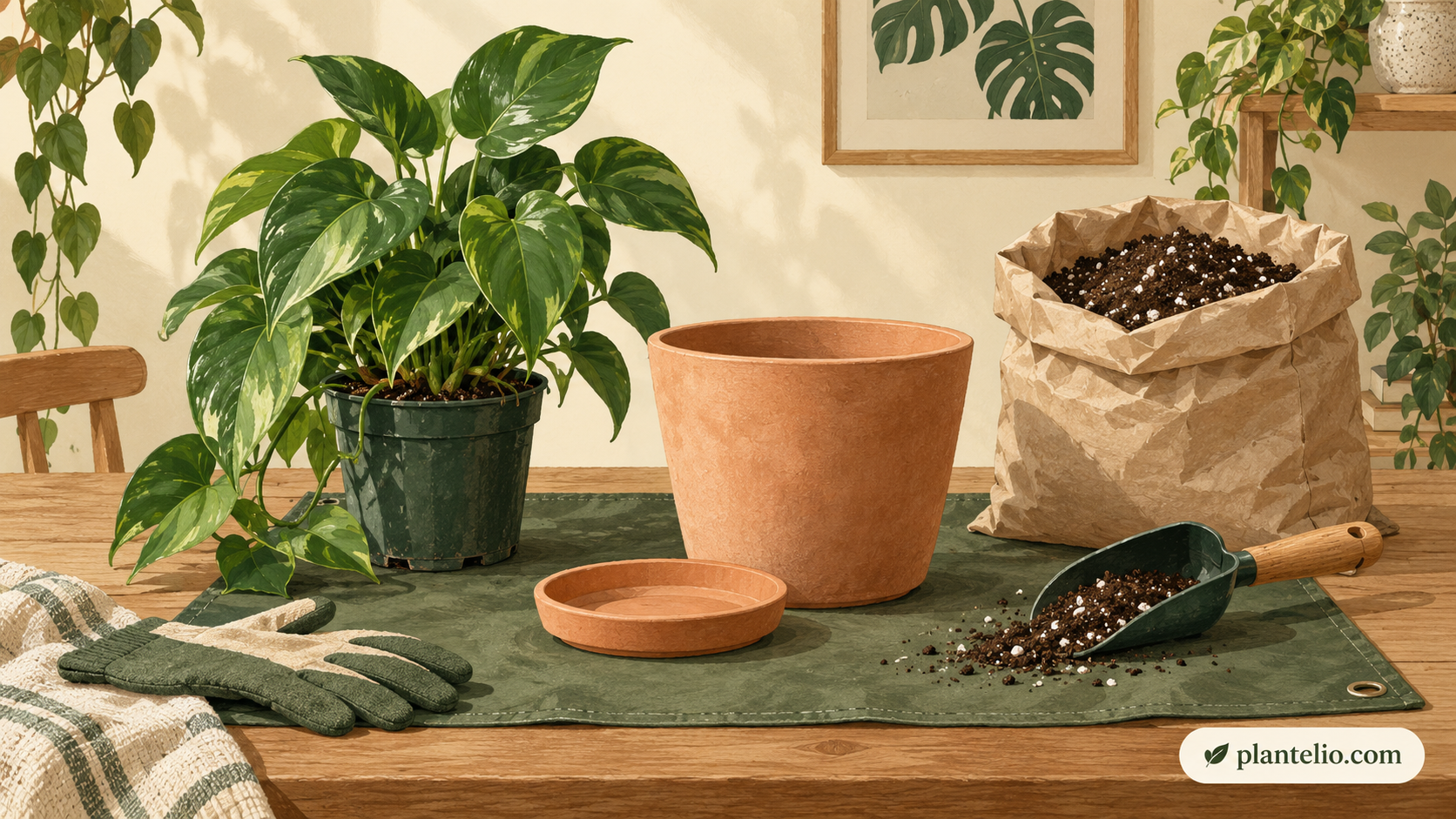
Prepare your repotting workspace before removing the plant from its container. A pot sitting beside a bag of mix can look like enough preparation until you need somewhere to put loose material, a spare container or a place for water to drain.
Confirm the job before laying out supplies
Write down why you are repotting and what you expect to change. If the concern is deteriorating growing medium, first review when old potting mix needs replacing. This checklist organizes an already justified job; it does not mean every newly purchased plant needs immediate repotting.
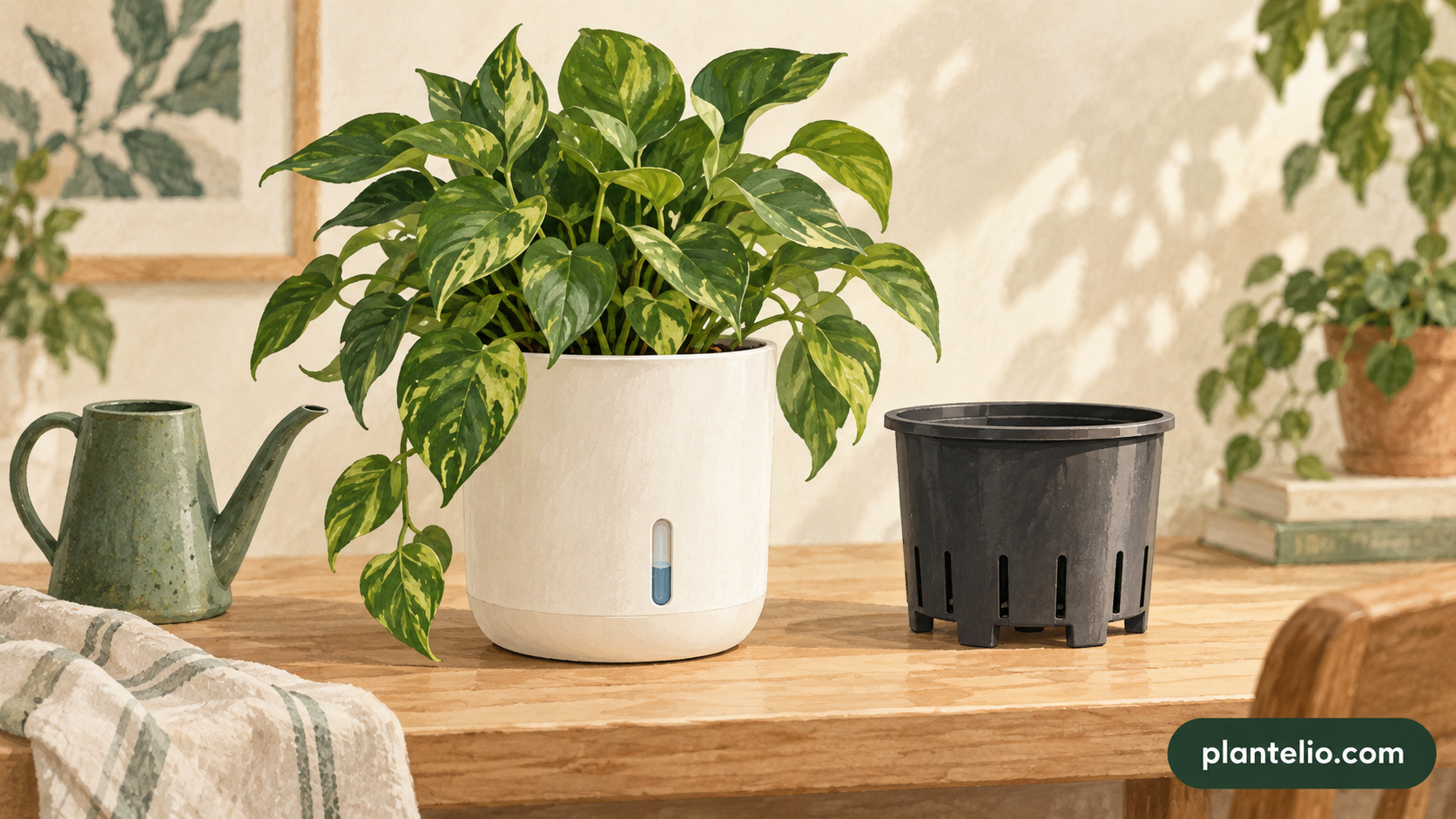
Choose the replacement container before opening the root ball. Compare its usable dimensions with the current pot using our houseplant pot size guide. Set out its matching saucer as well.
Build three simple work areas
- Clean supplies: place the new pot, suitable mix, scoop and plant label within reach.
- Working area: use a stable surface with a washable tray or protective mat to catch loose mix.
- Drainage area: reserve a suitable sink or catch tray for the watering step and keep the route clear.
Keep discarded material in a separate container so it does not get scooped back into fresh supplies. Leave room for the original pot; you may decide to reuse it if the replacement is unsuitable.
Check materials while the plant is still secure
The University of Maryland’s repotting guidance describes a growing medium that balances water retention, drainage and air around roots. Have the appropriate medium ready for your plant rather than substituting garden soil midway through the job.
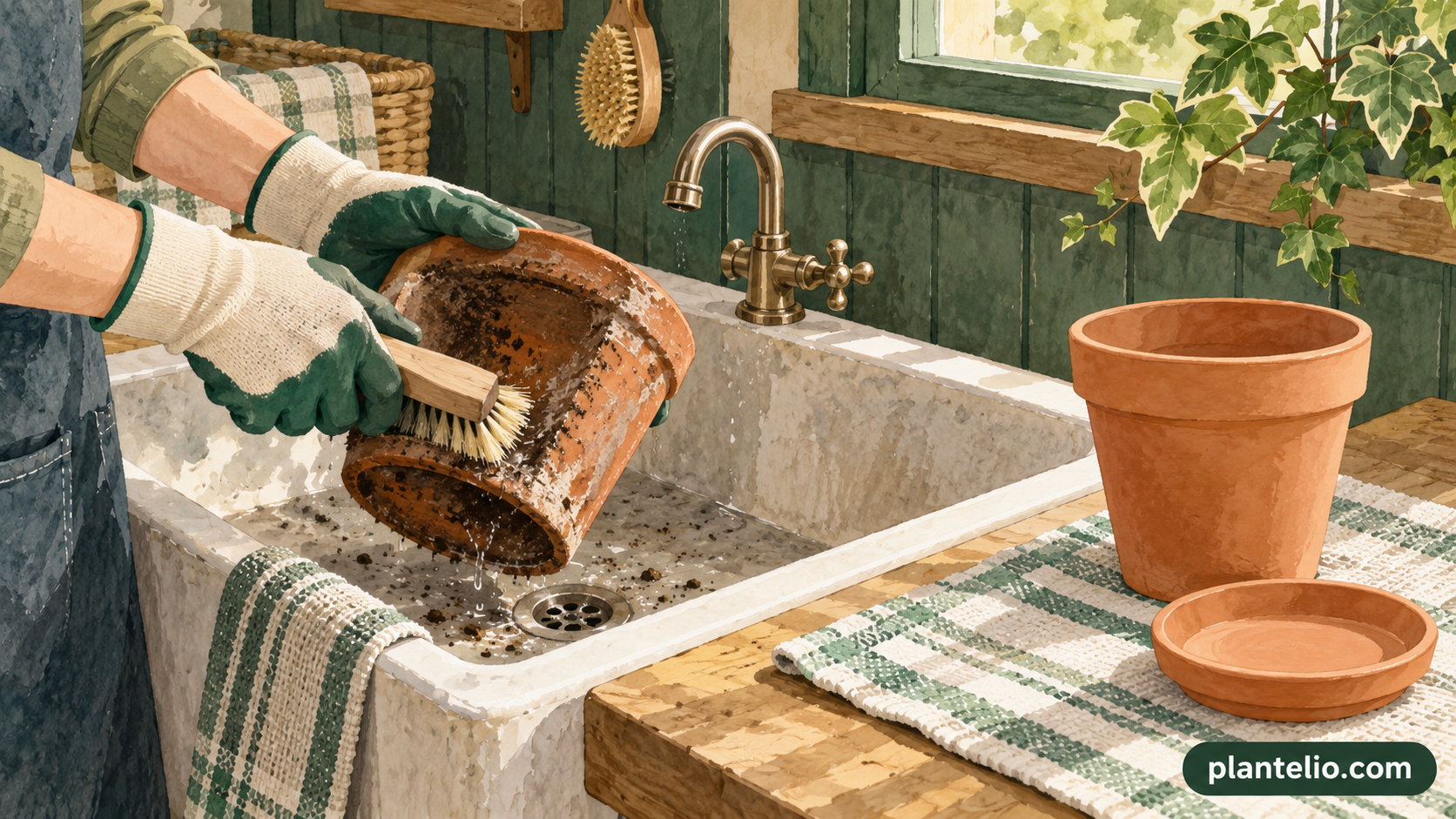
Check that drainage openings are clear. Maryland’s indoor plant guidance also recommends clean or new containers. Do the cleaning before setting up your fresh materials, and follow any cleaning product’s directions.
Make the last checks before unpotting
Can you support the plant safely at this surface? Can you carry or drain the finished pot without an awkward lift? If a large plant needs another person, arrange that help first. Keep tools for optional tasks separate; having scissors on the table is not a reason to cut healthy roots.
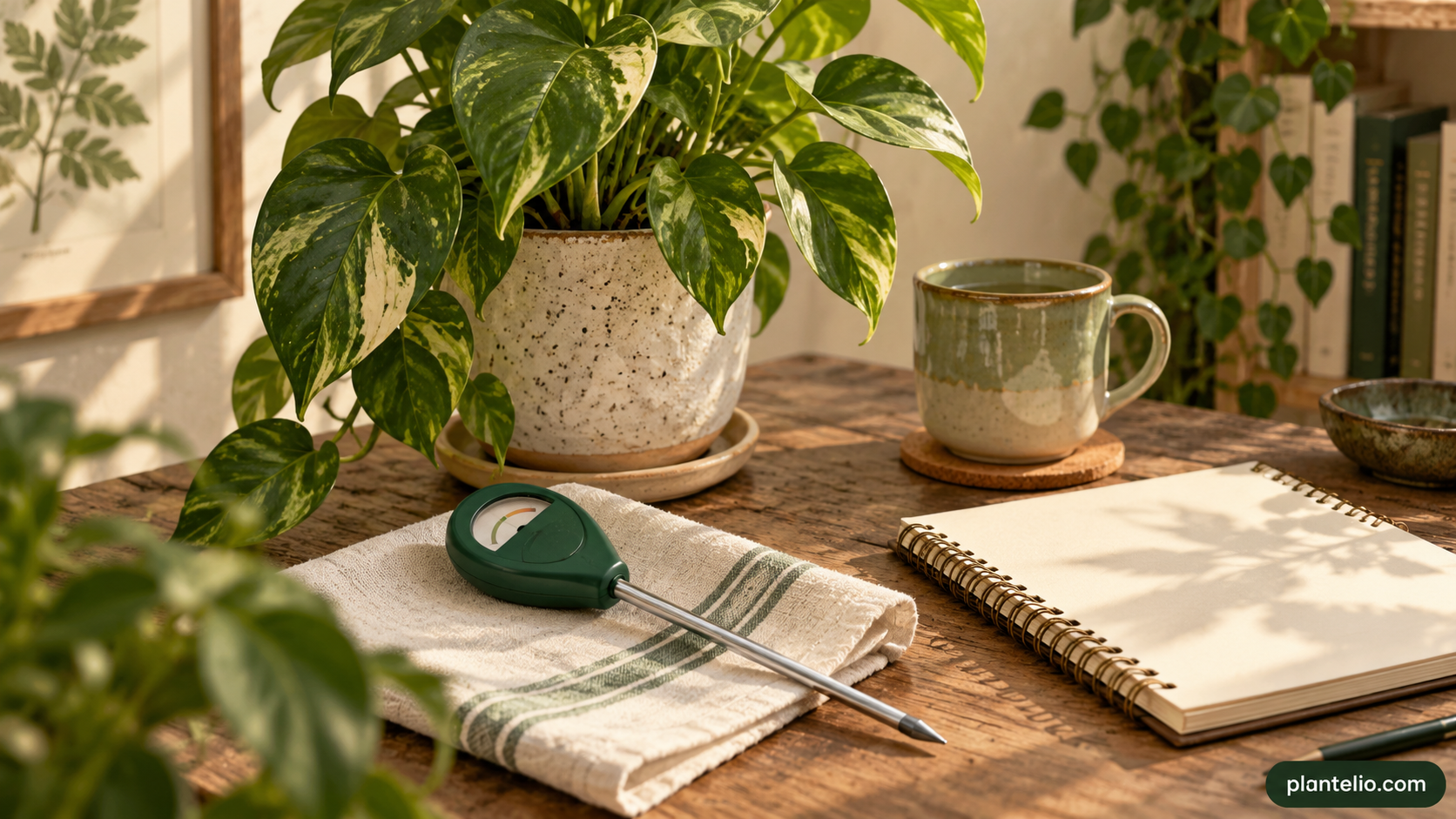
When the job is finished, return the label to the correct pot, record what changed and clean the workspace. An organized setup makes it easier to notice what the plant actually needs while you work.










2 comments