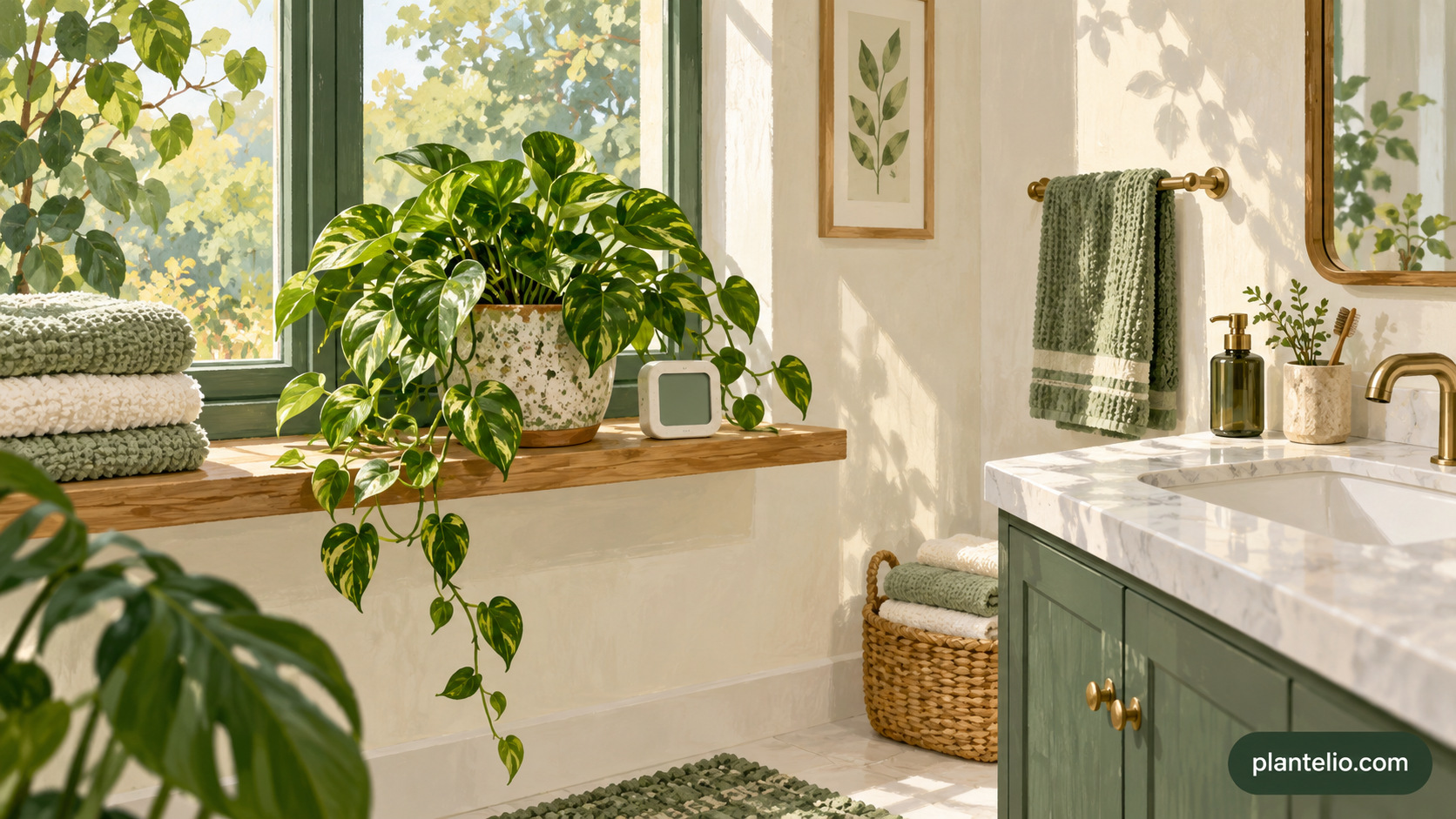
Why a Bathroom Is Not Automatically a Good Plant Room
Bathroom houseplant placement needs more thought than choosing a plant that likes humidity. A room can feel steamy after a shower yet offer too little light at the shelf where you want the pot. Check the proposed position before buying a plant for it.
Assess light before the room’s reputation
The University of Minnesota’s indoor lighting guide recommends matching plants to the quality and duration of available light. Humidity cannot replace the light plants need for photosynthesis.
Stand where the leaves would sit. A window across the room is not the same as a window beside the plant. Note privacy coverings, closed blinds and anything that blocks daylight. Our bright indirect light guide can help you describe what reaches the actual position.
Check conditions between showers
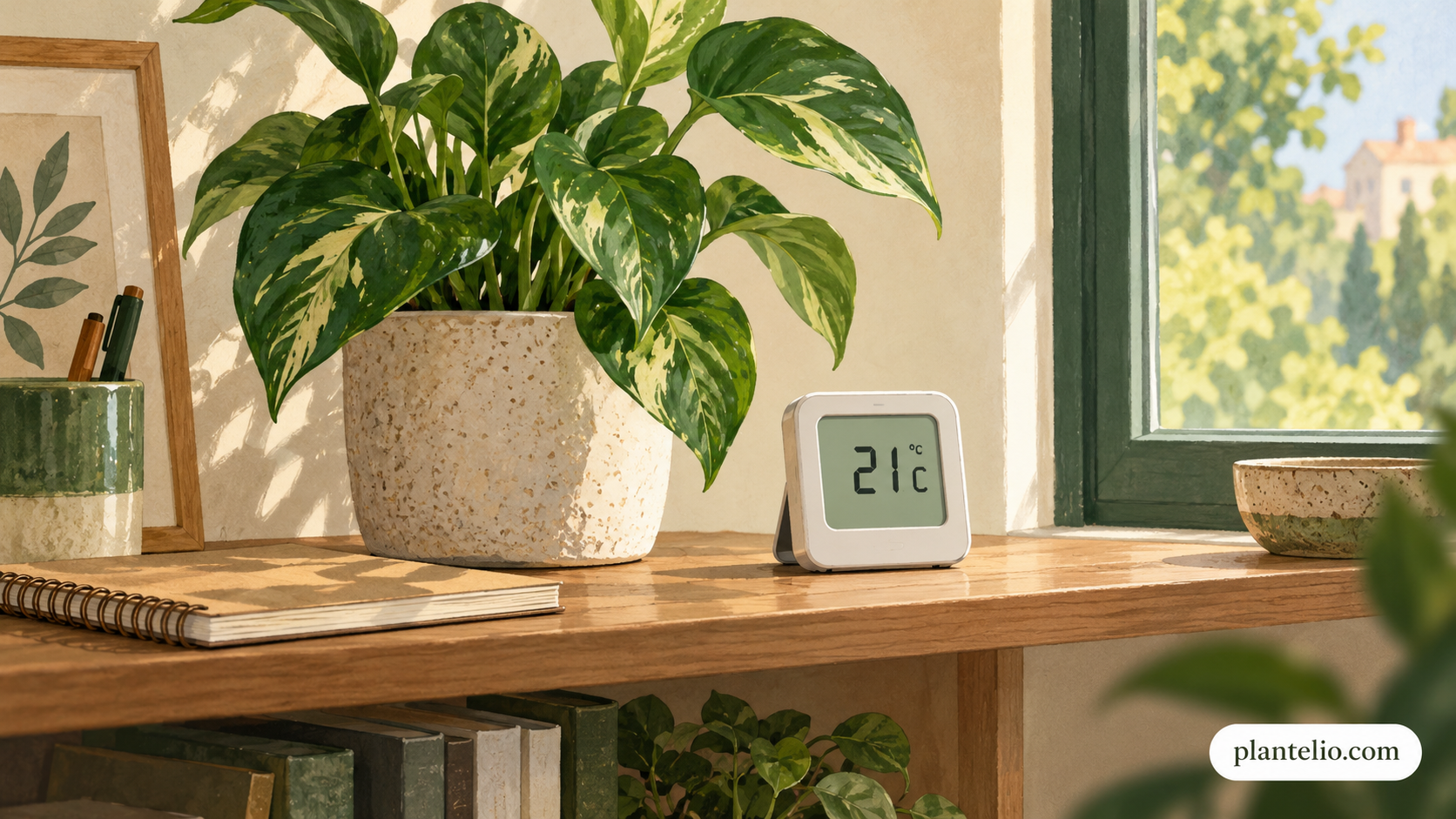
Penn State Extension’s humidity guidance cautions that a bathroom’s usefulness depends on how it is used and that inadequate light can be a drawback. It recommends checking humidity with a hygrometer rather than assuming the room supplies the right conditions.
Use our humidity measurement guide to compare ordinary conditions with readings after use. Avoid choosing a location from the highest reading alone. A rarely used guest bathroom and a busy family bathroom may behave differently.
Try a placement checklist
Once the light and humidity appear suitable for the species, check the practical details:
- Can you reach the pot to inspect leaves and growing medium?
- Is the surface stable, with room for the plant’s future size?
- Can excess watering water be removed without leaving the shelf wet?
- Will towels, doors or people repeatedly knock the foliage?
- Can the plant stay clear of cleaning sprays and routine splashes?
These are everyday placement checks, not a claim that one bathroom layout suits every plant. If the site fails the light assessment, choose a different location or assess appropriate supplemental lighting for that environment. Do not treat occasional use of the ceiling light as evidence that a dark room provides sufficient growing light.
Keep the first decision simple: select a plant for the conditions you have verified, rather than expecting the room’s name to provide its care.










Post Comment