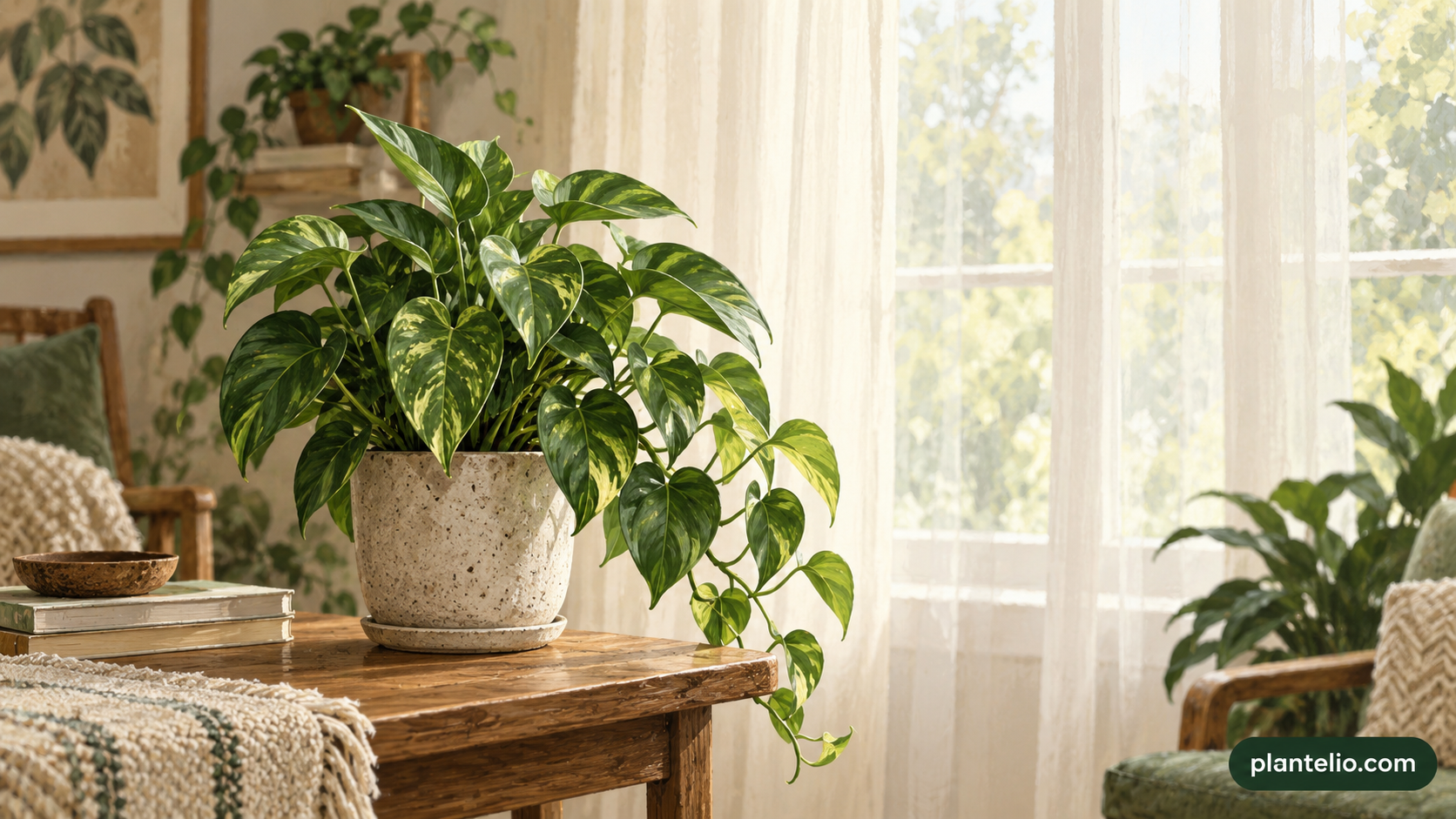
What Bright Indirect Light Looks Like at Home
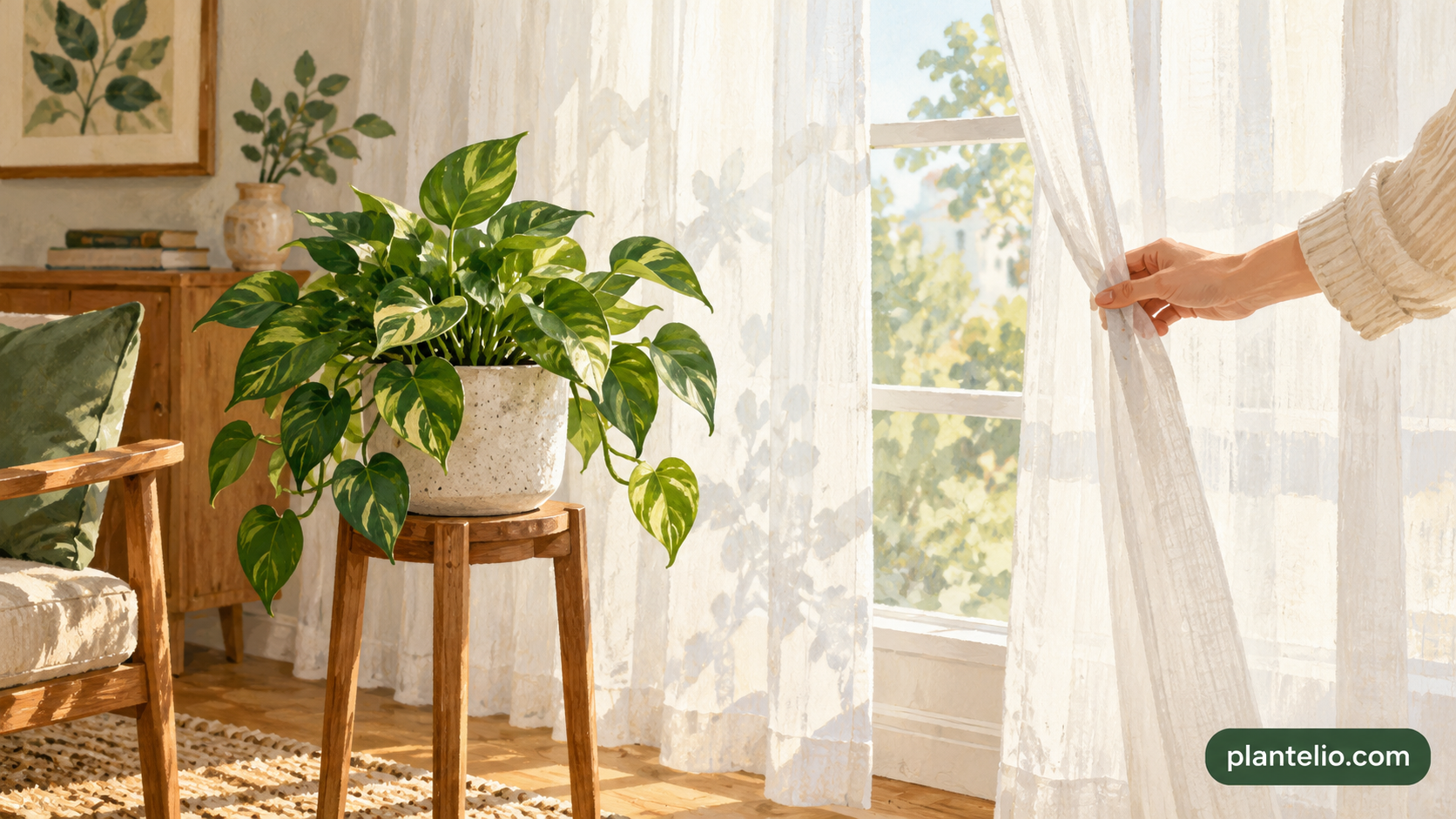
Bright indirect light describes a well-lit position where leaves are not receiving direct sun at that moment. The phrase is a starting point, not proof that every plant will thrive there.
Check the position, not just the room
Observe where the leaves will sit. A spot outside a sunbeam in the morning may receive direct sun later. The University of Minnesota lighting guide recommends assessing available light and its duration before matching a plant to a location. Its examples show that even a south-facing window can be shaded by an overhang.
Keep an observation record
Name the position clearly: the left end of a shelf, for example. Check it in the morning, near midday and later in the afternoon. Record weather, curtain position and direct sun. Repeat on another day so one photograph does not become the entire basis for your decision.
Use a plant care log to keep those observations beside the plant name. This is a practical record, not a calibrated measurement.
Match the plant to the evidence
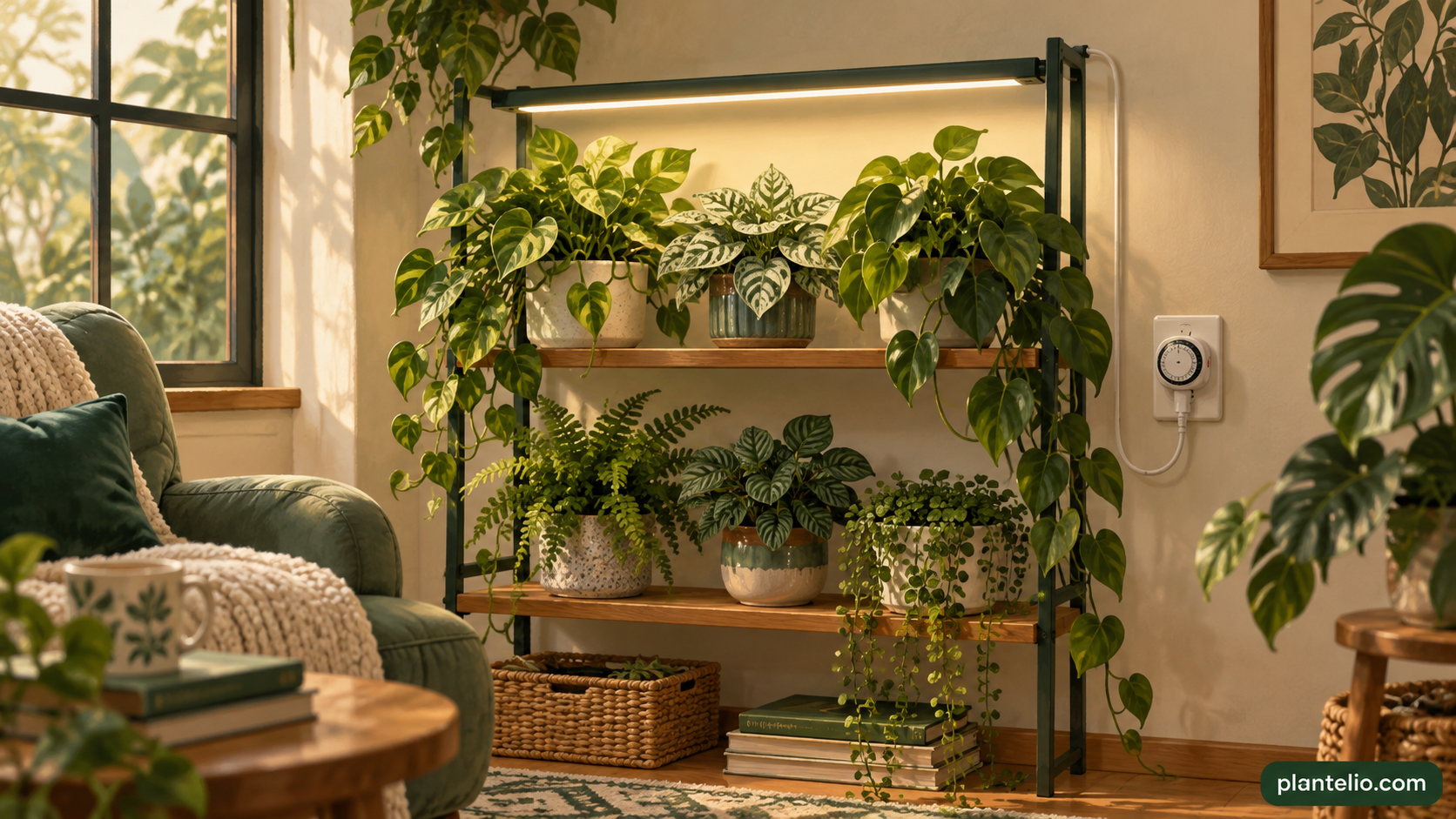
Look up the actual species requirements. Minnesota distinguishes low-, medium- and high-light plants; the same shelf will not suit every group. Compare your observations with species guidance before choosing the final position.
Continue routine checks, including soil moisture. Keep an observation separate from a diagnosis: one changed leaf does not establish that the light is wrong.






80 comments