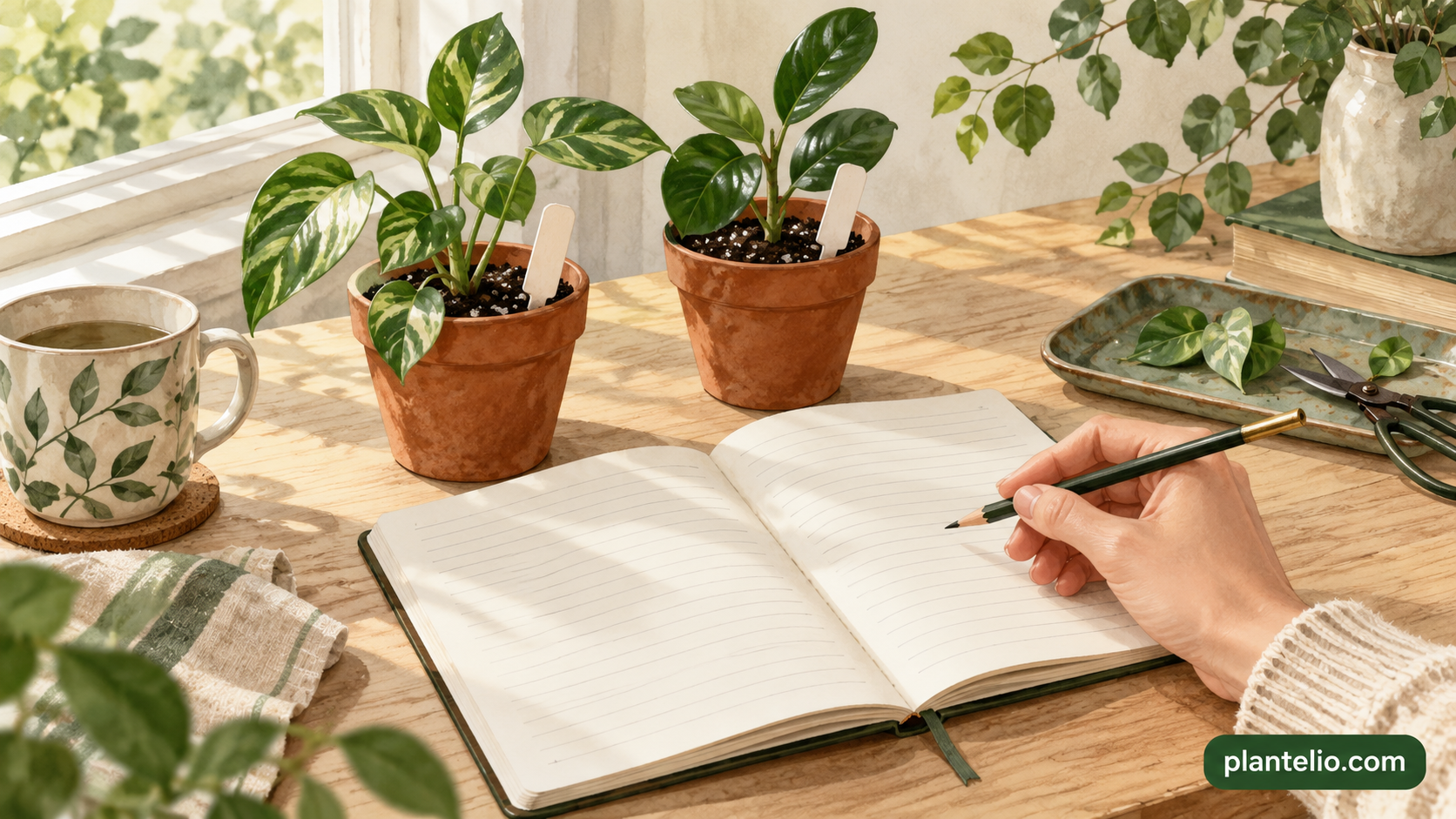
How to Keep a Houseplant Propagation Log
A houseplant propagation log helps you keep track of what you started and what happened next. It is especially useful when several similar pots share one tray. You do not need a complicated spreadsheet: a label on each container and one page of notes can be enough.
Give each batch a clear identity
Illinois Extension’s propagation article recommends labeling pots and trays when working with different varieties. Build on that simple habit by using the same short identifier on the pot, in your notes and in photo filenames.
For example, “Pothos A” could identify one batch from a known parent. That is an example label, not a botanical identification. Record the plant’s actual name as accurately as you can, and mark uncertainty instead of guessing a cultivar.
Record the starting setup once
Copy these fields into a notebook or your existing plant care log:
- Batch identifier and parent plant identity.
- Date started and number of cuttings.
- Propagation method and plant part used.
- Rooting medium, container and location.
- Any product used, with its name and label instructions retained.
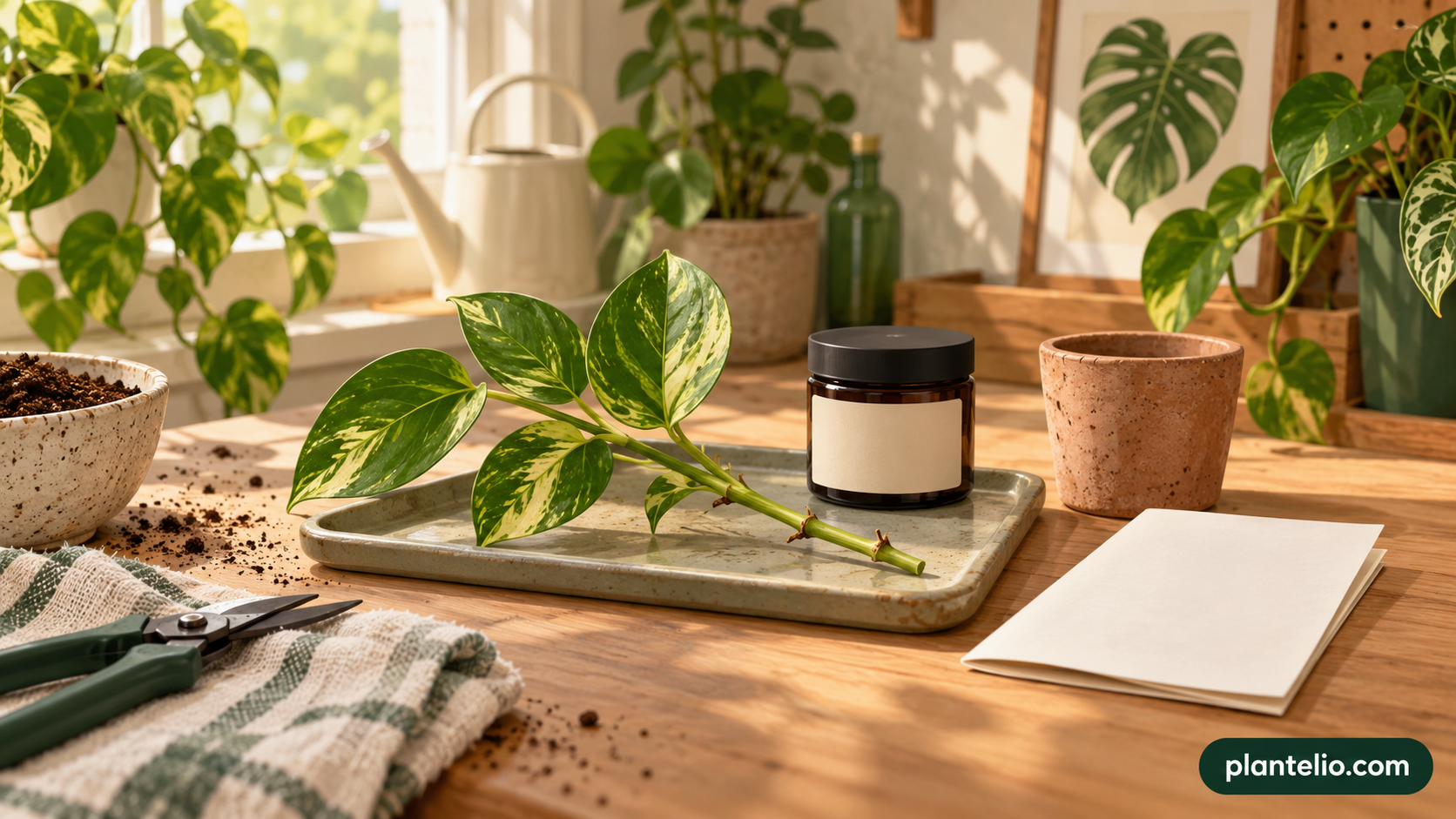
- A starting photo that shows the label and setup.
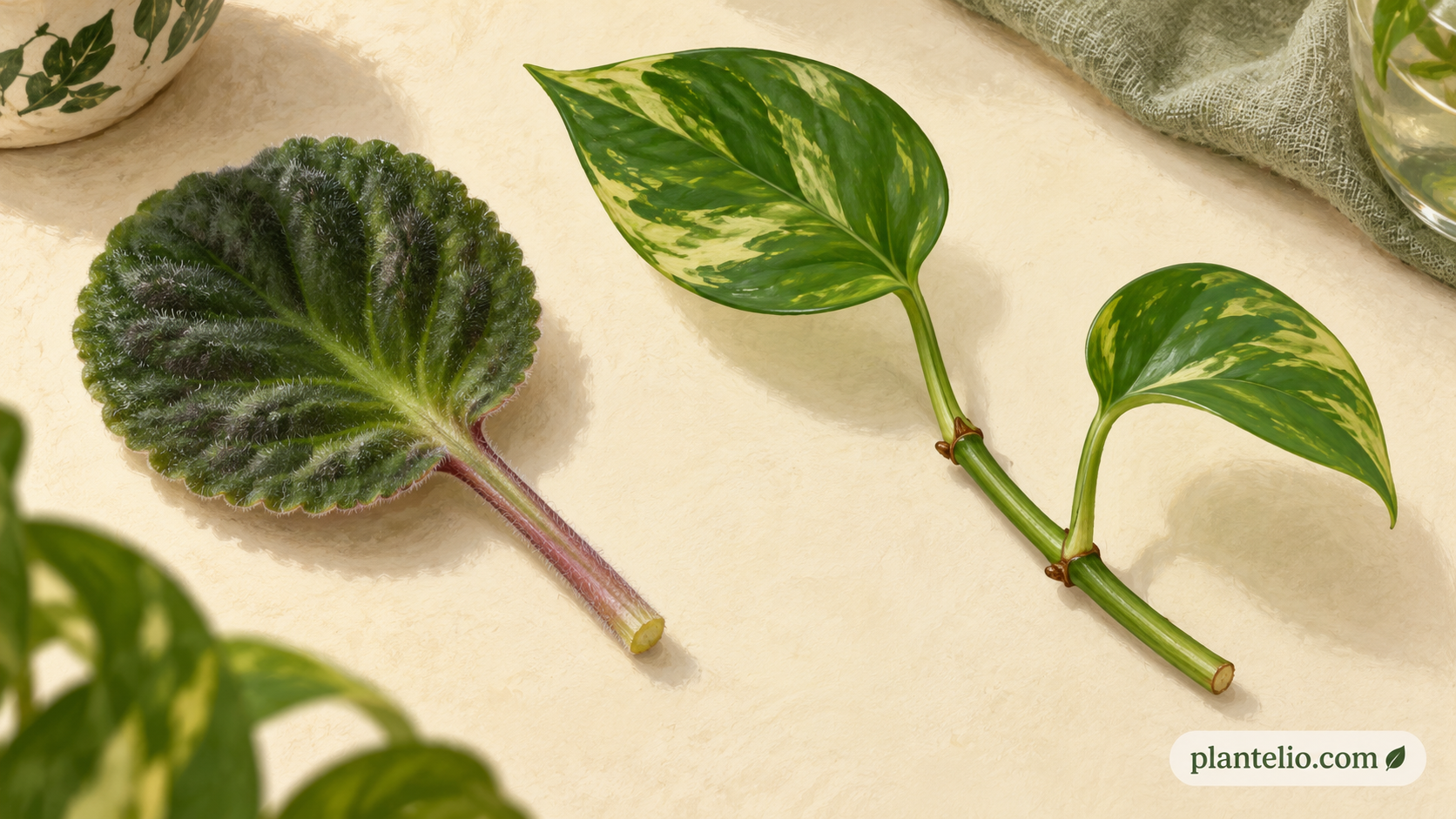
If you are unsure about the method, review leaf cuttings versus stem cuttings before filling the tray. A detailed record cannot make an unsuitable plant part produce a complete new plant.
Separate observations from decisions
Use three short columns in later entries: date, observation and action. “One cutting has a soft brown base” is an observation; “removed that cutting” records an action. Avoid writing “all failed” when you have only noticed a change in one specimen.
Illinois Extension’s winter propagation guidance notes that rooting time varies greatly between plants and that new roots are fragile. Do not repeatedly pull cuttings out merely to complete a diary entry. Record what you can observe during appropriate care and inspection.
Close the record with an outcome: how many were potted on, when that happened and what you would change next time. Compare batches cautiously if their plants, seasons or conditions differed. The purpose is a useful history, not a promise that every cutting should root by the same day.










Post Comment