How to Clean Used Plant Pots Before Reusing Them
Clean used plant pots before they join your fresh repotting supplies. An empty container can look tidy from a distance while holding old mix under the rim or around the drainage openings. This guide covers empty pots and saucers; do not carry out a cleaning or disinfecting treatment around a living plant’s roots.
Sort the containers before starting
Set aside the pots you actually intend to reuse and match them with their saucers. Inspect each one for cracks, unstable bases or damage that makes it unsuitable for the next job. There is little value in preparing a container you cannot use safely.
Reserve separate places for unwashed and finished pots. Our repotting workspace checklist helps you arrange the clean supplies, working surface and drainage area before unpotting a plant.
Remove debris, then wash
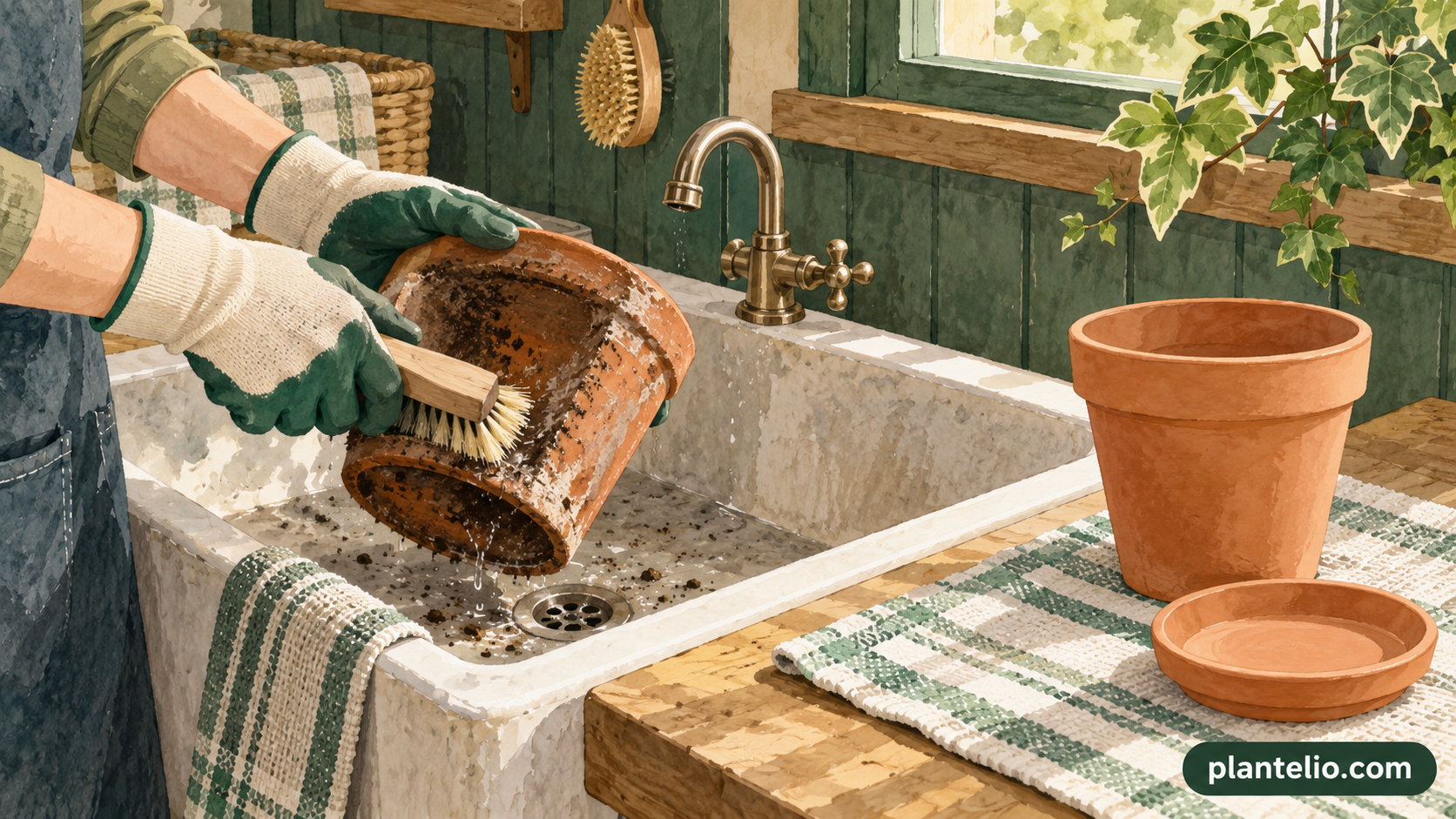
The University of Minnesota explains that contaminated containers can carry plant disease organisms and that debris can interfere with disinfectants. Its container-cleaning guidance recommends removing soil and plant material and washing the entire container, inside and outside. Use soap or detergent and a brush where needed, including rough surfaces and recesses.
Work around the rim, base and drainage openings rather than checking only the broad side walls. Keep loose waste out of your bag of fresh growing medium. The illustration shows this washing stage, not proof that a pot has been disinfected.
Treat disinfection as a separate step
Washing and disinfection are different jobs. When disinfecting, choose a product appropriate for the container material and intended use, and follow its label for dilution, contact time, protective equipment, rinsing and disposal. Do not mix cleaning chemicals. A quick splash is not a substitute for the specified process.
Do not copy a recipe from one product to another or assume a treatment suitable for plastic is suitable for every finish. If the instructions are unclear, resolve that before using the product. Keep the product label available throughout the job.
Keep finished pots ready for reuse
Once the required process and drying are complete, move the pot to your clean area with its saucer. A simple note can distinguish “washed” from “disinfected according to label,” so you do not have to reconstruct what happened later.
Prepare cutting equipment separately using our guide to cleaning houseplant pruning tools between jobs. A container checklist and a tool checklist serve different purposes; finishing one does not mean the other has been done.










Post Comment