Choosing a Watering Can for Indoor Plants
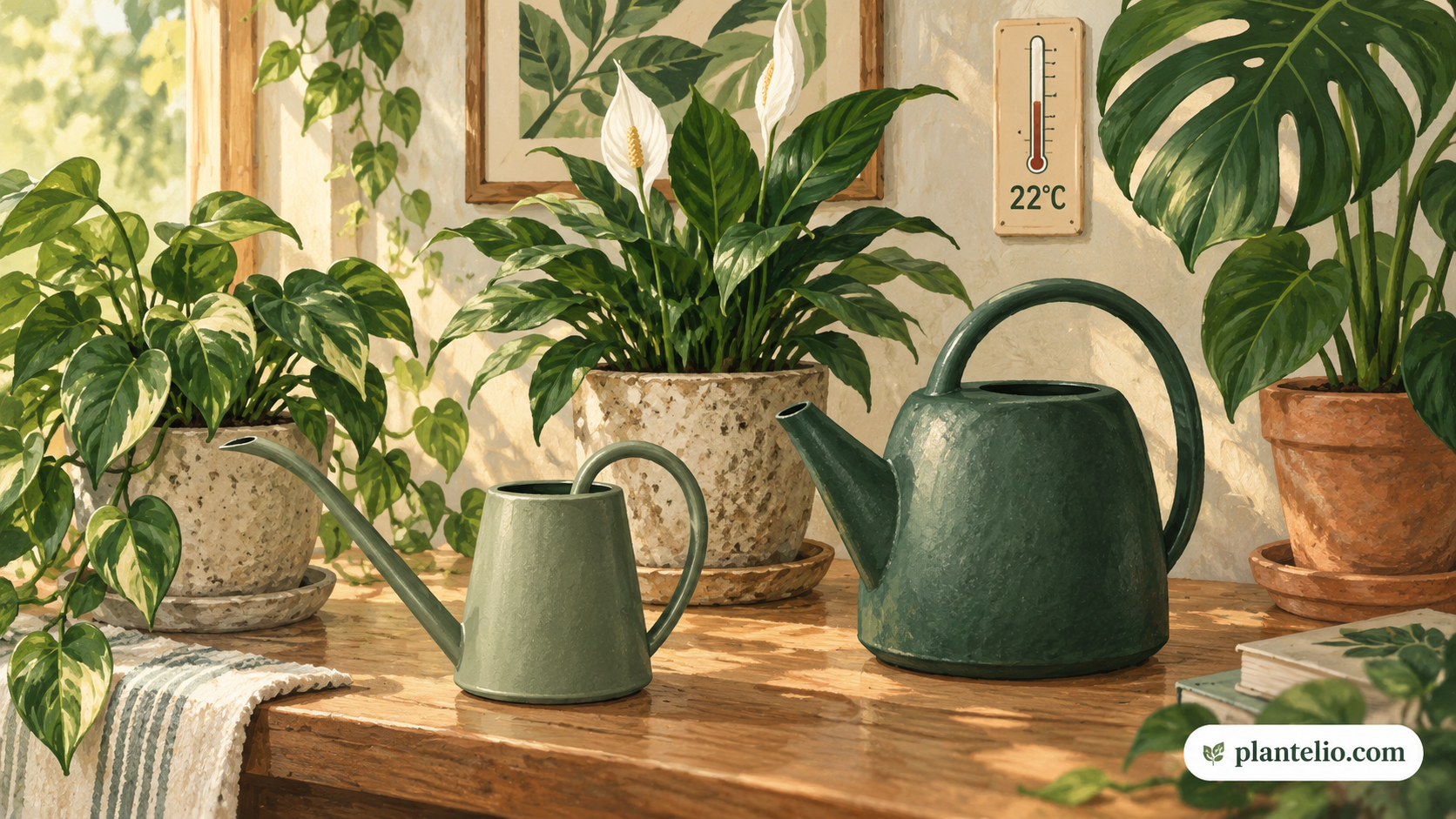
A useful indoor watering can is one you can carry, aim and stop comfortably. Capacity and appearance matter less if the spout cannot reach the potting mix or the handle becomes awkward once the can is filled.
Start with your hardest-to-reach pot
Look at the space between the pot rim and the foliage. A narrow spout can be convenient in a crowded arrangement, but check its length and angle against the actual space. Think about whether you can see the mix while pouring without pushing leaves aside with the can.
For high shelves, the important question is whether you can work safely and inspect the pot. A longer spout does not solve an unstable reach or make hidden runoff visible.
Consider filled weight, not just capacity
Choose a volume you can manage along the route from the tap to the plants. A smaller fill may mean another trip, but it may be easier to control. You do not have to fill a large can to the brim for every job.
If you already have a suitable jug or can, try it before buying another. Where testing a new can is possible, check whether the handle feels secure and whether water drips after you return it upright.
Check how the flow starts and stops
- Can you pour gently without a sudden gush?
- Can you stop promptly when water approaches the tray’s limit?
- Can the spout reach the growing medium without striking stems?
- Can you clean and inspect the opening and interior?
These are practical selection checks, not a ranking of brands or materials. Keep the watering tool for plant care and follow its cleaning instructions.
Pair the can with a drainage plan
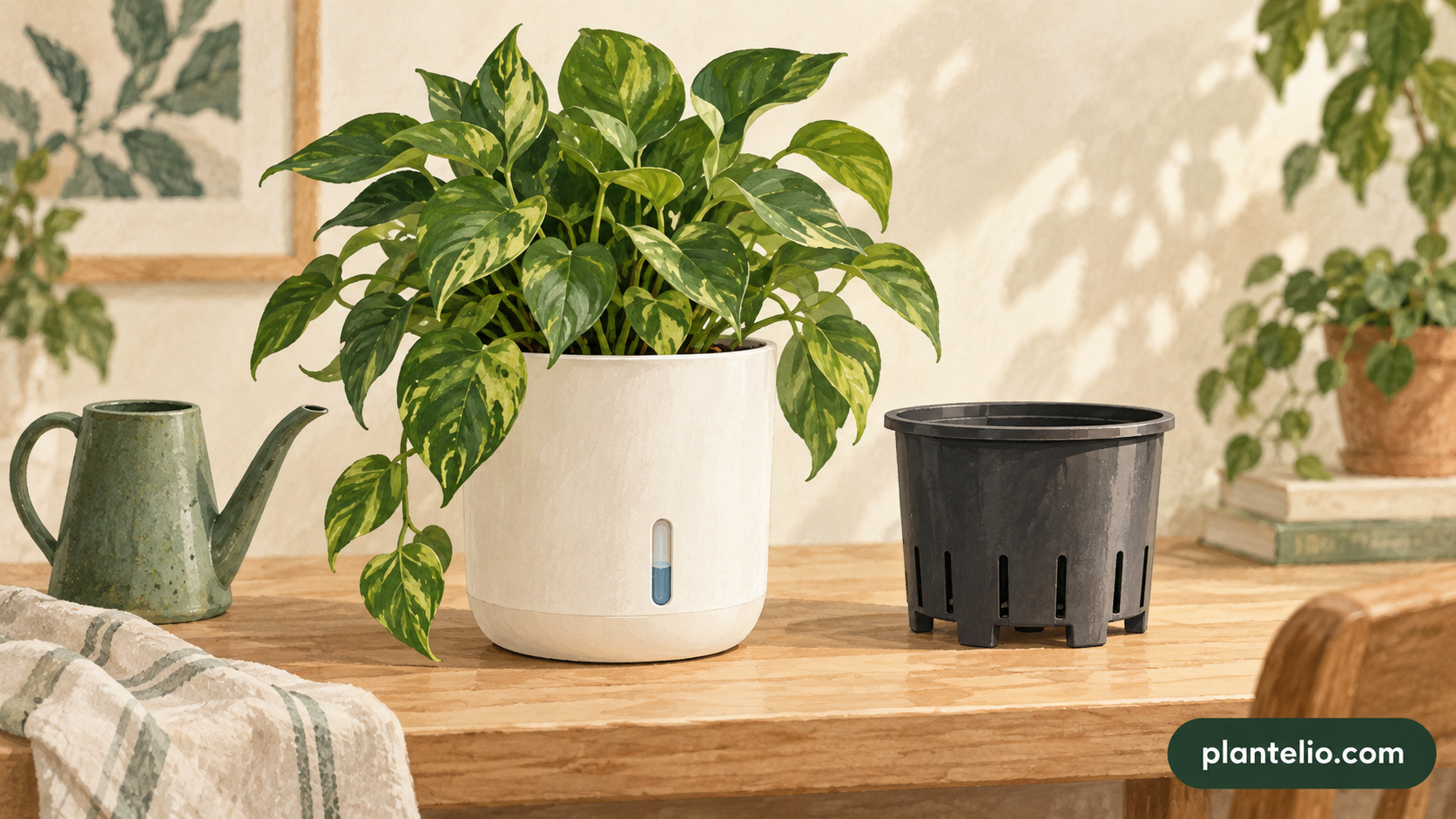
The University of Maryland’s watering guidance recommends allowing water to drain through the pot and removing excess from the saucer. A precise spout helps you control delivery; it does not replace drainage or runoff removal. For heavy containers, use our guide to watering a large plant in place to plan access.
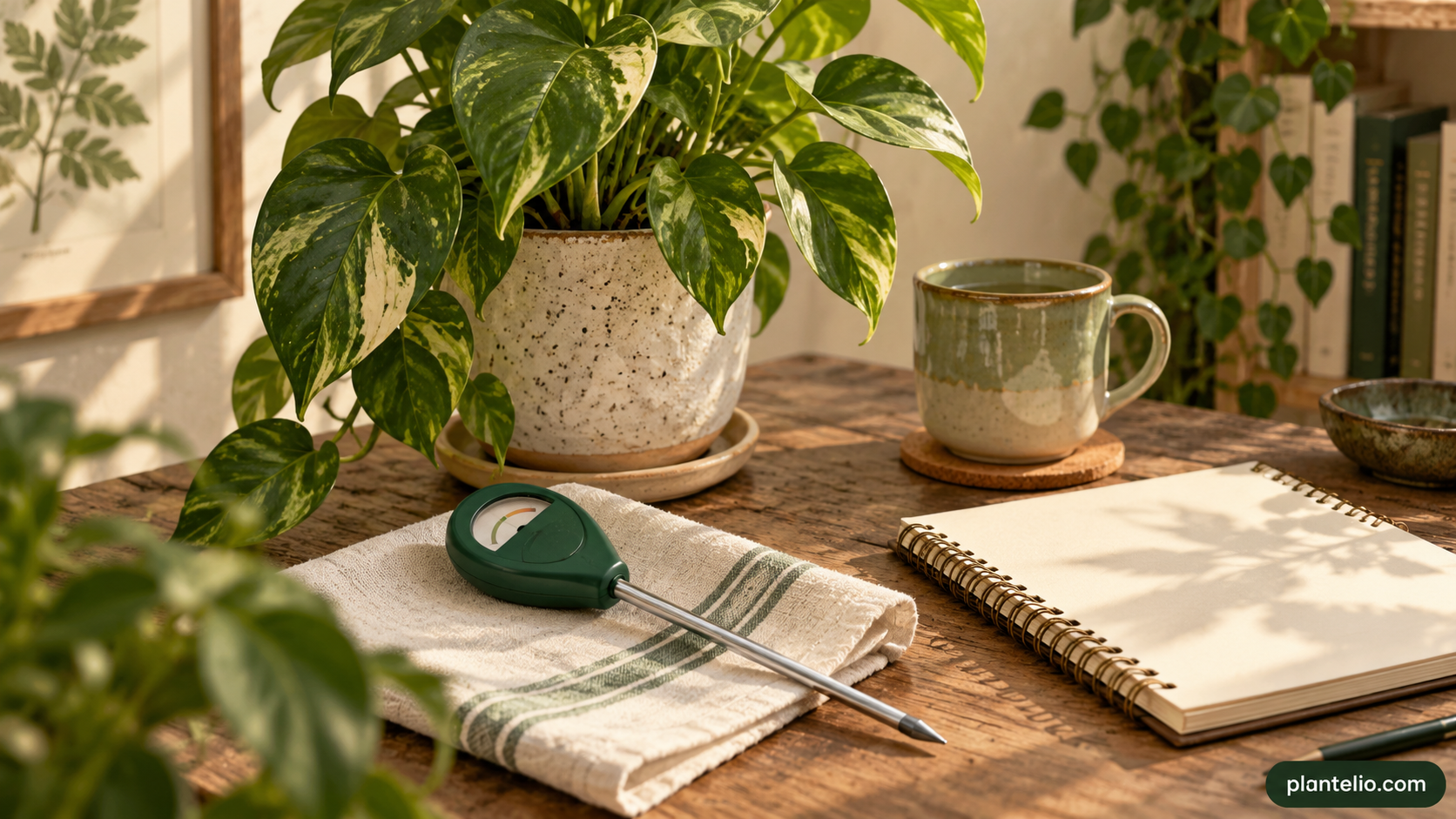
Finally, check moisture before watering. The amount left in the can is not a reason to water another plant. Select the tool around a sound routine rather than allowing its size to determine how much every pot receives.

Post Comment