Houseplants Near Radiators: Choosing a Better Position
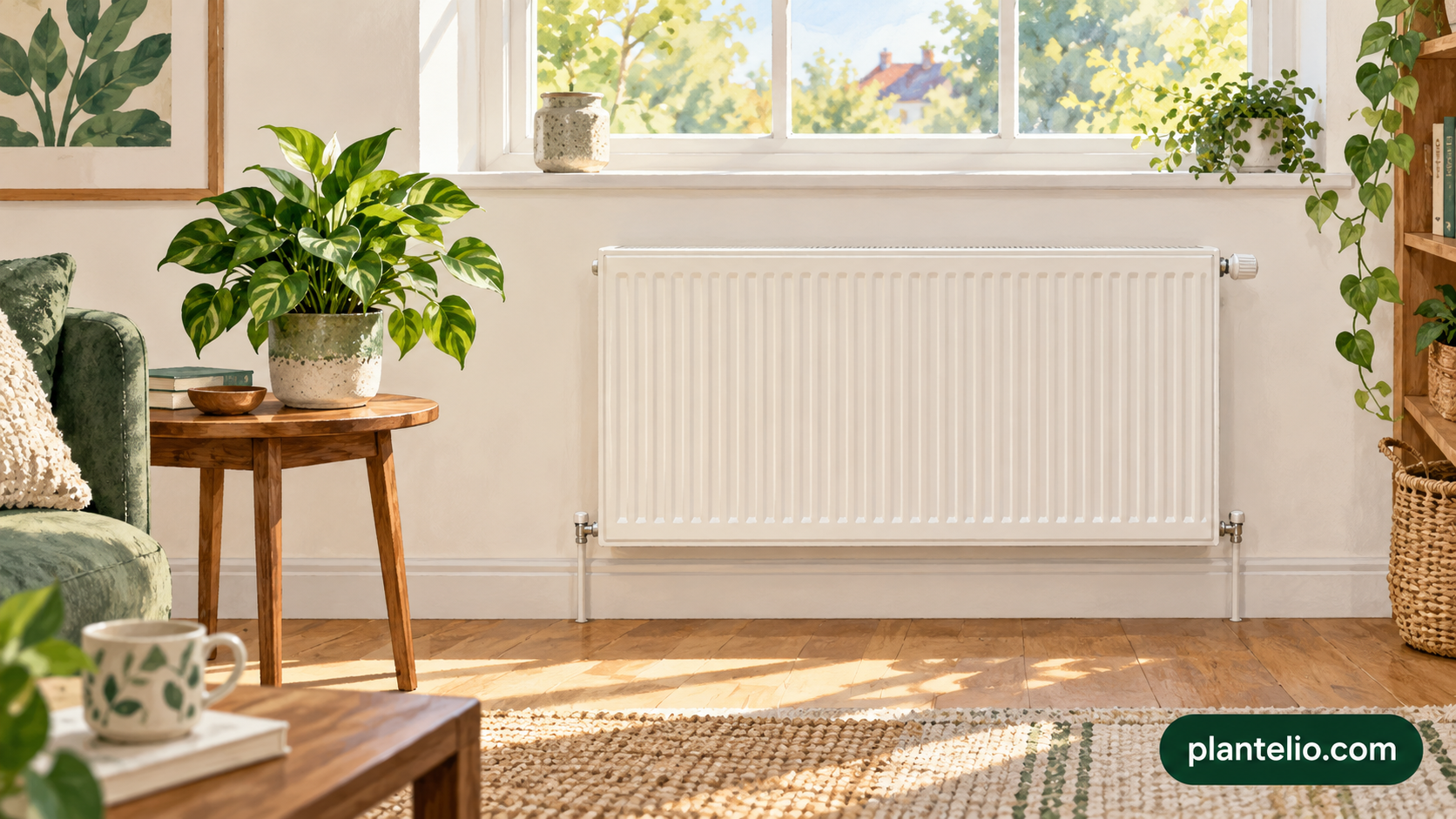
A window with a radiator underneath can create an awkward choice: a plant needs light, but the warmest part of the room may be directly below it. Start by finding a position outside the immediate heat source, then check whether that position still supplies suitable light. Do not assume a plant is comfortable simply because the room thermostat looks reasonable.
Move away from direct heat
In a response about houseplants and radiators, Ask Extension recommends positioning plants to the side and away from the radiator. Its suggested distance of roughly two to three feet is a starting point for that situation, not a guarantee for every appliance or room.
Keep foliage, pots and stands clear of the heater and follow the appliance manufacturer’s clearance requirements. Do not cover a radiator with a tray or improvise a plant shelf on it. Consider the full spread of the foliage, including leaves that lean toward the window.
Recheck light at the alternative spot
Moving sideways may change the light more than you expect. Iowa State’s houseplant-care guide notes that locations beside windows can be much darker than they appear. A gap beside the radiator is only useful if it also meets the plant’s light requirements.
Compare the new position with our guide to recognizing bright indirect light. Look at the actual leaves’ location, not just the brightness of the room. If the options near that window are poor, consider another suitable window instead of squeezing the plant into the remaining space.
Observe while the heating is operating
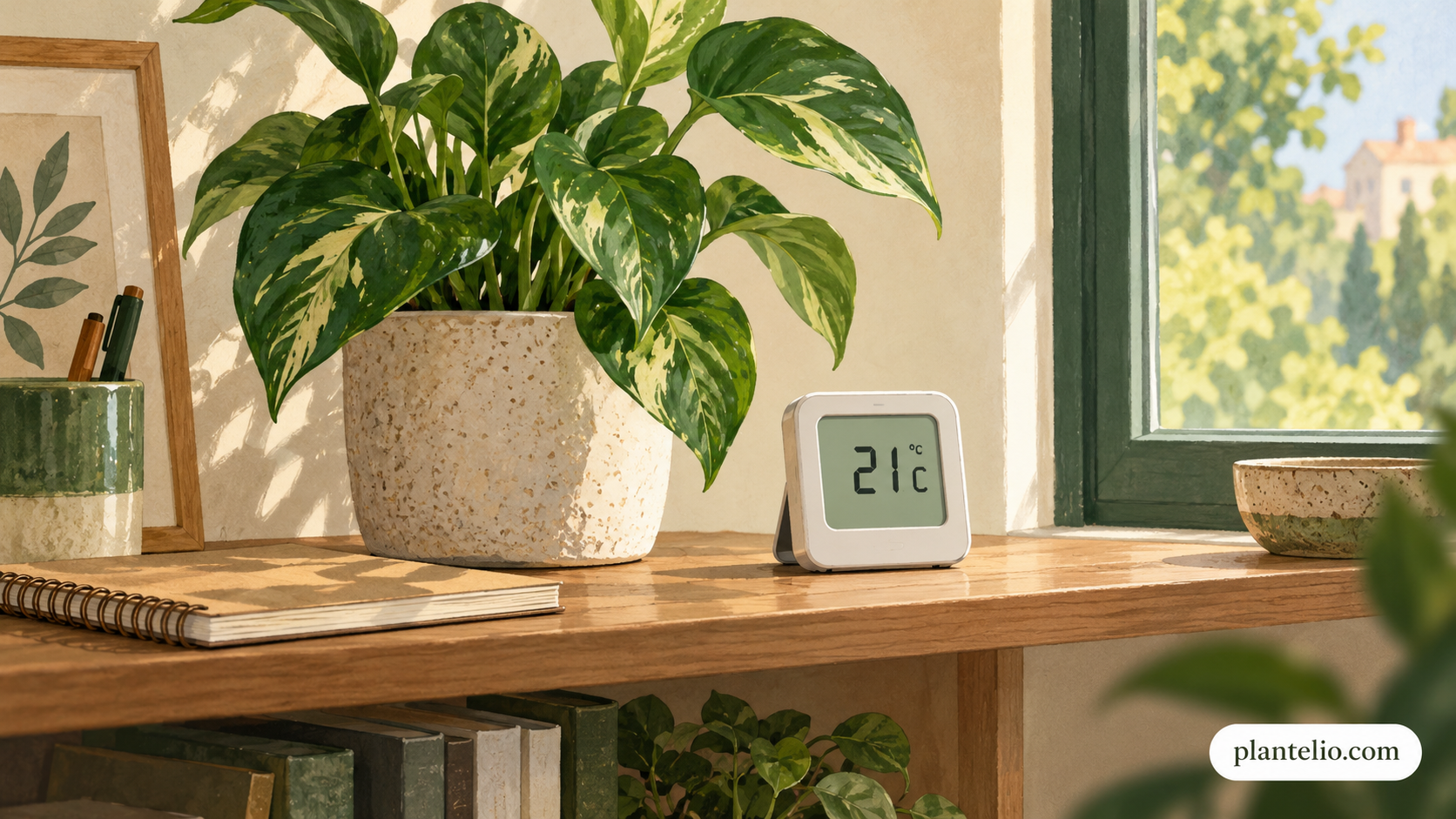
Make a short record of the proposed position during normal heating use. Our temperature-measurement guide explains how to observe air conditions near foliage rather than relying only on a wall thermostat.
- Record the plant’s location and the time.
- Note whether the radiator was operating.
- Record the local temperature using the device’s placement instructions.
- Compare another suitable position in the same way.
Keep watering a separate decision
A location change is a reason to check the pot, not an instruction to add water automatically. Iowa State explains that water needs vary with light, temperature, humidity, the plant and its container. Record your observations after moving it and adjust care to what the individual pot needs.
This position check can help you choose a workable home for the plant. It cannot establish the cause of every brown tip or yellow leaf; those symptoms still need their own assessment.










Post Comment