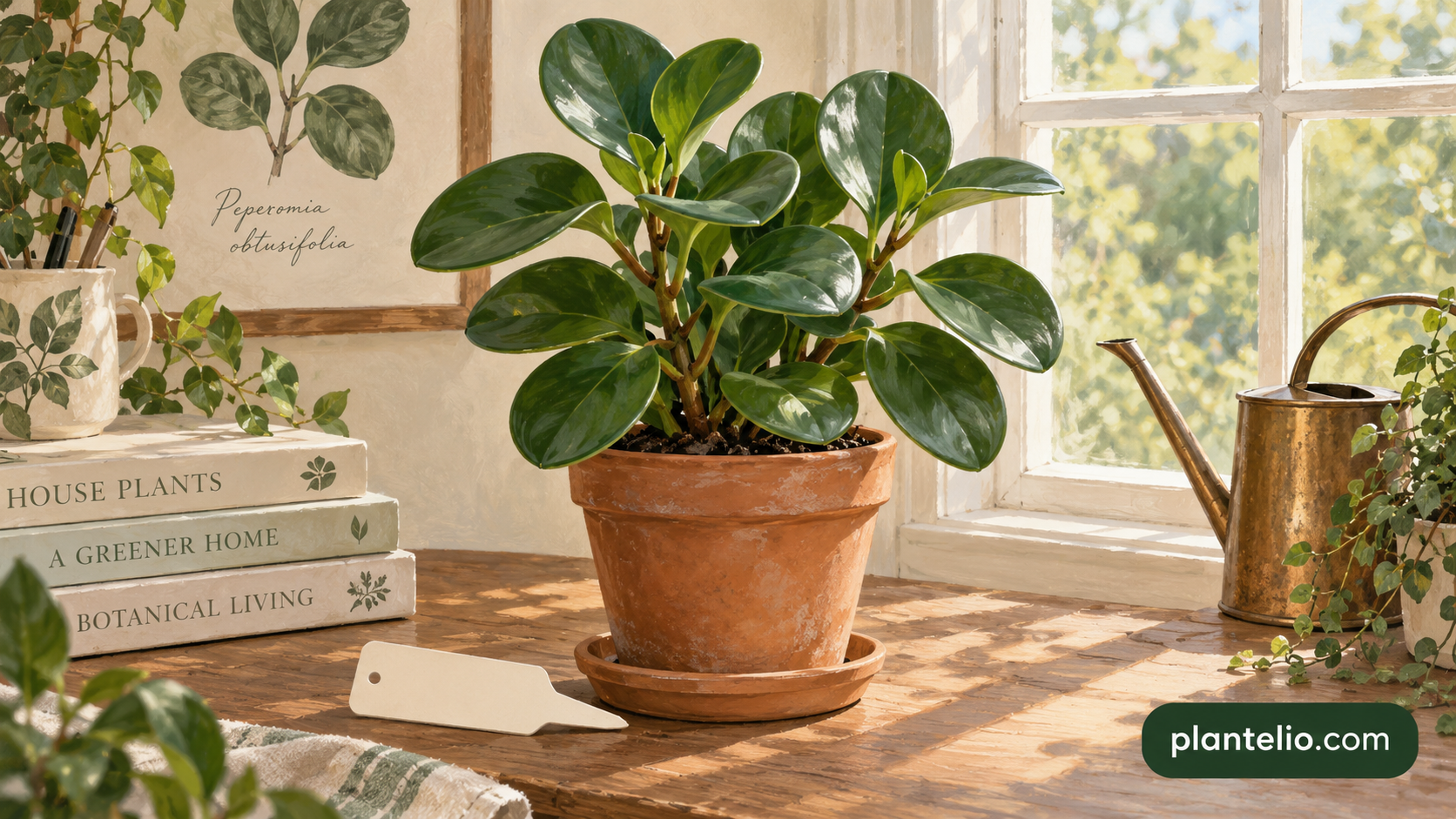
Peperomia Obtusifolia Care: A Practical Indoor Routine
Peperomia obtusifolia care starts with a clear plant identity and a sensible watering routine. Often sold as the baby rubber plant, it has thick, glossy leaves and a compact outline that fits well into a small indoor collection. Keep the botanical name with your records so care information for a different plant sold under a similar common name does not become your default.
Choose a bright, protected position
NC State Extension’s species profile describes glossy, cupped leaves on branching stems and recommends bright indirect light. Strong direct sunlight can burn the foliage, and very drafty sites are unsuitable.
Use our bright indirect light guide to describe the actual position you are considering. Write down which window it faces and whether direct sun reaches the leaves. A label saying “low light” should not replace looking at the plant’s growing conditions.
Check moisture before reaching for water
NC State warns about both wet soil and excessively dry conditions, with overwatering a particular concern. Avoid turning the plant’s fleshy appearance into a rule that it should remain bone-dry for long periods.
The University of Maryland recommends basing watering on need rather than a fixed schedule. It describes checking the growing medium and comparing pot weight as useful observations. For this plant, allow some drying while avoiding either prolonged saturation or extreme dryness; do not borrow a completely dry cactus routine.
Follow our soil-moisture checking guide and compare more than one clue. When you water, allow excess water to drain and remove it from the saucer. Note what you observed before watering, not just the date.
Keep a short baseline record
During your first checks, record:
- The identification label and a whole-plant photograph.
- The location and any direct sunlight you observed.
- The pot’s moisture condition before each watering.
- Any recent move or other change in care.
This is a record of your plant, not a deadline for producing new leaves. A consistent photograph is often more useful than trying to remember whether the plant looked fuller last week.
Investigate changes before adding treatments
NC State lists yellowing and root rot among possible consequences of overwatering and advises monitoring for pests such as mealybugs and spider mites. A yellow leaf alone is not enough to identify the cause.
If something changes, review the recent moisture observations, inspect the plant and identify the problem before choosing a treatment. Keep the first response focused on evidence rather than changing its position, pot and feeding routine all at once.










Post Comment