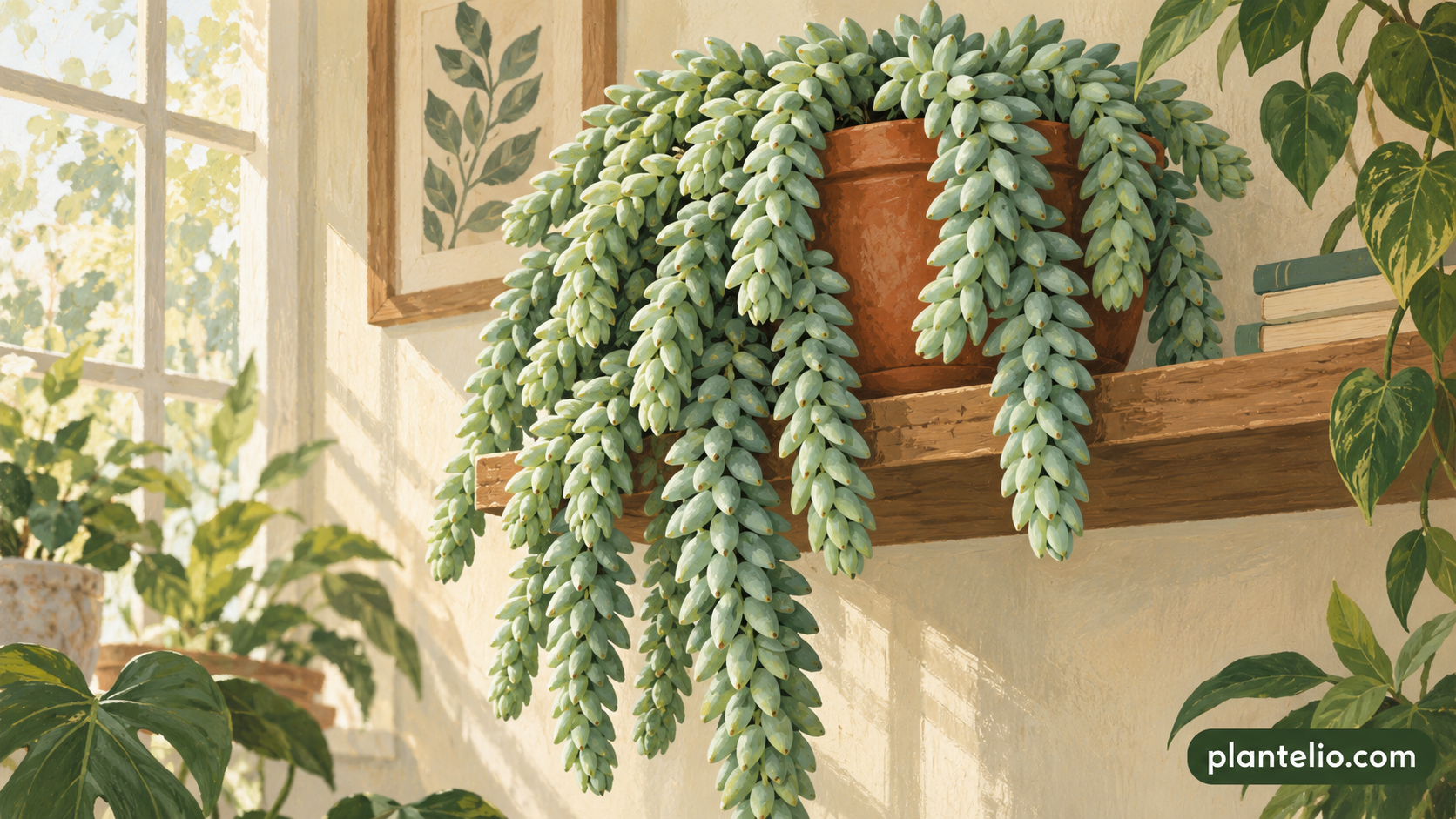
Burro’s Tail Care: Protecting the Leaves on Trailing Stems
Burro’s tail care is partly about where you put the plant. Sedum morganianum carries many fleshy leaves on trailing stems, and an attractive display can quickly lose leaves if it sits where people repeatedly brush past it.
Choose a place that protects the stems
Wisconsin Extension describes brittle stems and leaves that detach easily. The blue-green foliage also has a silvery surface coating that can rub away when handled. Give the tails room to hang without resting against a frequently used door or walkway.
UC Master Gardeners highlights its usefulness as a cascading container plant and warns against bumping the heavy, water-filled trails. Before settling on a position, check how you will reach the pot for normal care.
Imagine the complete watering routine: access to the growing medium, room for your hand and a clear route around the hanging stems. A display that looks good but is awkward to reach will be harder to maintain.
Assess the available light
Wisconsin Extension recommends bright light to full sun, while UC Master Gardeners lists bright indirect exposure. Our indoor light guide can help you describe what your proposed position actually receives.
Wisconsin notes that insufficient light leads to wider gaps between leaves, while overly intense light can bleach their color. Keep a photograph of the stem tips so that changes in spacing are easier to notice.
Check the mix before watering
Wisconsin recommends well-drained growing medium and allowing the soil to nearly dry between waterings. It also identifies root rot from overwatering as a common problem. Use our soil moisture checking methods instead of judging the entire pot from a single fallen leaf.
Both sources caution against excessive water. Record the condition of the mix, especially when the room or season changes. A calendar can remind you to inspect the plant without deciding the watering date for you.
Think before moving a long specimen
Clear the destination before lifting the pot. Look for places where trailing growth could catch, and plan enough space for the whole plant rather than just the container.
If leaves fall after a bump, record that event. Mechanical damage and a change in plant condition are different observations; useful notes help you avoid treating every missing leaf as the same problem.
Sources: Wisconsin Extension; UC Master Gardeners.





Post Comment