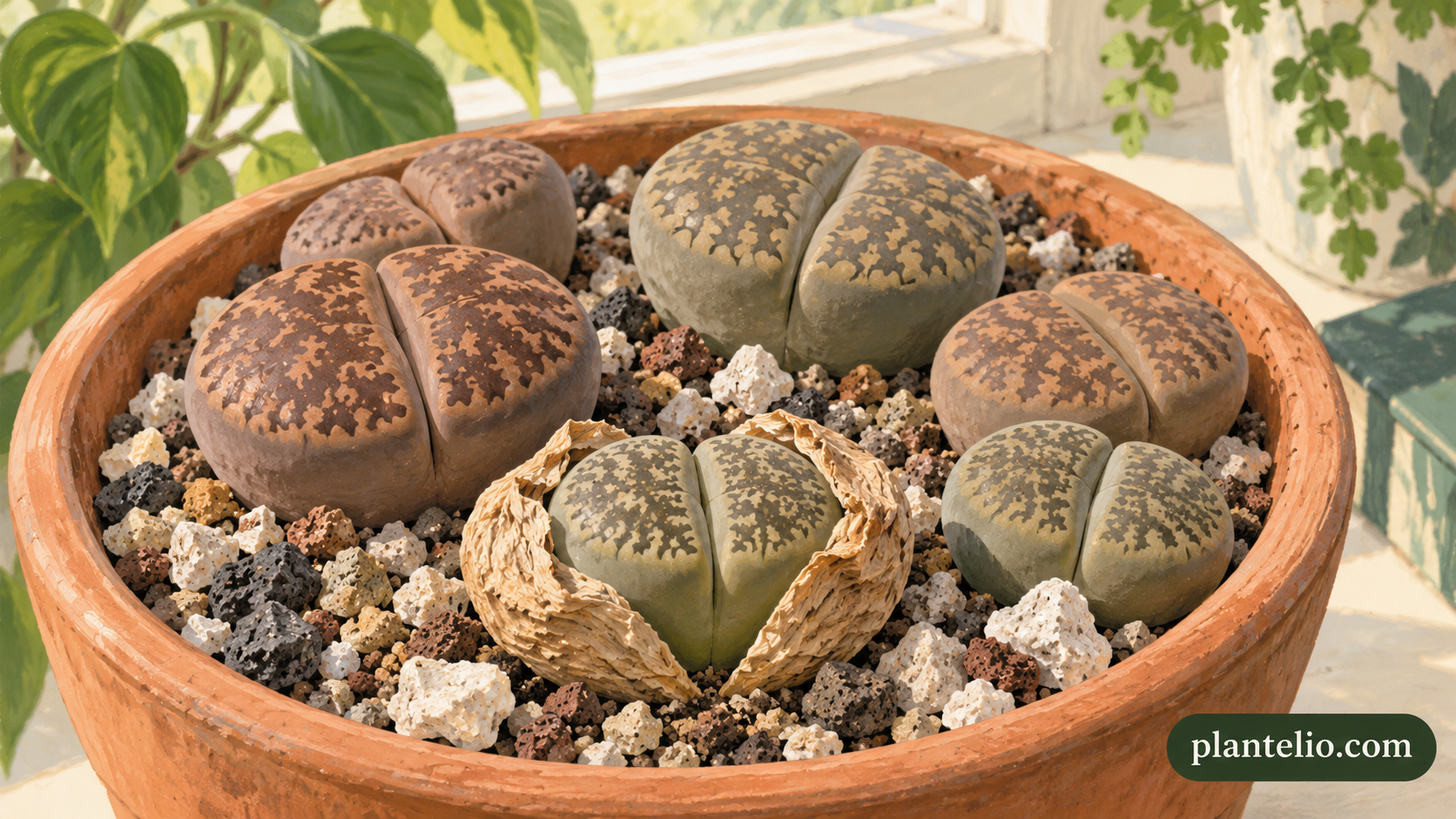
Lithops Care: Why New Leaves Change the Watering Routine
Lithops care requires more than a general rule to water whenever soil feels dry. These living stones follow a growth cycle, and an established plant may need to remain dry while a new leaf pair develops. This guide concerns established plants, not newly germinated seedlings.
Recognize a pair of leaves
NC State describes small, nearly stemless plants with two fleshy leaves divided by a fissure. A new pair develops each year. Their stone-like markings vary, so save the species name from the seller whenever it is available.
Photograph the top and side of the plant without disturbing it. Include the date and note whether you see a flower, new leaves or older leaves drying around a new body. Those details are more useful than a note saying only that the plant looks wrinkled.
Understand leaf replacement
Wisconsin Extension explains that old leaves are reabsorbed as the new body develops. Its guidance is to withhold water during this replacement stage and resume only after the old leaves have completely shriveled and dried. Watering too early can keep the old pair growing and disrupt the process.
Our soil moisture checking guide helps you assess the pot, but dryness alone does not establish that a Lithops needs water. Identify its growth stage as well. Keep this observation separate from the care routine for nearby leafy houseplants.
Provide light and drainage
Wisconsin recommends several hours of early direct sunlight with afternoon shade, and warns against an abrupt move into stronger light. Our indoor light guide explains how to distinguish direct rays from indirect light when assessing a window.
RHS recommends a gritty, well-drained compost for Lithops lesliei and no watering while dormant. A plant sold simply as Lithops may belong to another species, so keep its identification and supplier’s care information together.
Follow the plant as well as the season
Wisconsin describes a summer rest and renewed growth in late summer or autumn, while noting that watering guidance varies by species. Do not turn that outline into an automatic weekly watering schedule.
Keep a short record across the year. Before changing the routine, compare the current leaf stage with previous photographs and check species-specific guidance if the cycle is unclear.
Sources: NC State Extension; Wisconsin Extension; RHS: Lithops lesliei.











Post Comment