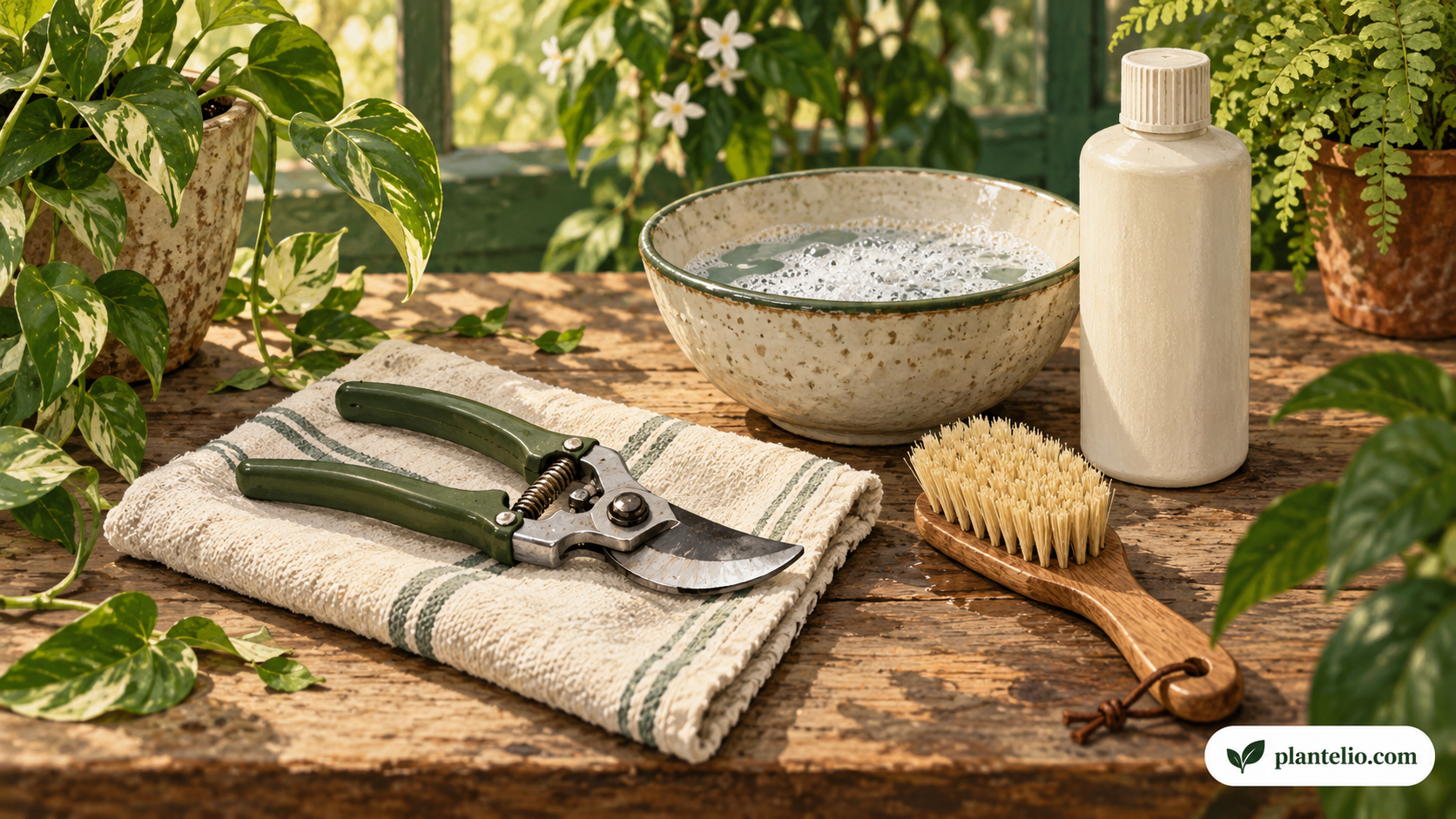
How to Clean Houseplant Pruning Tools Between Jobs
Houseplant pruning tools are easy to set down after a quick trim and pick up again for the next plant. A simple cleaning routine helps you avoid carrying yesterday’s plant debris into today’s job.
Separate cleaning from disinfection
The University of Minnesota’s tool hygiene guidance explains that plant pathogens can travel on contaminated tools and debris. It recommends removing visible dirt before disinfecting because debris can reduce the effectiveness of the process.
These are two separate checks: a blade can look cleaner after wiping while still needing disinfection. Pay particular attention after working on a plant with suspected disease and before moving to another plant.
Set out a small cleaning station
Before beginning, identify the tool manufacturer’s maintenance instructions and the directions on your chosen disinfectant. Set aside a washable work surface, a suitable brush or cloth and a place for the cleaned tool to rest. Keep a separate place for tools that have just been used.
This arrangement can sit alongside your repotting workspace, but keep cleaning products away from open potting mix and plant material. A tray makes the boundary between clean supplies and used tools easier to maintain.
Follow the product and tool instructions
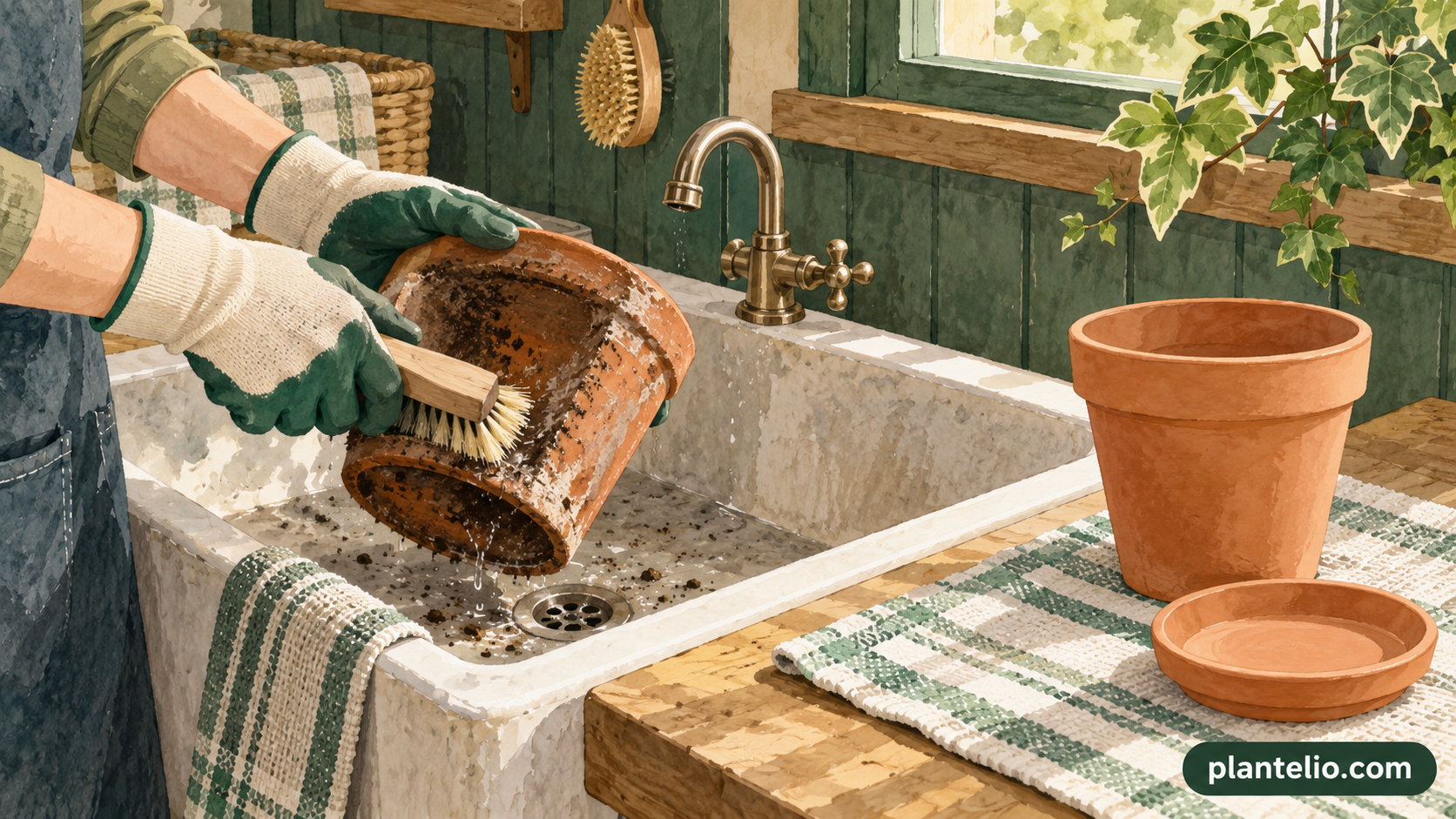
Remove plant fragments and residue with a method suitable for the tool; Minnesota describes soap or detergent and water for cleaning dirt and grime. Then use an appropriate disinfectant according to its label, including the required contact time, protection and any rinsing directions. Never mix cleaning chemicals.
Do not assume all household sprays are interchangeable or that a quick wipe satisfies every product’s directions. Avoid improvising a concentration from a different bottle. Handle sharp edges carefully and follow the tool maker’s drying and lubrication guidance before storage.
Build the pause into your plant-care routine
- Finish work on one plant before reaching for the next.
- Keep removed plant material away from cleaned tools.
- After cleaning, return the tool to its designated clean resting place.
- Store it so you can distinguish ready-to-use tools from ones awaiting attention.
Tool hygiene does not identify what is wrong with a plant. If you are trimming because of unexplained damage, first inspect and record the symptoms. Keep diagnosis and cleaning as separate tasks so a tidy blade does not create false confidence about the underlying problem.










Post Comment