Should You Rotate Houseplants Toward the Light?
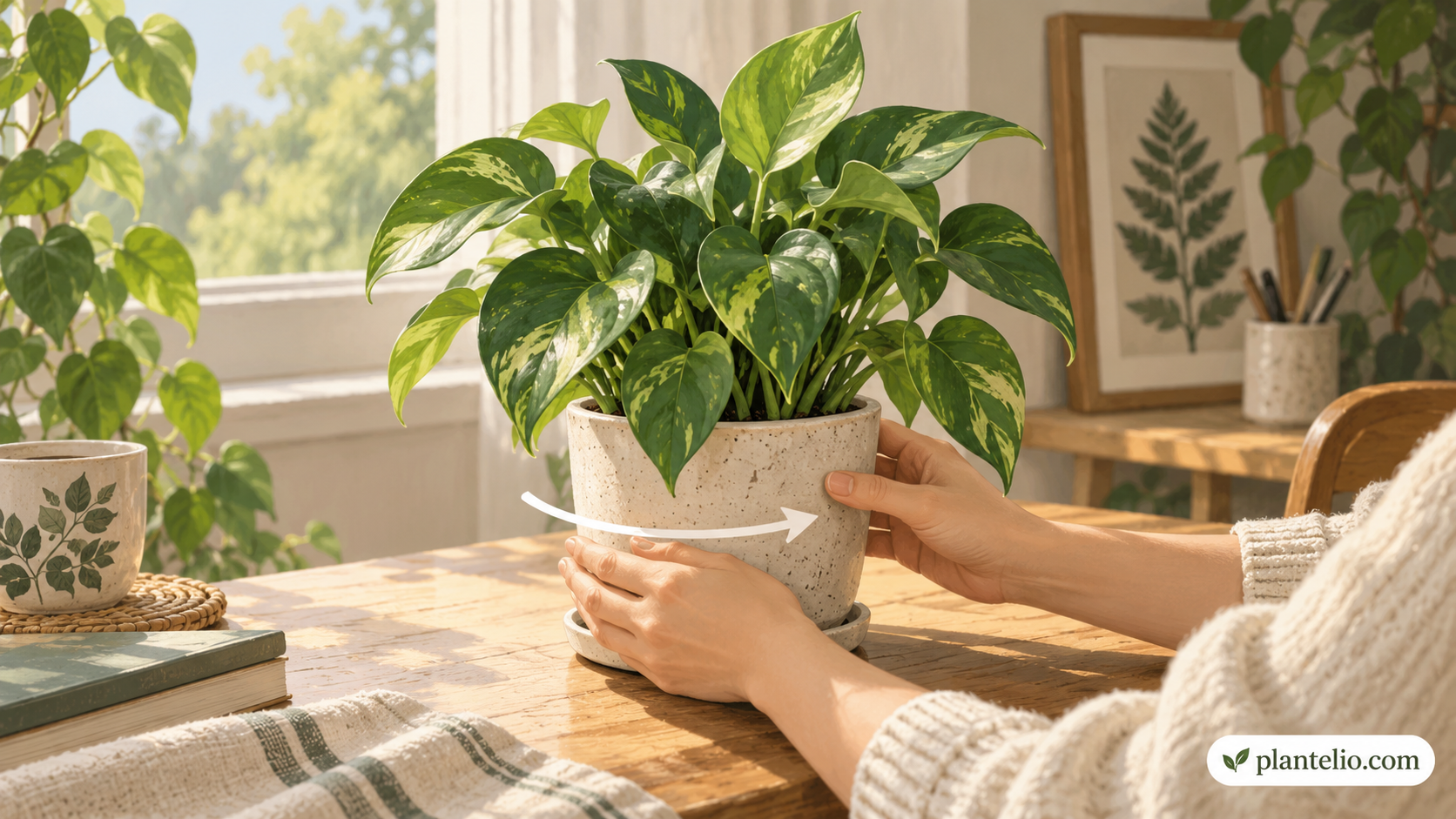
Rotating a houseplant means turning its pot within the same growing position so a different side faces the light. It can be useful when light arrives mainly from one window, but it cannot make a dim location brighter.
Decide what you want the turn to achieve
Look at the plant from the window side and from the room. Note whether the newest growth consistently faces one direction. The University of Minnesota’s houseplant guidance recommends rotation to distribute window light more evenly during winter. This supports a practical goal: give different sides access to the available light.
It does not promise a perfectly symmetrical plant or an instant correction of an old bend. Before turning anything, take a photo that shows the whole plant and the window.
Check light quality before changing direction
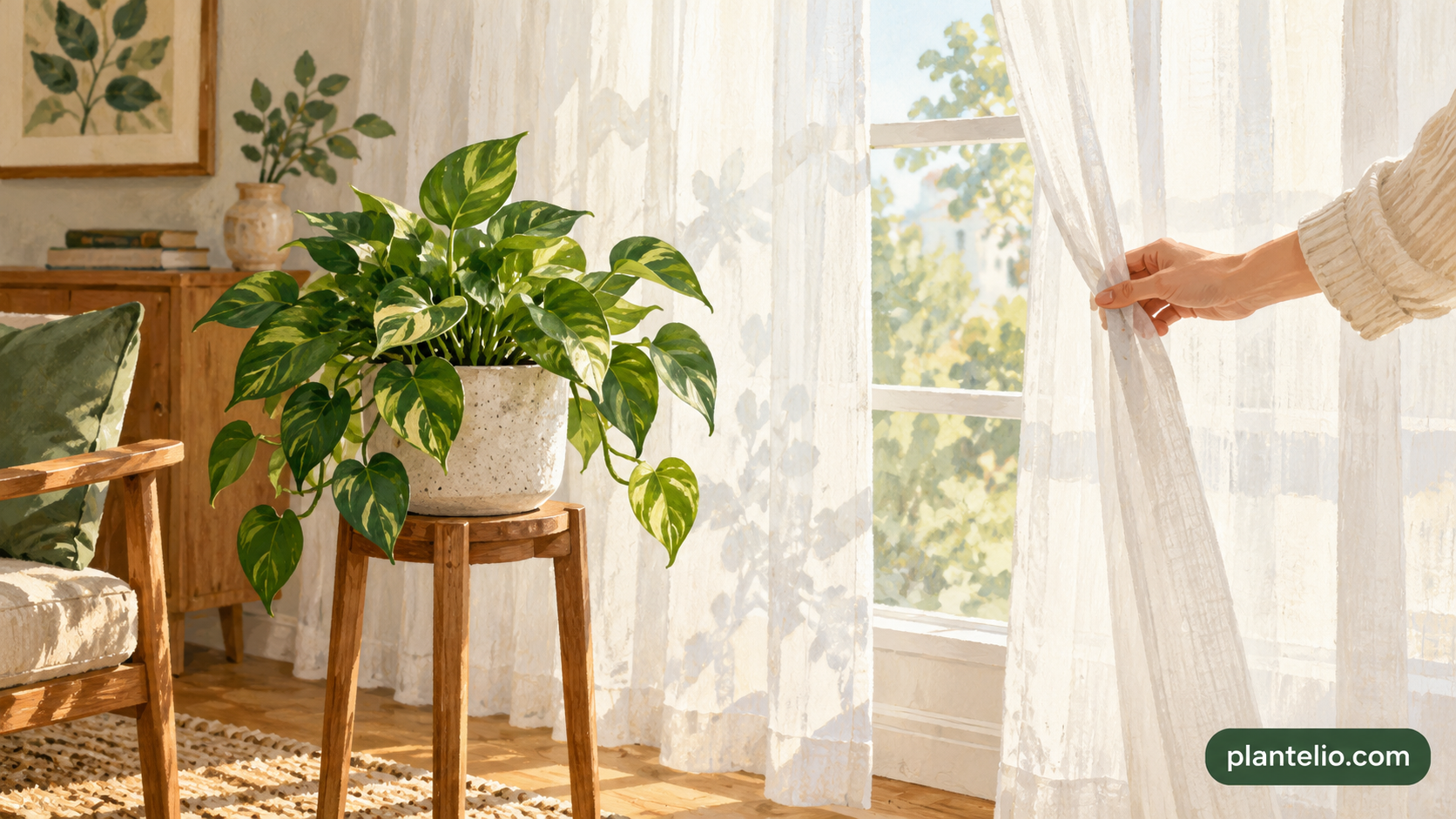
A plant with sparse, stretched growth may need a review of its location rather than repeated turning. Use our guide to bright indirect light to describe the actual position. Note direct sun, curtains and nearby obstructions.
Turning a pot and moving it into a sunnier location are different changes. Keep them separate in your notes so you can tell which change preceded a response. Do not use rotation as a substitute for checking the light requirements of the particular species.
Make a controlled, manageable adjustment
- Check that leaves and trailing stems are free of curtains, neighboring plants and fixed supports.
- Turn the container only if you can handle its weight safely.
- Keep its distance from the window consistent when testing rotation alone.
- Record the new orientation with a removable mark on the pot or a photograph.
There is no need to impose one universal turning schedule on every plant. A plant trained against a support or wall may be awkward to rotate; assess the whole arrangement before moving it.
Judge the result through new observations
Add the date and direction of the turn to your plant care log. Compare later photos from the same viewpoint, especially as new growth develops. Avoid turning it again simply because an older leaf has not changed position overnight.
If the overall growth remains weak, review lighting and the rest of the care conditions. Rotation is one small adjustment, not a diagnosis or a treatment for every leaning plant.











Post Comment