How to Inspect Houseplants for Pests Before Treating Them
Inspect houseplants for pests before choosing a treatment. A curled leaf or yellow patch tells you that something has changed, but it does not identify the cause. A careful inspection gives you evidence to work with.
Prepare a place to look closely
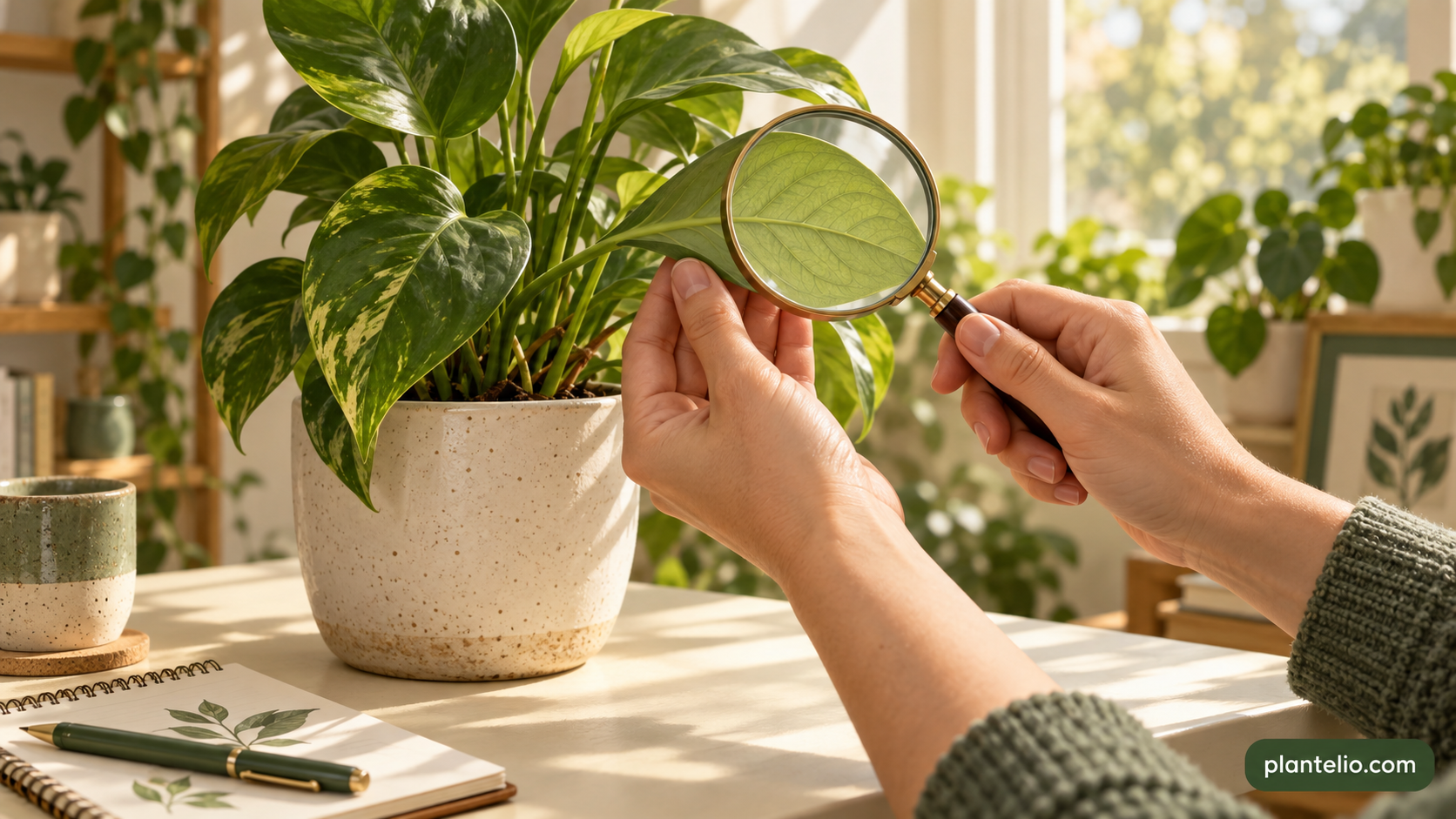
Choose good light and keep a hand lens, phone camera and notebook nearby. Check one plant at a time. Start with a whole-plant photo so you can later see whether the problem was on new growth, older leaves or one side of the plant.
The University of Minnesota’s indoor insect guide recommends examining both leaf surfaces, stems and containers. It also suggests a magnifying lens for pests that are difficult to see.
Follow the same route around each plant
- New growth: look around folded leaves and where leaves join stems, without pulling tender growth apart.
- Leaf surfaces: support a leaf and examine the top, underside and veins.
- Stems and joints: look for attached bumps, cottony material, insects or fine webbing.
- Container: inspect the rim, crevices, saucer and accessible base.
Mealybugs can hide beneath leaves and around leaf-stalk bases, as described by Iowa State Extension. A quick glance across the top of a plant can miss these sheltered areas.
Record clues without turning them into a diagnosis
Write what you actually see: “two white cottony patches at leaf joints” is more useful than “plant is infected.” Sticky deposits, webbing and tiny moving specks deserve closer inspection. Photograph the clue beside an undamaged part of the plant, then take a closer image in focus.
Use our plant care log guide to keep the date, plant name and observations together. Leave room for a later identification; you do not have to name every speck immediately.
If something looks suspicious
Keep the suspect plant apart from the collection while you investigate. Our houseplant quarantine guide explains a practical separation routine. Compare clear photos with university pest guides or ask a local extension service for help.
Before selecting a control, answer three questions: have you found a pest, where is it living, and how widespread is it? If no pest is visible, record the symptoms and review the growing conditions as well. Repeat the same inspection route at the next check so the observations are comparable.


2 comments