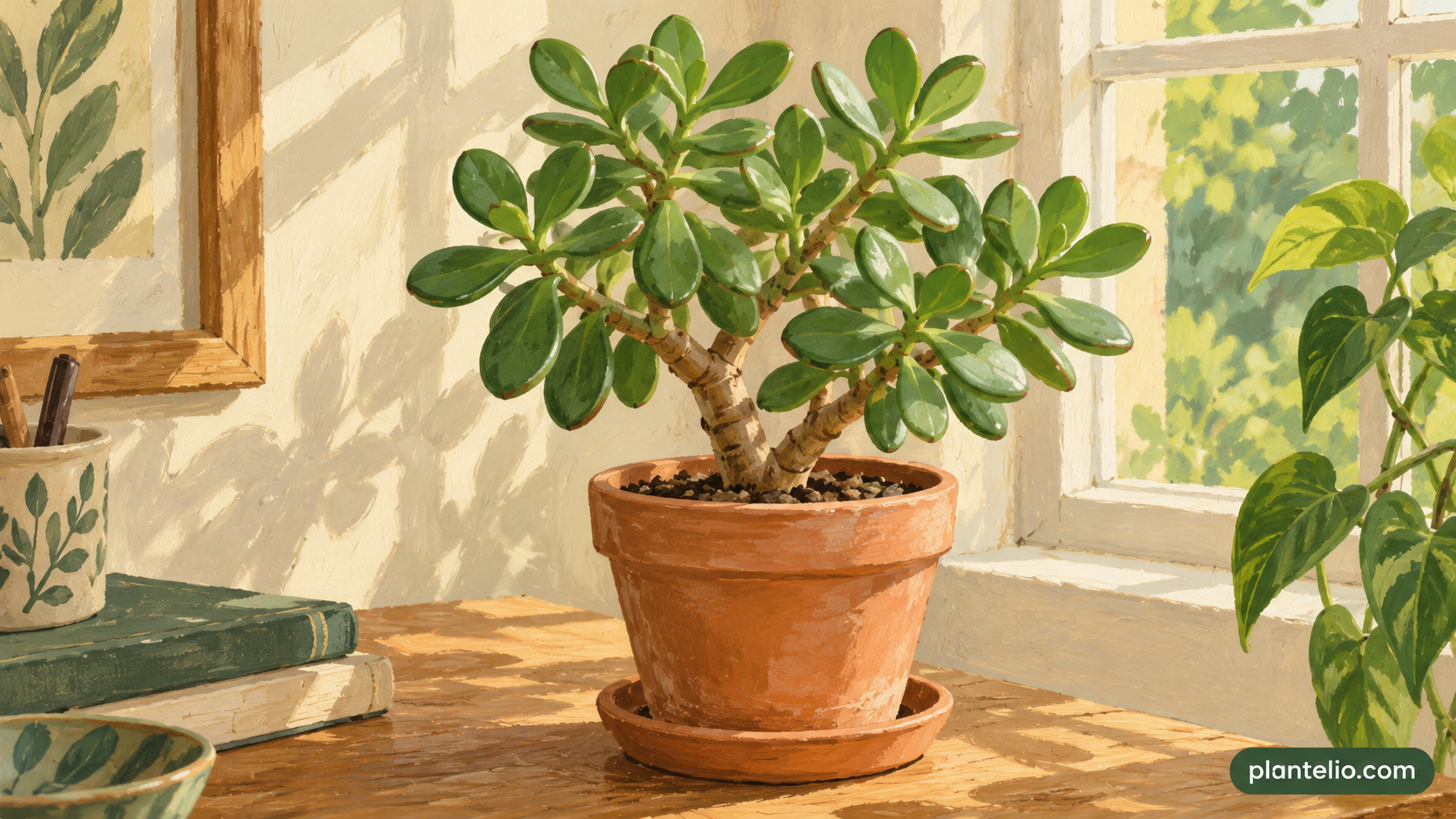
Jade Plant Care: Light, Drying and a Stable Pot
Jade plant care applies here to Crassula ovata, the succulent with thick leaves and branching stems. “Money plant” can refer to several unrelated houseplants, so check the botanical name before borrowing another plant’s routine. Jade pothos is also a different plant.
Start with light and drainage
NC State Extension’s Crassula ovata profile recommends a sunny indoor location with some afternoon shade, a well-drained mix and moderate watering when the soil has dried. Reduce watering from autumn through late winter. Overwatering can contribute to leaf fall and root rot; flowering is uncommon in home conditions.
Use our explanation of bright indirect light to distinguish filtered daylight from direct sun when describing your window. Write down what actually reaches the plant. That observation is more useful than choosing a position solely because the room seems bright.
Jade plant care is not permanent drought
Clemson Extension’s jade plant guide cautions that severe dryness can also cause leaf loss. It distinguishes active spring and summer growth from the drier watering regime needed in winter. Check the growing medium and plant conditions rather than treating succulent leaves as permission to ignore the pot.
Our guide to checking soil moisture provides a practical inspection routine. Record the result before deciding what to do. For example, “mix still damp; waiting” explains a decision much better than an empty watering calendar.
Check whether the pot remains stable
Clemson notes that jades can remain in the same container for years, but older plants may become top-heavy. When repotting is needed, a heavier container can help prevent tipping. Keep drainage in the decision; the goal is a stable growing setup, not simply the largest pot available.
Look at the plant from the side as well as above. Record whether its branches extend over a walkway or beyond the supporting shelf. Choose a place where the pot can sit securely and where you can inspect it without lifting an awkward plant each time.
Document a change before treating it
Both university sources list mealybugs and other pests as possible problems. If leaves fall or the plant looks different, record moisture, light, recent care and visible insects separately. A single symptom does not tell you which factor changed.
Keep the cultivar label, a whole-plant photo and a clear close-up of the concern together. That small record makes it easier to ask a focused question and to compare the plant after a deliberate adjustment.


Post Comment