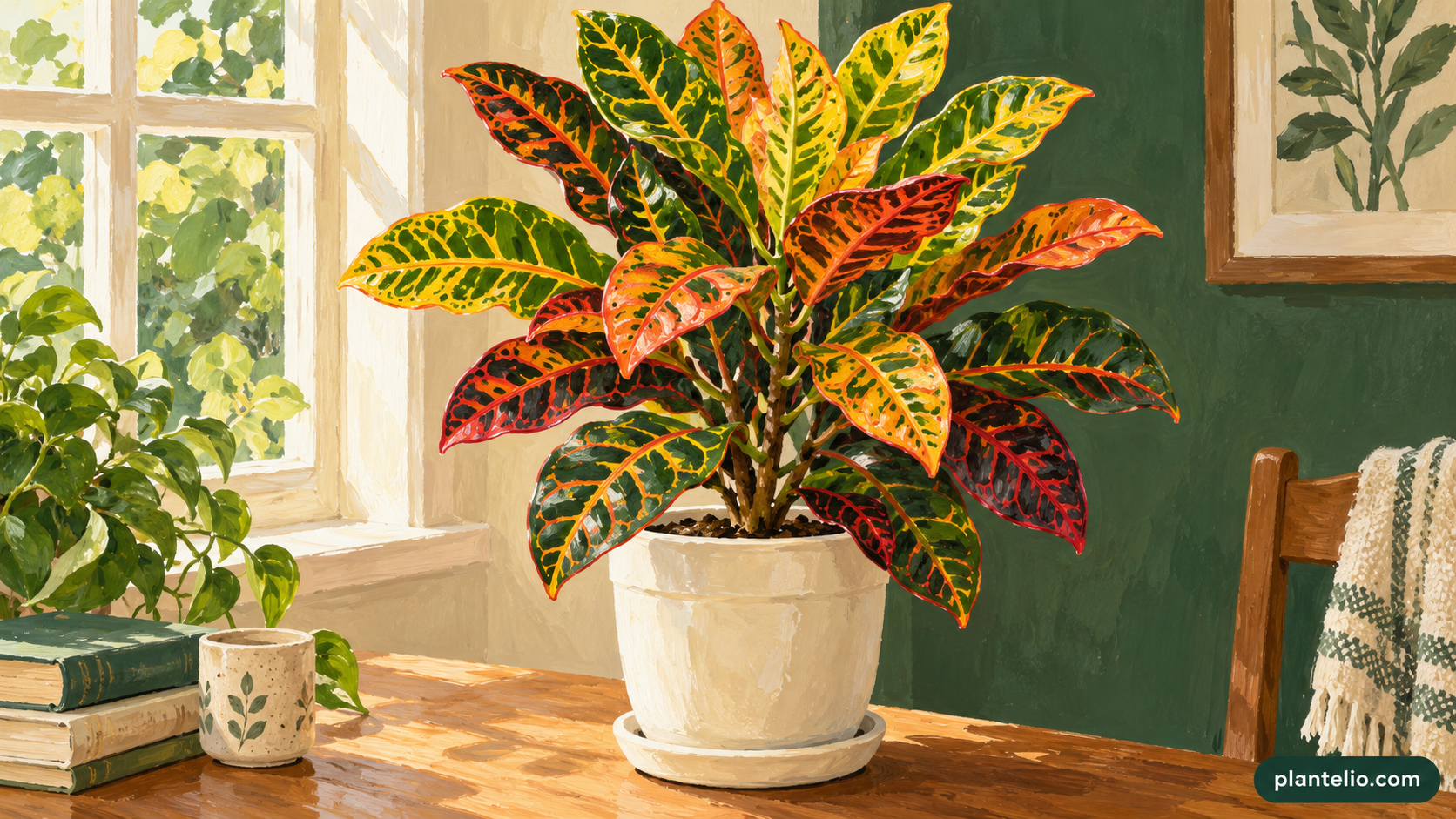
Croton Care: Bright Light, Watering and Changes in Location
Croton care starts with a distinction: colorful leaves are part of the appeal of Codiaeum variegatum, but color alone is not a complete health assessment. Keep the cultivar label and record the plant’s position before trying to explain every new shade or fallen leaf.
Choose light for a colorful foliage plant
NC State Extension’s croton profile recommends bright light, including some direct sun, for the best foliage color. Excessive shade can lead to loss of lower leaves. Use a well-drained growing medium; water more generously during active spring-to-autumn growth and reduce watering in winter.
Our guide to bright indirect light helps you describe a location accurately. For croton, also note whether and when direct sun reaches the leaves. “Bright room” is less useful than the actual conditions at the pot.
Make changes in location gradually
University of Wisconsin Extension notes that rapid environmental changes can cause leaf drop. It recommends gradually acclimating plants moved outdoors and protecting them from temperatures below 10°C (50°F). This is a reason to plan moves, rather than repeatedly shifting the plant while trying to fix the first fallen leaf.
Before a move, photograph the plant and write down its old location. Afterward, record the new position and the date. If leaves drop, that sequence helps you distinguish an observed change from a guess about its cause.
Build croton care around checks
Check moisture before watering, and include the result in your notes. Do not assume that another pot in the same room has dried at the same pace. Record water added, water withheld and any recent change in the container or growing mix.
Wisconsin Extension advises repotting when the plant outgrows its container, using a pot only about 2.5–5 cm (1–2 inches) wider. Mealybugs, scale and spider mites are possible pests. Look closely at affected foliage and stems before deciding that a symptom is caused only by light or watering.
Compare leaves and handle sap carefully
Wisconsin describes considerable variation in leaf shape and color, including changes as leaves age. Compare photos of the same plant rather than expecting it to match a different cultivar online. Keep the lighting similar when taking comparison pictures.
NC State warns that sap from damaged leaves or stems can irritate skin and stain fabric. Protect your hands when handling cut material and keep sap away from eyes. Choose a work surface that can be cleaned, and keep the plant out of reach of children and pets that may chew it.











Post Comment