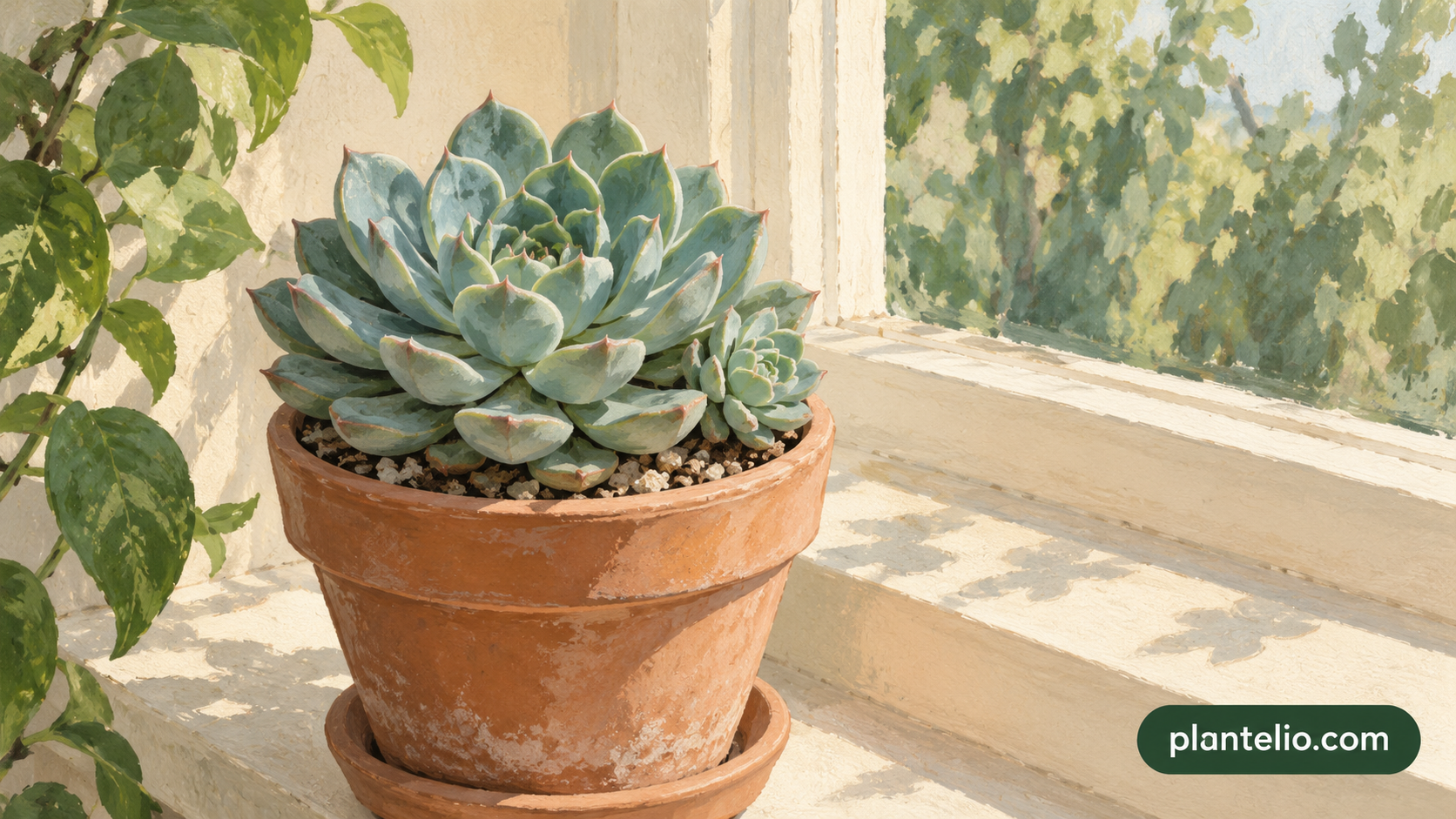
Echeveria Care: Keep the Rosette Bright and Well Drained
Echeveria care begins with the rosette: a compact arrangement of fleshy leaves that needs enough light and a pot that drains freely. A decorative container is only part of the setup. Before choosing its permanent home, check both the light reaching the leaves and how you will empty runoff after watering.
Give the rosette a bright position
NC State describes echeverias as a diverse group of succulent rosettes that can grow on a sunny windowsill. The RHS recommends bright, indirect light. These descriptions are best applied by checking your particular window and introducing changes gradually, rather than moving an unfamiliar plant straight into intense sunshine.
Our guide to assessing bright indirect light provides a starting point. Write down the hours when direct sun touches the pot. Photograph the plant when you choose the position, keeping the image as a baseline.
Water the pot, not the calendar
The RHS advises watering when the compost is approaching dryness, using a gritty, well-drained cactus mix and a container with drainage holes. Do not leave the pot standing in water. Cooler conditions call for a drier routine, and the plants need protection from frost.
Before each watering, check the potting mix. Note the result separately from the date. A dry surface does not describe the whole container, and two pots on the same shelf may dry at different rates.
Understand changes before reacting
NC State notes that older leaves can fall away and leave some stem exposed as plants age. This means a visible stem is not, by itself, a complete diagnosis. Compare the whole plant with your earlier photograph and record whether the change happened slowly or suddenly.
The genus includes many species and hybrids. Keep the cultivar name if it is supplied, especially when asking for advice about color or leaf shape. A photograph of another echeveria may show a different plant rather than a target your own should match.
A manageable care checklist
- Keep the drainage outlet accessible.
- Record the position and pot size.
- Write down moisture checks and watering dates.
- Photograph the rosette from above and from the side.
Both sources discuss offsets as a way these plants can multiply. You can enjoy a clump before deciding to propagate it. Label any future divisions so their identity does not get lost.
Sources: RHS: Echeveria; NC State Extension: Echeveria.











Post Comment