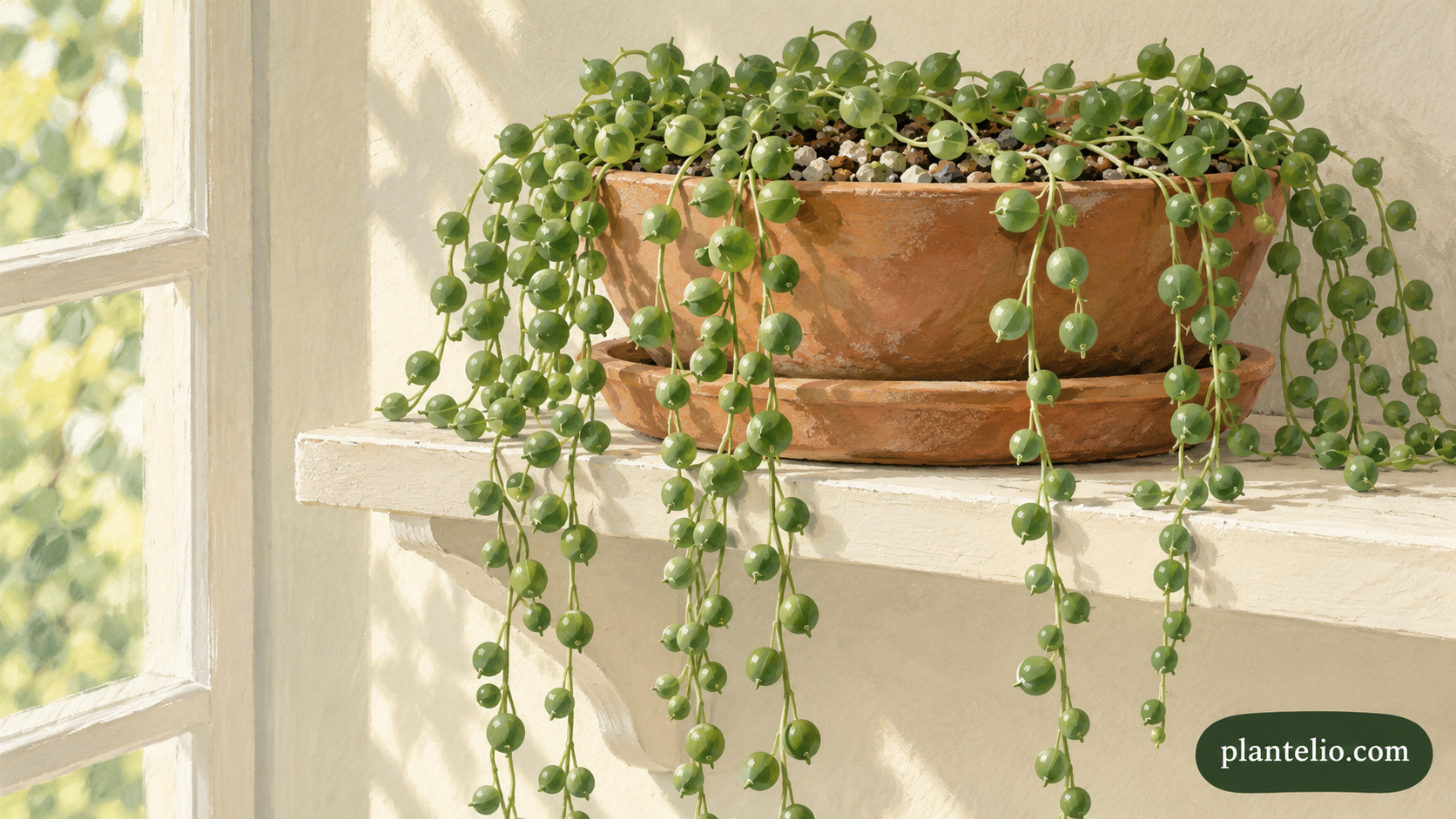
String of Pearls Care: Bright Light and a Drying Root Zone
String of pearls care revolves around its water-storing leaves and small root system. Curio rowleyanus, also sold as Senecio rowleyanus, carries rounded green leaves along slender trailing stems. It needs a different watering routine from a leafy tropical vine beside it.
Start with a suitable pot
Wisconsin Extension recommends a shallow container because this plant does not develop an extensive root system. Use a very freely draining succulent mix. A large volume of damp compost around a small plant can increase the risk of root rot.
Before choosing a decorative container, check that the growing pot drains freely and can be removed for inspection. Arrange the strands so you can lift the pot without trapping them under its rim.
Provide bright, protected light
The RHS recommends bright light with protection from strong midday summer sun. A hanging location must provide useful light as well as space for the stems. Our guide to bright indirect light indoors helps you assess the location before installing a hanger.
If moving a plant outside for summer, acclimate it gradually and protect it from excessive rain. Bring it inside before frost. Do not assume that a succulent can move straight from a sheltered room into intense outdoor sun.
Let the root zone dry
Allow the compost to dry between waterings. Winter usually calls for much less water than active summer growth. Check moisture in the pot, rather than judging only by the exposed surface or a fixed number of days.
Shriveled leaves deserve an inspection, not an automatic drink. The RHS notes that overwatering and stem rot can also accompany shriveling. Record whether the mix is dry and whether stems remain firm before deciding what to change.
Manage the trailing display
Healthy stems can be shortened if they outgrow their space. They can also be laid against suitable compost to root, helping fill a sparse display. Keep a dated photograph before rearranging stems so you can see which sections produce new growth.
Wear gloves when handling cut stems because the sap can irritate skin. Keep the plant and fallen leaves away from children and pets; the bead-like foliage is not edible.
Sources: University of Wisconsin–Madison Extension; RHS string of beads growing guide.











Post Comment