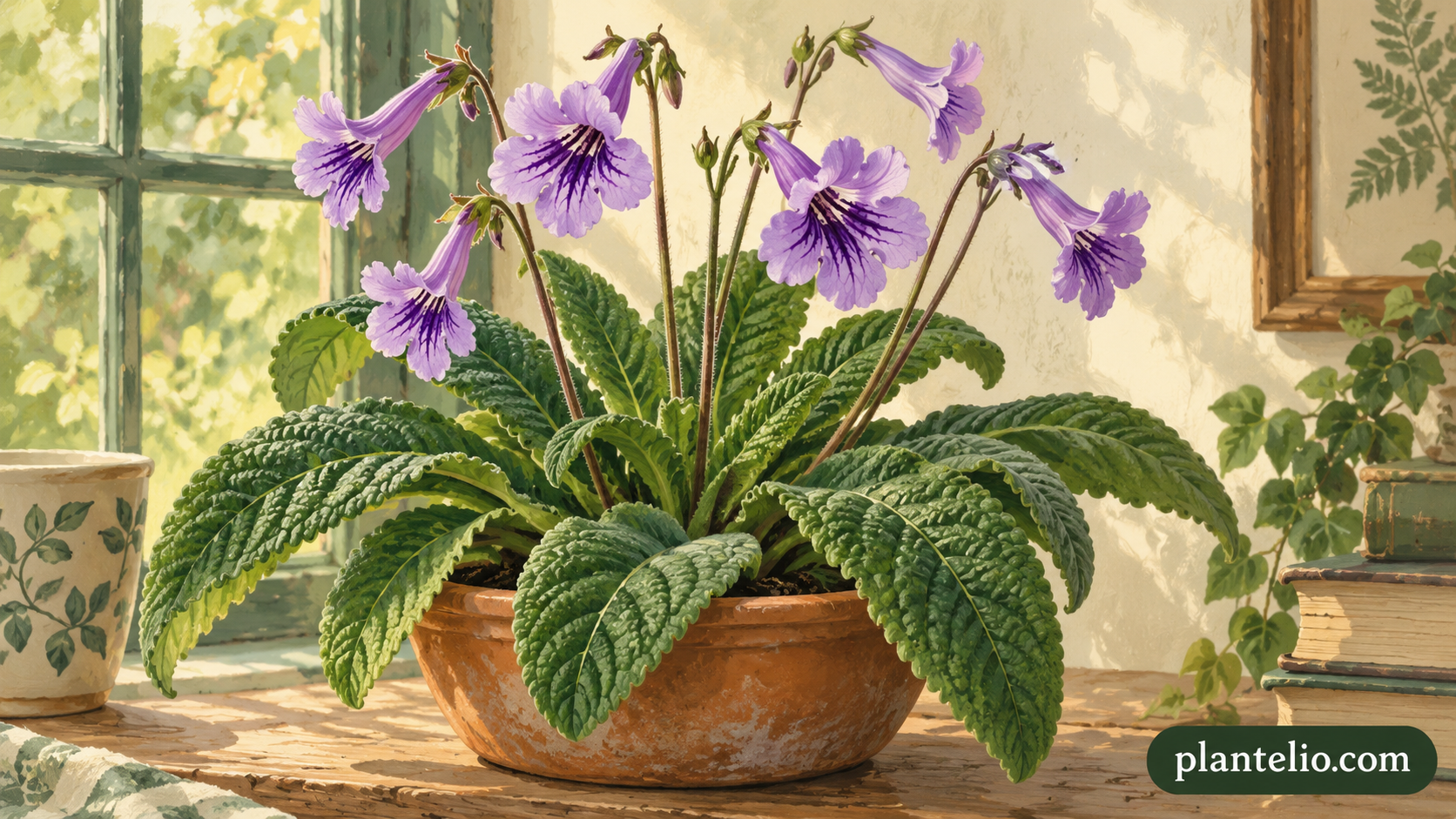
Cape Primrose Care: Light, Watering and Seasonal Changes
Cape primrose care should follow the plant’s growth and the conditions around its pot. These flowering Streptocarpus plants can provide a long display, but one routine will not suit every season or every windowsill.
Choose the right care guide
RHS notes that African violets are now included in Streptocarpus, while their care differs somewhat from Cape primroses. Keep the original plant label so a shared genus name does not send you to the wrong instructions.
Missouri Botanical Garden describes Cape primroses with velvety, wrinkled foliage and long-tubed flowers, commonly in blue-purple, pink or white. Flower color alone is not enough to identify a particular cultivar.
Use good light without hot sun
Missouri Botanical Garden recommends a bright position protected from direct afternoon sunlight. Our bright indirect light guide helps you compare possible locations rather than relying only on a window’s compass direction.
Check the actual light reaching the plant as the season changes. A photograph taken on an overcast morning will not show whether the same spot receives hot sun later that day.
Check the mix before responding to wilt
Missouri Botanical Garden recommends a fertile, well-drained growing medium, allowing it to dry between waterings and avoiding wet foliage. Use our soil moisture checking routine to assess the container before adding water.
RHS warns that wilting can occur with either insufficient or excessive watering. A drooping leaf alone cannot tell you which condition exists. Record what you find in the mix instead of treating wilt as an automatic watering signal.
Allow for seasonal change
RHS explains that leaf tips may naturally die back in autumn or winter. This is different from assuming that all deterioration is seasonal. Compare the affected area with the rest of the plant and note any changes in light, moisture or temperature.
When repotting is needed, RHS recommends doing it in spring and choosing a slightly larger, wide, shallow container. Prepare the new pot before disturbing the plant rather than choosing a large container just to postpone future work.
Missouri Botanical Garden recommends removing faded flowers to prevent seed production. Keep a brief record of flowering and new leaf growth; it can help you judge the plant over time instead of reacting to one fading bloom.
Sources: RHS: Streptocarpus; Missouri Botanical Garden: Cape primrose.










Post Comment