Satin Pothos Care: Growing Silver-Patterned Scindapsus
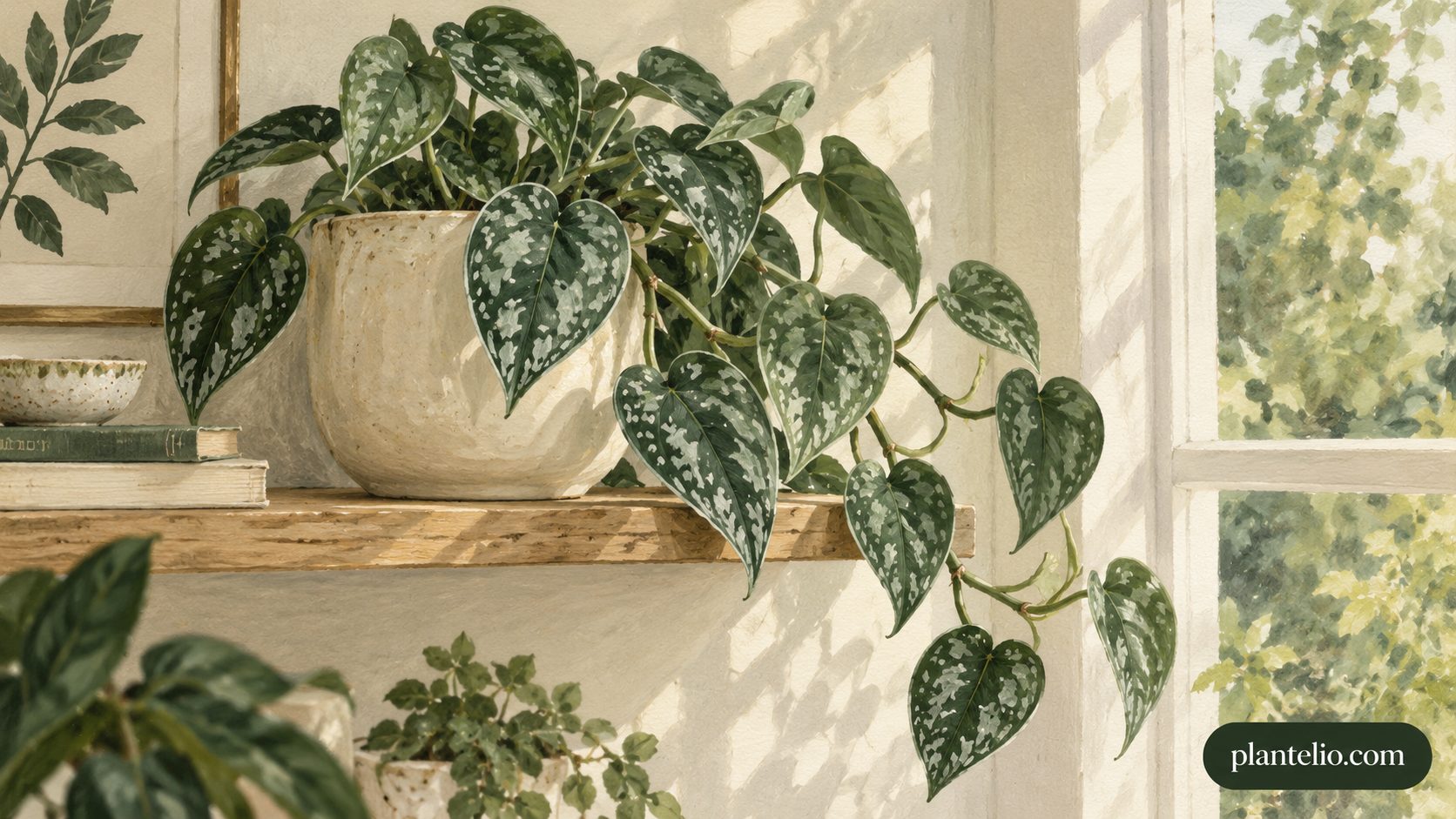
Satin pothos care begins with the label: Scindapsus pictus. Its matte green leaves carry silver patches, and young leaves have a heart-shaped base. Although its common name includes pothos, use the botanical name when comparing advice or buying a replacement plant.
Give it filtered light and warmth
Choose bright indirect light with protection from hot sun. NC State recommends ordinary warm room conditions, around 65–85°F (18–29°C). Avoid cold drafts. Our bright indirect light guide can help you describe the position more accurately than simply calling a room sunny.
Take a photograph from the same angle each week. Include the newest leaf and the end of a stem. This gives you a useful comparison when deciding whether the current location supports steady growth.
Use drainage, then check moisture
A peat-free, loam-based potting compost with good drainage is suitable. The RHS advises moderate watering during growth and less water at other times. Keep collected runoff from sitting around the base of the pot.
Check the potting mix before watering. Curling can be associated with underwatering, while yellowing may accompany excess water, but neither symptom identifies the cause on its own. Note whether the mix is wet or dry before responding to a changed leaf.
Choose climbing or trailing growth
Satin pothos can climb a support or trail from a basket. Decide which arrangement fits your space before the stems become difficult to move. Leave enough access to inspect the compost and lift the container without pulling on the vine.
Pinching stem tips can keep the plant tidy, and stem cuttings can produce new plants. Pruning is optional rather than a required monthly job. Keep a note of where you cut so you can follow the next shoots.
Inspect and handle thoughtfully
Look beneath leaves for scale, mites, mealybugs, or thrips. Do not mistake the plant’s normal silver markings for a coating that needs scrubbing away.
The RHS lists this plant as harmful if eaten and a skin or eye irritant. Wear gloves when handling cut stems, and place trailing growth beyond the reach of children and pets.
Sources: NC State Extension Scindapsus profile; RHS silver vine profile.











Post Comment