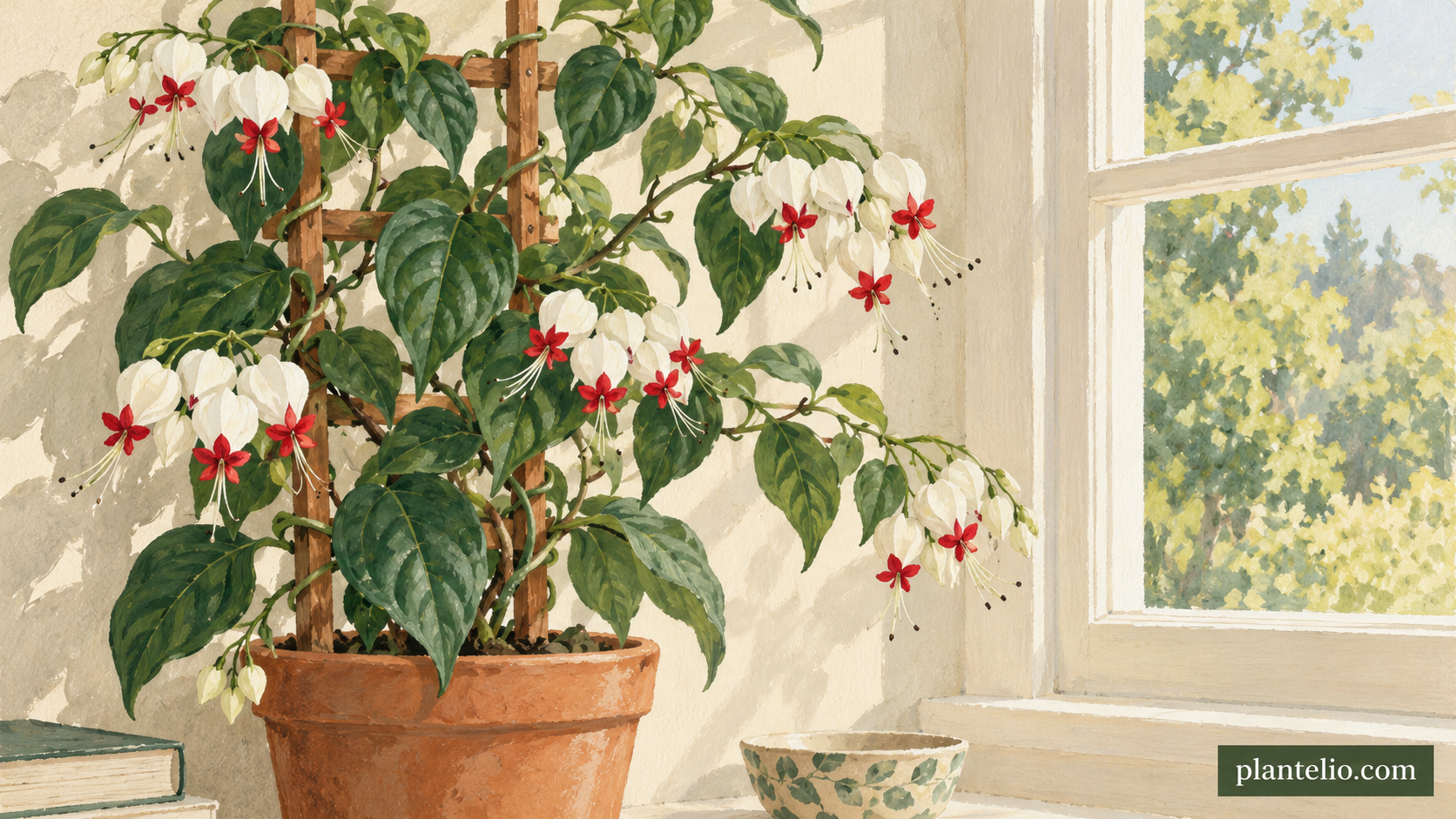
Bleeding Heart Vine Care: Light, Support, and Seasonal Rest
Bleeding heart vine care applies to Clerodendrum thomsoniae, a tropical climber. It is different from the hardy garden bleeding hearts sold under Lamprocapnos or Dicentra. Check the botanical name before borrowing outdoor care advice for your indoor pot.
Understand the red-and-white display
The red flower emerges from a white calyx. After the red part fades, the calyx can remain and change toward pink or lavender before browning. A changing flower cluster therefore does not automatically mean the whole plant is failing.
Photograph one cluster every few days. Comparing that sequence with the appearance of new leaves helps separate normal flower aging from a wider change in the plant.
Provide light and a support
Give the vine a bright position. The RHS recommends full light under glass, with shade from hot sun and good summer ventilation. Our guide to assessing light at home is a starting point for comparing windows, but a dim room is unlikely to support reliable flowering.
Offer a small trellis if you want climbing growth. Choose one that fits the container and available window space. Arrange loose stems around it without forcing a sharp bend; leave access to the compost so watering and inspection remain easy.
Match watering to growth
Use a well-drained, loam-based, peat-free compost. During active growth, keep the root zone moist rather than waterlogged. Check moisture before watering and empty collected runoff.
A cool seasonal rest can bring leaf loss and lower water use. During dormancy, water only enough to prevent complete drying and stop feeding. Do not continue an active summer routine simply because the calendar says it is watering day.
Prune and inspect deliberately
Flowers form on new growth; pruning after flowering can help manage the vine. Keep it protected from frost. Check for mealybugs, spider mites, and whiteflies, particularly where leaves overlap the support.
Keep a brief record of pruning, new shoots, and flower clusters. This makes the next season’s decisions specific to your plant instead of promising a fixed flowering date.
Sources: University of Wisconsin–Madison Extension; Royal Horticultural Society plant profile.










Post Comment