Panda Plant Care: Fuzzy Leaves, Bright Light and Drying Soil
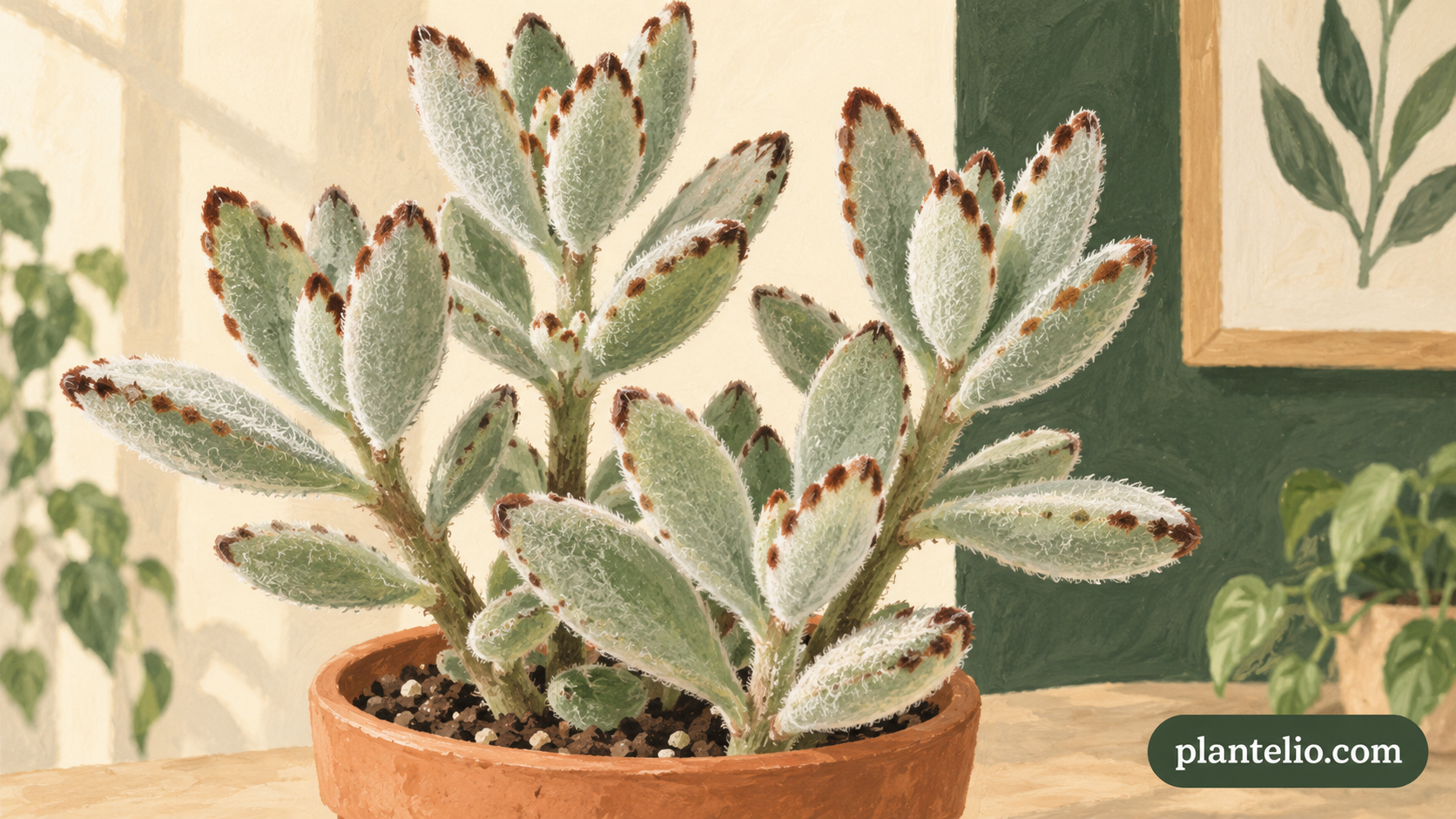
Panda plant care begins with recognizing its distinctive foliage. Kalanchoe tomentosa has thick, softly hairy leaves with brown markings around the edges. Those markings belong to the plant’s normal appearance; they are not automatically evidence that every leaf tip is dying.
Learn its normal appearance first
RHS describes silvery, fleshy leaves edged and tipped with brown on an upright evergreen plant. Keep a clear photograph of healthy foliage as a reference. When something changes later, compare its location and texture with that starting image.
NC State notes that indoor plants rarely flower. A healthy foliage display is therefore a more useful everyday goal than waiting for flowers as proof that care is working.
Provide plenty of suitable light
RHS recommends full light with good ventilation under glass. NC State recommends bright indirect light and protection from very hot sun to avoid leaf burn. Read these recommendations with the actual heat and exposure of your window in mind.
Our indoor light guide helps you describe the position. Record when direct rays reach the leaves rather than relying only on the name of the room or the direction of the window.
Let the growing medium dry
NC State recommends a well-drained cactus or succulent mix and allowing it to dry between waterings. Our soil moisture checking methods help you assess the container before adding water.
RHS advises more sparing watering in winter. Keep checking the plant, but do not treat a weekly reminder as an instruction to water a pot that is still wet. Note both the date and the condition you found.
Investigate changes before reacting
NC State associates yellow, mushy leaves or stems with excessive watering and leggy growth with inadequate light. Check the mix and the display position before changing several things at once.
Keep the plant out of reach of pets and small children because NC State identifies it as poisonous if eaten. A secure display should also leave enough access to inspect the pot without repeatedly handling the fuzzy foliage.
Sources: NC State Extension; RHS: panda plant.




Post Comment