Chenille Plant Care: Growing Its Long Red Flower Tassels
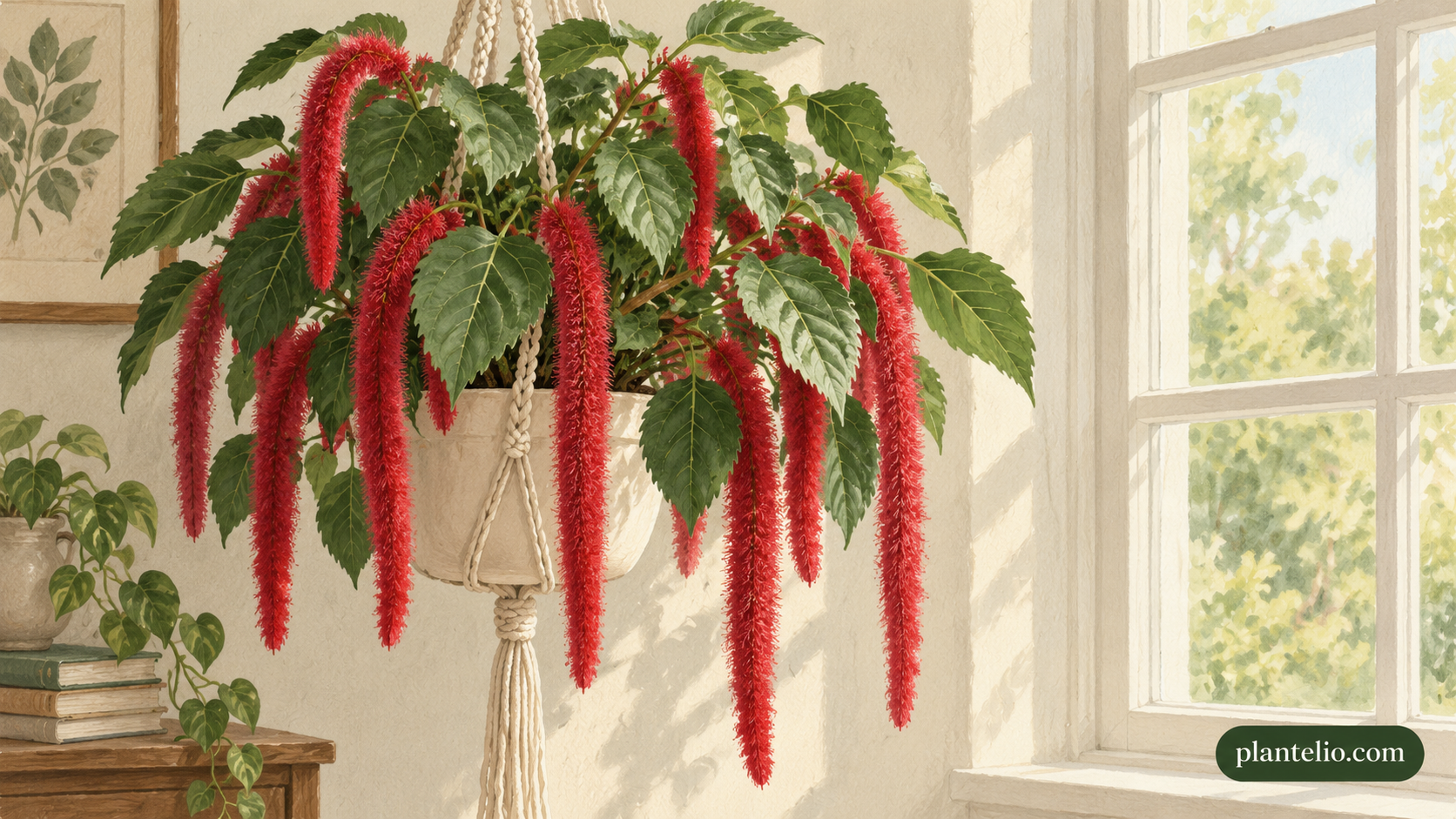
Chenille plant care combines the needs of a tropical shrub with room for its unusual flowers. Acalypha hispida produces long, hanging clusters of tiny flowers that resemble fuzzy red tassels. Those tassels need clear space below the foliage, not a crowded shelf where they rest against nearby objects.
Understand the display
Kew describes the flower clusters as long-lasting, gradually fading and turning brown with age. A single old tassel browning is different from the whole plant deteriorating. Check whether younger clusters and leaves still look healthy before treating normal flower aging as a crisis.
The leaves are broad, green, and toothed. This is a vigorous shrub rather than a permanently miniature hanging plant. Kew notes that cultivated specimens are usually kept smaller by pruning.
Choose a bright, warm location
NC State lists full sun to partial shade and recommends indoor temperatures above 60°F, about 16°C, with high humidity. A dim corner is therefore a poor choice for displaying the flowers long term.
Use our indoor light guide to describe the light you actually have. When choosing a spot, also check whether an opening window exposes the plant to cold air.
Water without leaving the roots flooded
NC State recommends moderate moisture and warns against poorly drained soil. Check the pot before watering and allow runoff to escape. A hanging basket can hide a reservoir of water, so inspect the container itself rather than judging only the surface.
Our soil moisture guide offers several checks to combine. Bring a basket down to a safe working height when needed; reaching blindly through the flower clusters makes it harder to see where the water goes.
Plan maintenance around flowering
NC State advises pruning after flowering to control size. It also lists mealybugs, scale, and spider mites as possible problems. Examine stems and leaf undersides when tending the plant, especially before moving it beside other houseplants.
Kew reports that cultivated chenille plants are propagated by cuttings. Keep a label with the botanical name: common names alone can refer to more than one plant.
Sources: NC State Extension: chenille plant; Kew: Acalypha hispida.











Post Comment