
Bloodleaf Care: Bright Veins, Moisture and Bushy Growth
Bloodleaf care focuses on the leaves: rich red or purple surfaces, contrasting veins, and colored stems. Often sold as Iresine herbstii, the plant is listed by NC State as Iresine diffusa f. herbstii. Both names can appear in care references.
Read the foliage before judging it
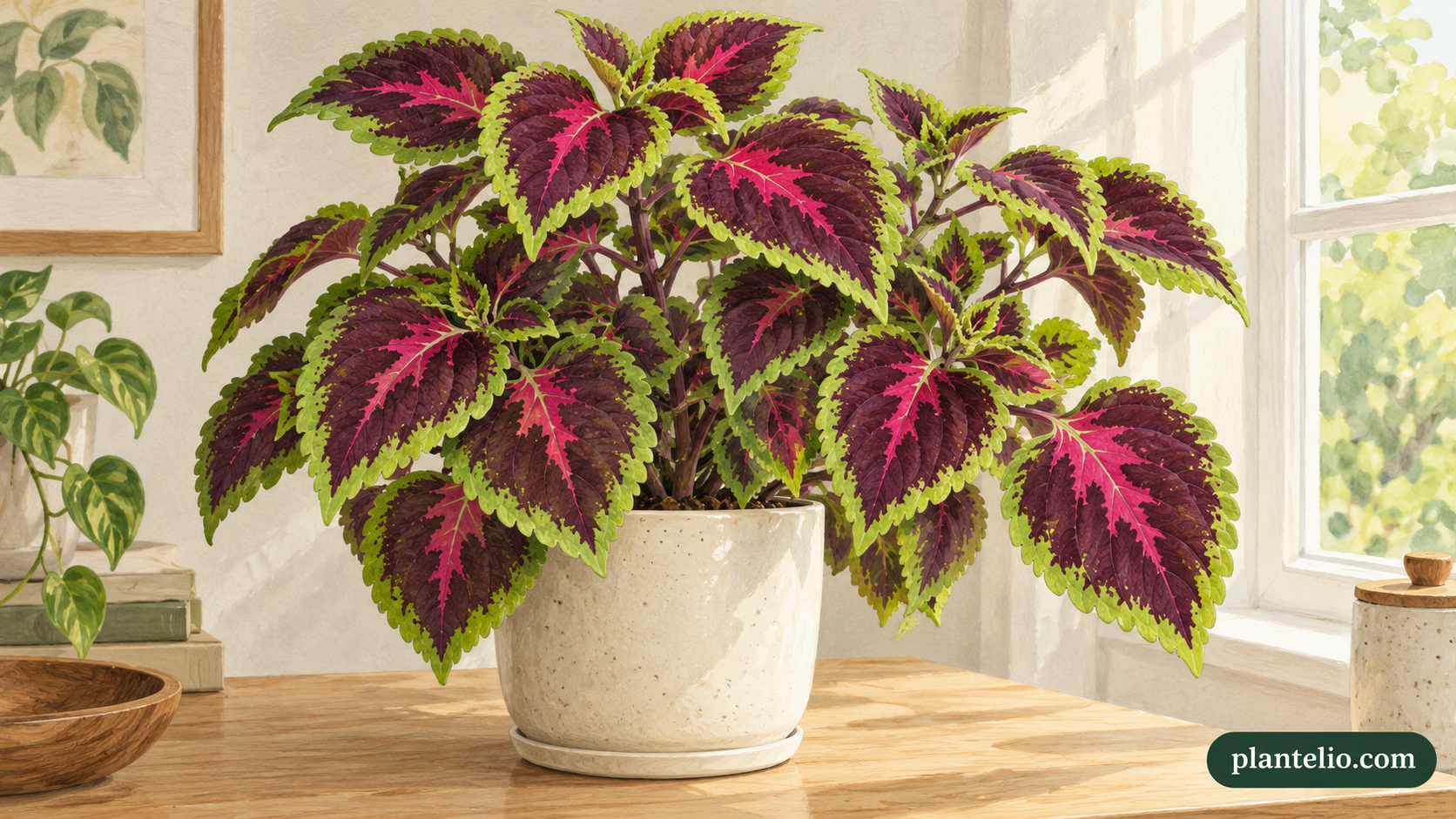
NC State describes reddish-purple leaves with lighter red or pink veins and red stems. Some leaves have a notched tip. These features are normal, so compare a damaged area with the rest of the leaf rather than assuming every contrasting patch is a symptom.
Keep the nursery label or photograph it. The RHS notes that cultivated foliage can also include green, yellow, or orange; another plant’s color is not a reliable target for yours.
Provide strong light with protection from heat
For protected cultivation, the RHS recommends full light with shade from hot sun. Assess the position through the day before placing the pot against a sunny window.
Our indoor light guide helps distinguish a bright room from a well-lit plant position. If a curtain is closed for most of the day, evaluate the light with that curtain in its normal position.
Match watering to active growth
The RHS advises generous watering during growth and keeping the compost just moist in winter. It recommends a peat-free, loam-based compost. NC State likewise calls for even moisture with good drainage and reduced watering during cooler periods.
Use our soil moisture checks before adding water. Seasonal guidance is a prompt to reassess the pot, not a reason to pour in water when the compost is already wet.
Encourage a fuller plant
NC State recommends pinching the growing tips to encourage branching and control size. It also notes that stem cuttings are an easy propagation route. Save healthy tips if you want to try making another plant.
Make changes deliberately: identify the shoots to shorten, keep enough healthy foliage, and check the plant’s response before cutting again. Inspect new growth for aphids or mites, which both references list as possible pests.
Sources: NC State Extension: bloodleaf; RHS: Iresine herbstii.










Post Comment