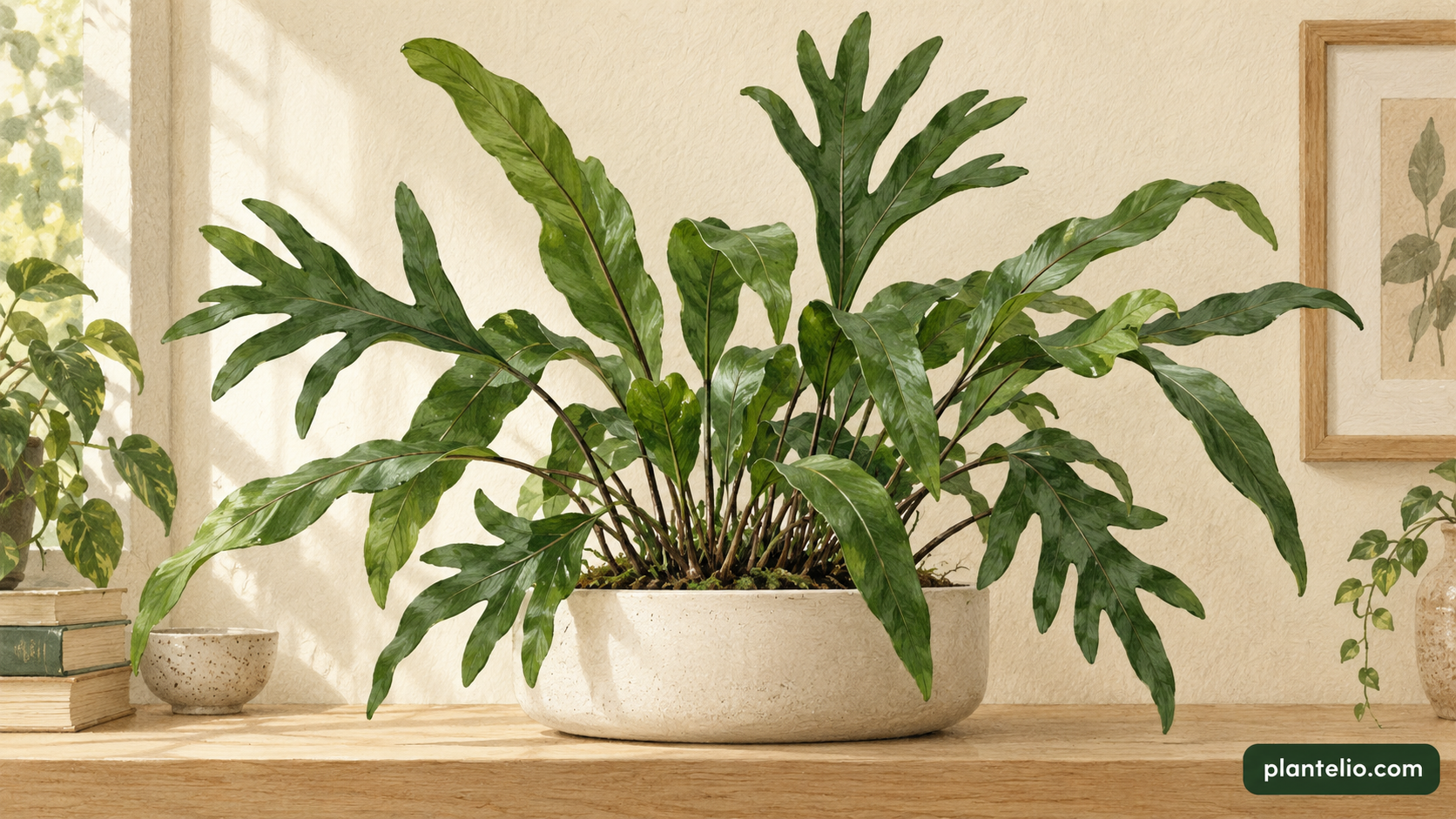
Kangaroo Paw Fern Care: Leathery Fronds and Even Moisture
Kangaroo paw fern care depends on steady moisture, drainage, and a suitable indoor position. Usually labeled Microsorum diversifolium, this fern has leathery green fronds with irregular shapes. Its thicker-looking foliage is not a reason to give it a succulent’s dry watering routine.
Choose a position with room to spread
Griffith University’s indoor-plant guide describes a fern around 30 cm tall and 60 cm wide, suitable for pots and hanging baskets. Those dimensions are a planning guide rather than a promise for every indoor specimen.
Allow space around the pot so the fronds can extend without being folded behind furniture. A narrow ledge may fit the container but still be too small for the plant.
Use indirect light
Griffith recommends indirect sunlight indoors with moderate to high humidity. Use our bright indirect light guide to assess the proposed spot. Shade tolerance does not tell you how much light reaches a shelf far from the window.
Check the room at the time when the strongest sun enters. This is more useful than choosing a place solely because another fern looks attractive there in a photograph.
Keep moisture even without sacrificing drainage
Clemson Extension specifically recommends regular, even moisture throughout the year for kangaroo paw fern. Its general fern guidance also warns that poorly draining mixes and overly frequent watering can lead to root rot.
Combine these points by checking before watering, then allowing excess water to leave the pot. Our soil moisture checks can help you distinguish a drying mix from one that is still wet. “Even moisture” describes the root environment, not an instruction to add the same amount every day.
Handle fronds carefully
Clemson advises keeping ferns away from busy areas because rough handling can damage their fronds. Lift the pot instead of using foliage as a handle, and leave room to water without bending the plant aside.
If several fronds decline, review both moisture and room conditions. A brown area alone does not distinguish dryness, excess water, or physical damage. Note where the damage occurs and whether new growth is also affected before choosing a remedy.
Sources: Griffith University: native plants for indoors, page 18; Clemson Extension: indoor ferns.











Post Comment