Swedish Ivy Care: Rounded Leaves and Trailing Growth
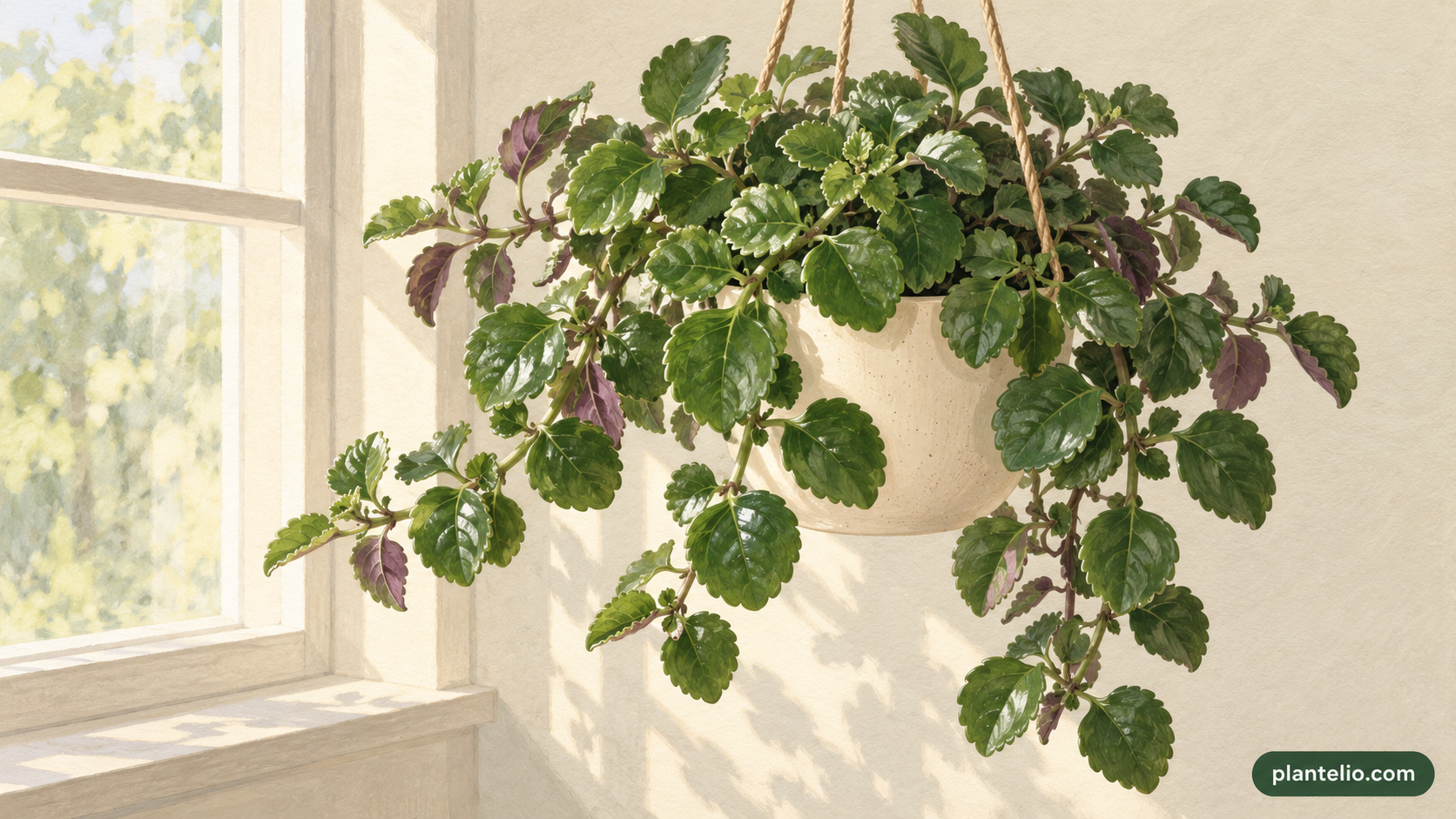
Swedish ivy care begins with the name on the label. This guide covers Plectranthus verticillatus, a trailing plant with rounded, coarsely toothed leaves. Its foliage and growth habit differ from the pointed leaves of familiar climbing ivies, so keep the botanical name with your care notes.
Choose a bright position with sun protection
The RHS recommends partial shade and protection from hot sun when grown under glass. A shelf near a window or a hanging position can work, provided the leaves receive suitable light.
Check the plant at different times of day using our bright indirect light guide. The top of a basket and its lowest trailing stems may sit in different light, especially when a curtain or window frame blocks part of the view.
Give trailing stems useful space
The RHS describes a low, spreading perennial with a trailing habit. Rounded leaves may have purple undersides, and small pale flowers can appear in spikes. A purple leaf back alone is therefore not evidence of damage.
Leave enough space below the container that stems do not catch in drawers or doors. Before moving a basket, free any stems tangled around its support rather than pulling the pot away.
Keep drainage part of the watering routine
Use well-drained compost and a container that allows runoff to escape. NC State’s guidance for the wider Plectranthus group also emphasizes drainage and identifies root rot as a possible problem.
Our soil moisture checks help you assess the mix before watering. Bring hanging containers to a comfortable height when necessary so you can see the compost and remove collected runoff.
Shape the plant while it is young
The RHS recommends pruning young plants to encourage bushy growth and lists stem-tip cuttings as a propagation method. Decide which long shoots need shortening before making cuts; trailing growth itself is normal.
During maintenance, inspect leaf undersides and stem joints. NC State lists mealybugs and spider mites among possible problems in this plant group. Identify any suspected pest before choosing a treatment.
Sources: RHS: Swedish ivy; NC State Extension: Plectranthus.











Post Comment