
Pothos Propagation Guide: How to Propagate Pothos Step by Step
Before cutting a pothos vine, identify the stem section you intend to grow and prepare its container. A cutting is a small project with its own observations; it should not be judged against a promise that roots must appear in a particular week.
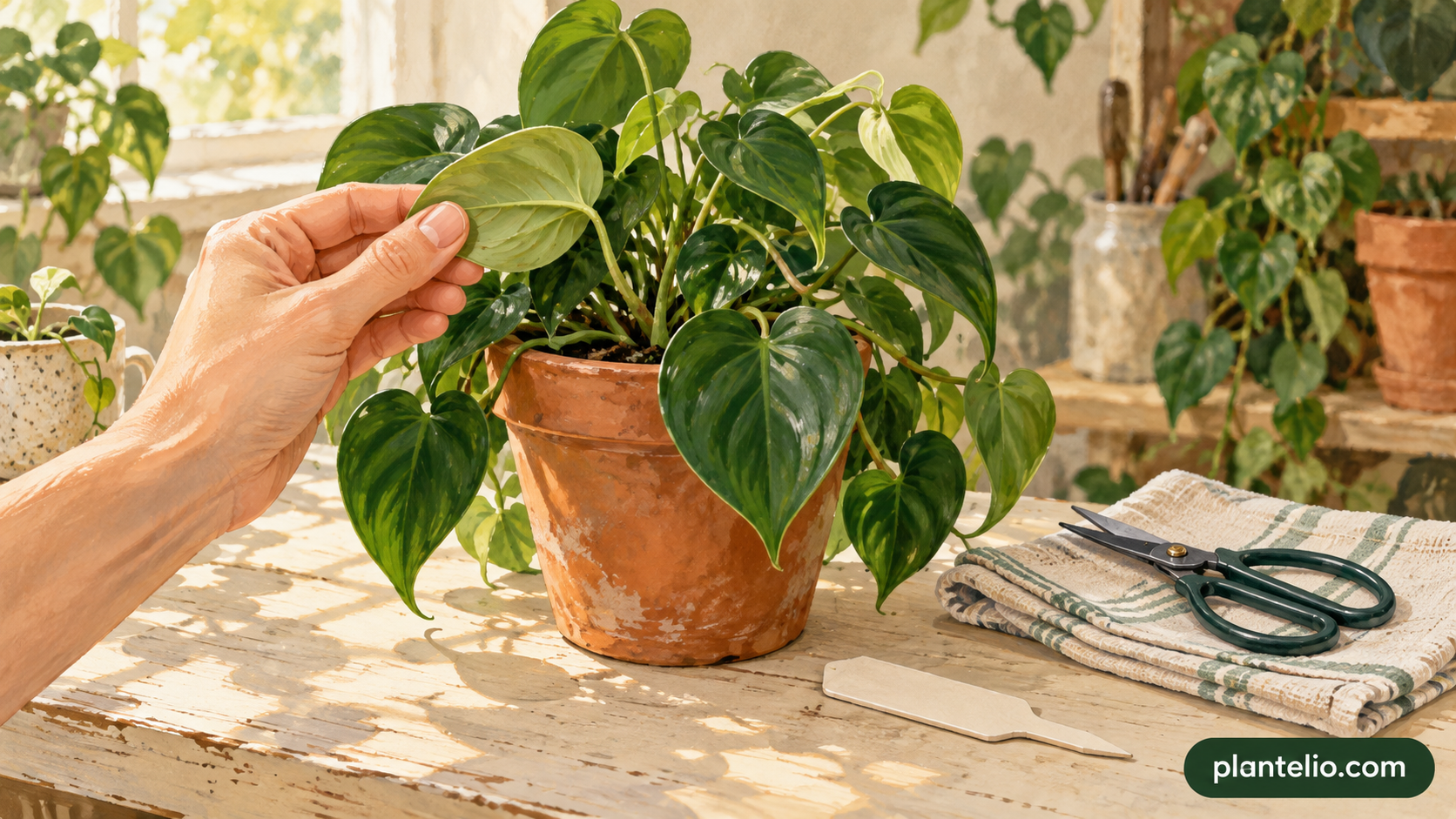
Map the vine before making a cut
Trace the main vine with your eyes. A leaf stalk joins that vine at a node. Keep stem tissue with a node on the cutting; a detached leaf and its stalk are not the same as a stem cutting. Use the Pothos Nodes Guide if you are unsure of the parts.
Take a close photograph before cutting. In your note, label the growing-tip end and the end nearest the parent plant. This is especially useful when dividing a long vine into several sections that might otherwise look alike.
Prepare one manageable batch
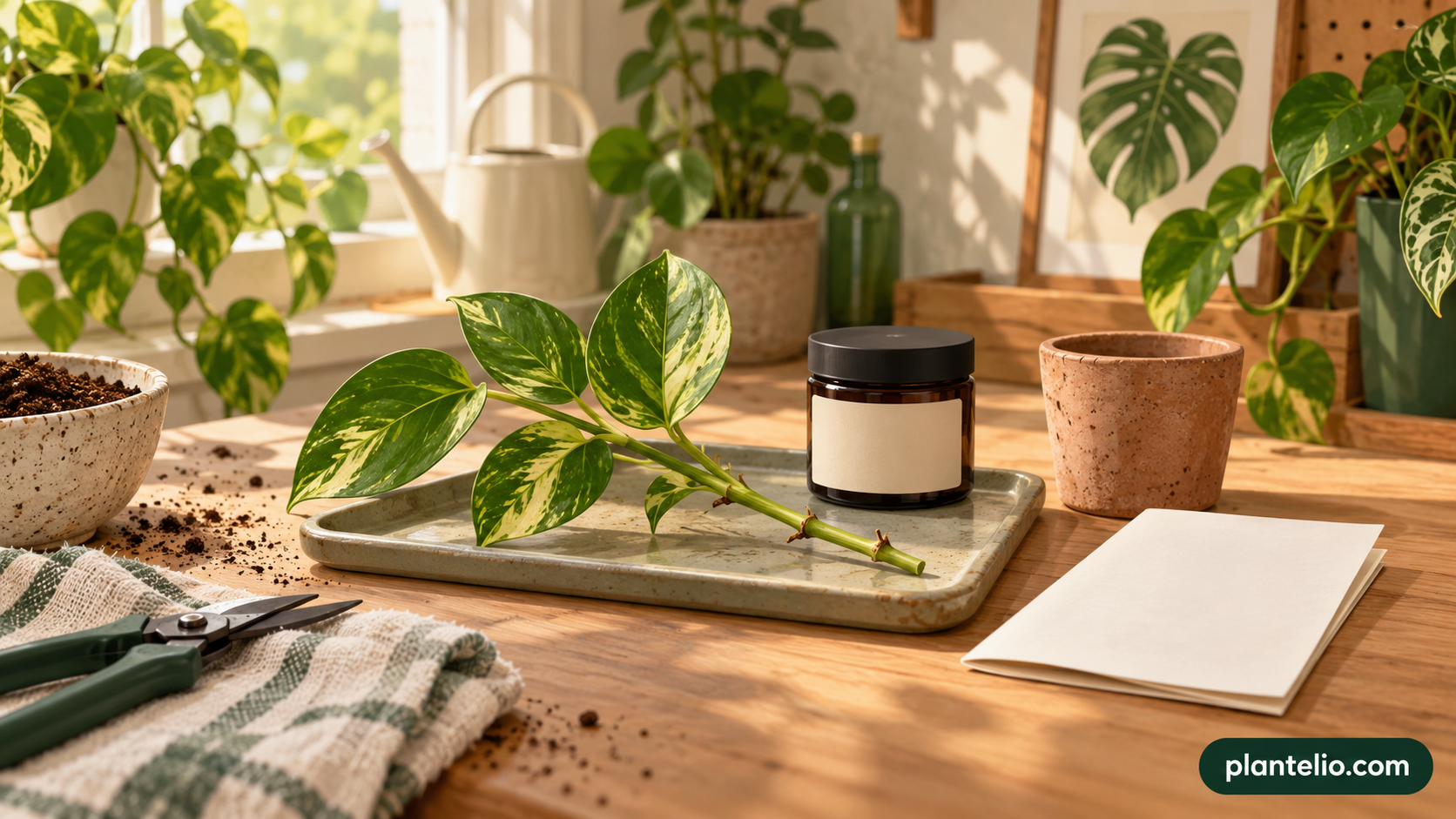
Use healthy material and a clean cutting tool. Prepare a clean water container or a draining container of moistened rooting medium. Keep leaves above water or the medium, and place a node in the rooting area. Give cuttings warmth and bright indirect light without strong direct sun.
Start with a number of cuttings you can label and inspect. Write the date, parent-plant identity and chosen method on each container. If you mix several cultivars without labels, later differences can be difficult to interpret.
Choose a method you can monitor
| Method | What you can observe | What to record |
|---|---|---|
| Water container | Exposed stem and developing roots | Water changes, node position and root photographs |
| Rooting medium | Moisture and the above-ground cutting | Watering checks and new shoot growth without repeatedly uprooting it |
With water propagation, check the level and refresh the water regularly. With medium propagation, maintain moisture and drainage. When transferring a water-rooted cutting into mix, expect an adjustment rather than assuming the two environments are interchangeable.
Keep roots and shoots as separate observations
Use a simple record with four entries: stem condition, roots visible, new leaves and changes to the setup. A leaf remaining green is one observation; visible roots are another. Avoid calling a cutting established solely because it has survived for a few days.
Illustrative record: cutting A has visible roots but no new leaf; cutting B has no visible roots yet and its stem remains firm. Record those findings separately instead of assigning both cuttings a fixed “week two” stage. This is an example of record keeping, not results from a Plantelio experiment.
Photograph a water-rooted cutting through the container when possible, using the same angle. For cuttings in medium, avoid pulling them out repeatedly just to check progress. Document above-ground changes and moisture instead.
Review setbacks before starting again
If a cutting deteriorates, note where the change started and photograph it before disposal. Was the affected area submerged, buried, damaged during cutting or already abnormal on the parent plant? These observations can help you change the next attempt, although they do not identify a pathogen.
Compare the setup with your notes rather than assuming a missing deadline means failure. Check orientation, node placement, light and container condition. If several cuttings in one container fail, keep that information separate from healthy cuttings in another container.
Plan the move into a pot
Prepare the destination before removing a rooted cutting from water. Choose a small draining container around the roots you have, handle them gently and maintain consistent care after planting. Monitor moisture and new growth; do not copy the watering interval of a large established basket. The watering guide explains how to check a container.
Label the planting date separately from the original cutting date. This lets you distinguish a change after transplanting from a problem that started during rooting. For a fuller pot, track how many separate cuttings remain established rather than counting the parent vine’s original leaves.
Sources and scope
The cutting and rooting principles are supported by Iowa State Extension: How to Propagate Houseplants by Stem Tip Cuttings. The species profile at NC State Extension also identifies stem cutting as a pothos propagation method. The labels, comparison table and records are practical planning aids. No rooting deadline or success rate is guaranteed. Reviewed October 11, 2026.











5 comments