Choosing a Healthy Parent Plant for Houseplant Cuttings
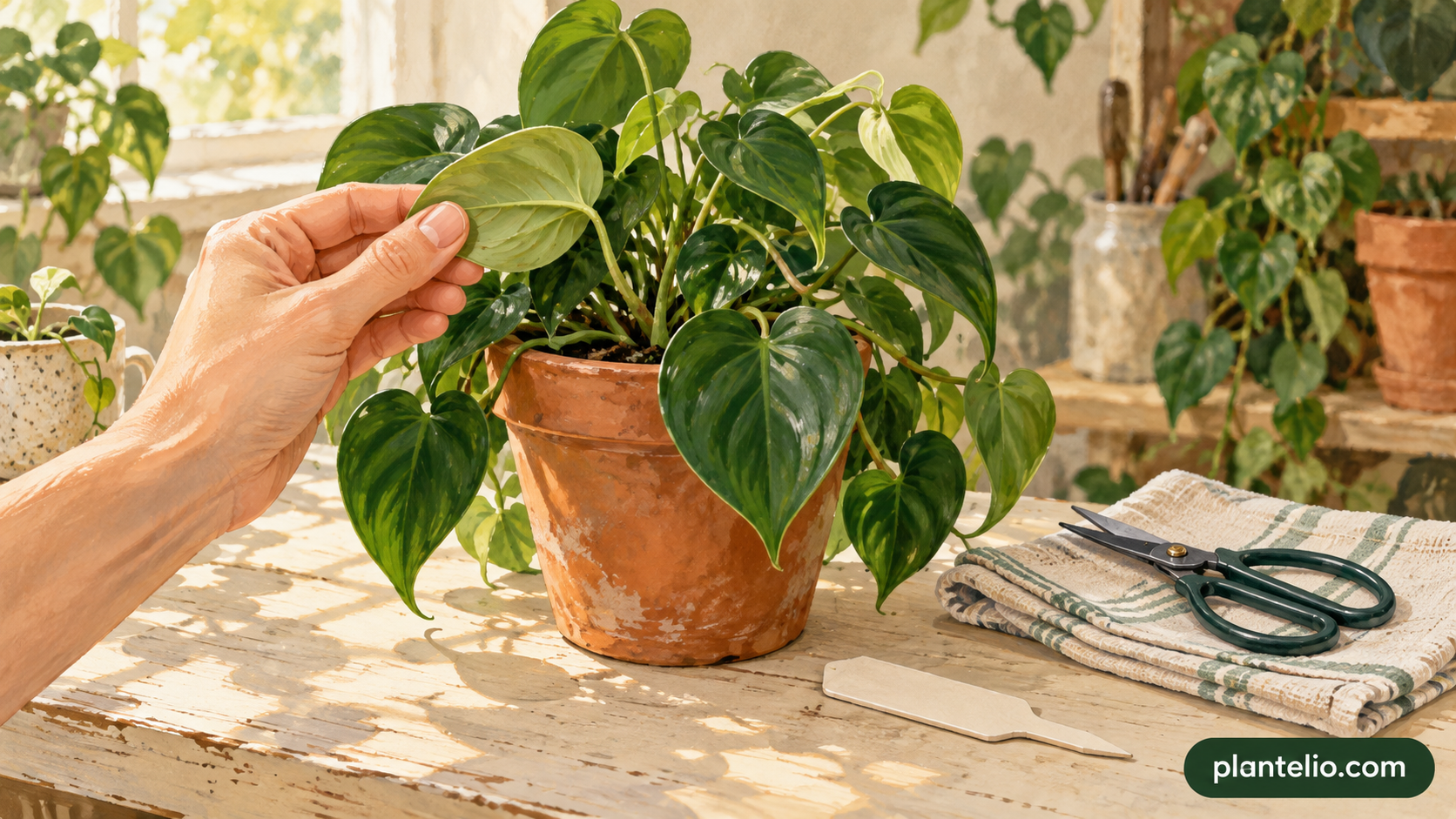
Choosing a healthy parent plant is an important decision before taking houseplant cuttings. A long stem is easy to notice, but length alone does not tell you whether the plant is a good propagation candidate. Check the whole plant before deciding where to cut.
Look for growth and investigate problems
Iowa State Extension’s propagation guide recommends healthy, vigorously growing parent plants and advises against propagating plants with pest or disease problems. It also notes that spring through summer is generally the best period, although many houseplants can be propagated at other times.
Use those points as a reason to assess the plant in front of you, rather than starting because a calendar says it is propagation day. If growth is weak or symptoms are spreading, pause the routine project and investigate first. A visually healthy leaf does not establish that the entire plant is disease-free.
A short inspection before you cut
Use this decision checklist as a practical starting point:
- Identity: can you name the plant well enough to find an appropriate propagation method?
- Recent history: has it been growing normally, or have you been troubleshooting an unresolved problem?
- Inspection: have you checked leaf undersides and stem junctions, rather than only the most attractive shoot?
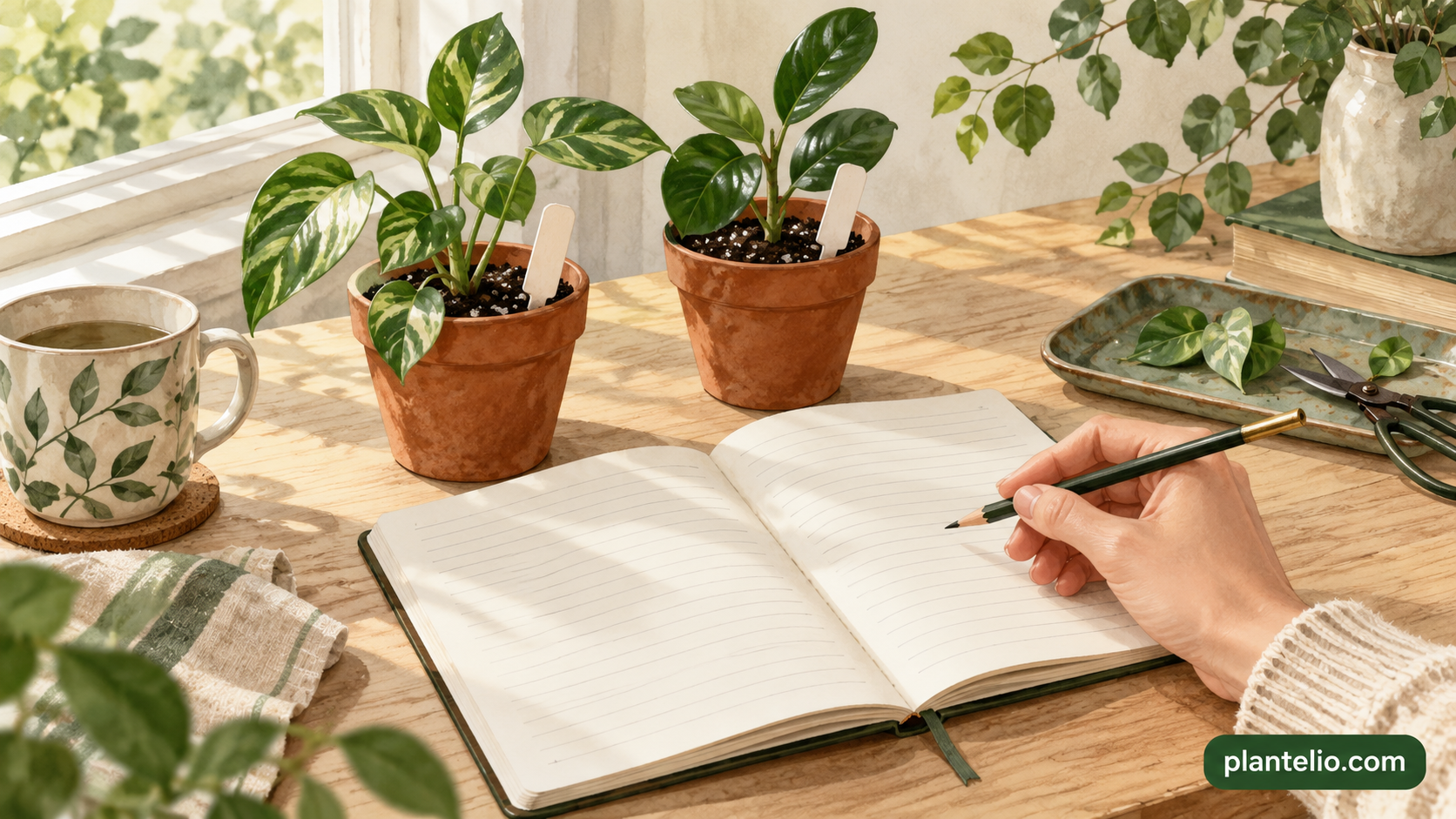
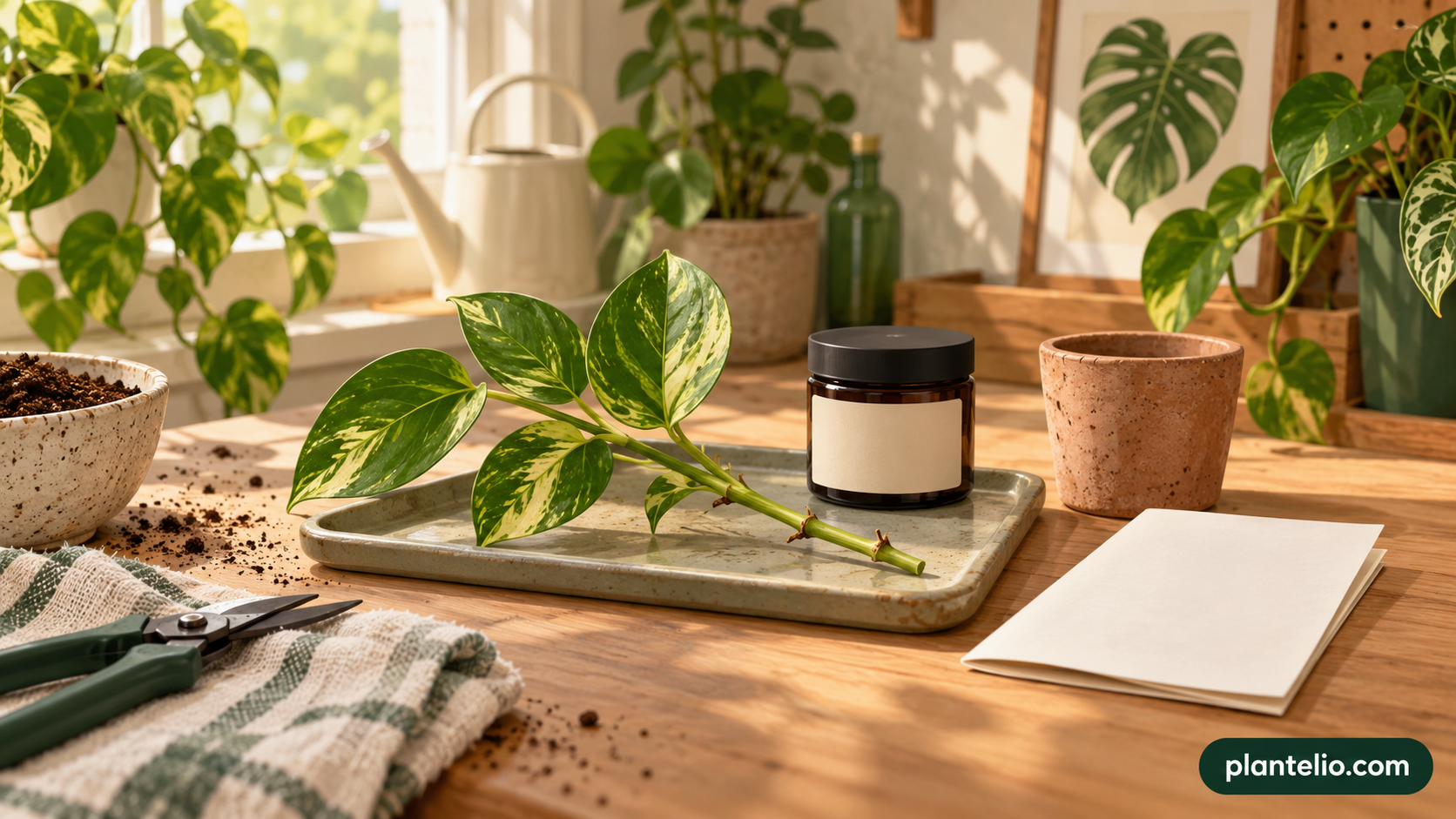
- Preparation: are the container, label and suitable rooting materials ready before anything is removed?
Follow our houseplant pest inspection routine if you need a systematic way to look. If something is suspicious, photograph it and identify the issue before sharing cuttings with someone else.
Match the cutting to the plant
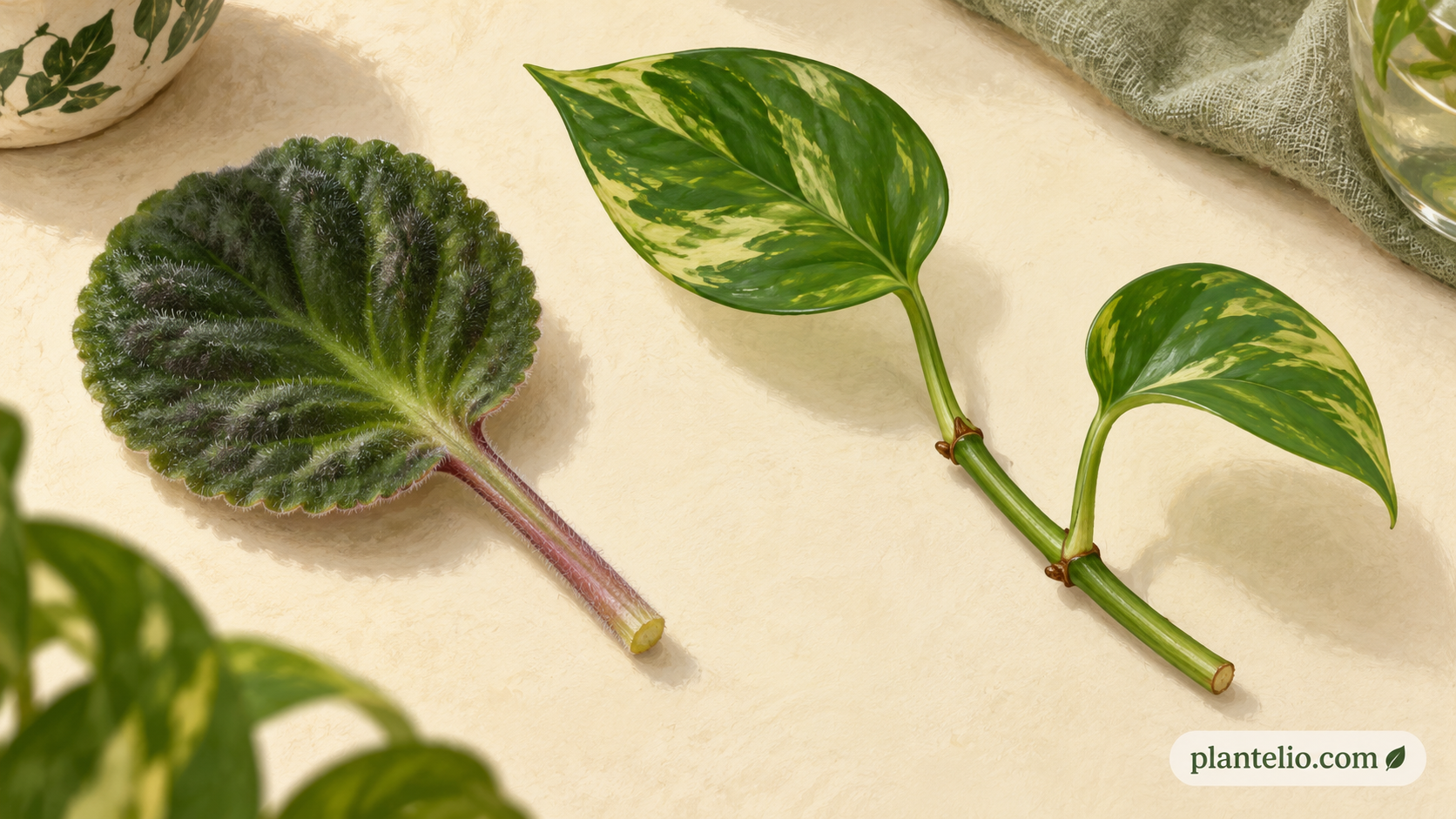
A healthy source plant still needs the right method. Illinois Extension’s propagation overview explains that plants differ in their ability to regenerate: some leaves can root without producing a complete new plant. It also emphasizes clean cutting tools and suitable, clean rooting medium.
Review leaf cuttings versus stem cuttings before making the first cut. Then use a species-specific procedure for the part to remove and its aftercare.
Record the parent plant’s identity and the date on the label. If you decide to wait, write down why: “unidentified marks on leaf undersides” is more useful than “try again later.” Emergency attempts to save a failing plant are a separate troubleshooting decision, not evidence that a stressed plant is the preferred source for ordinary propagation.










Post Comment