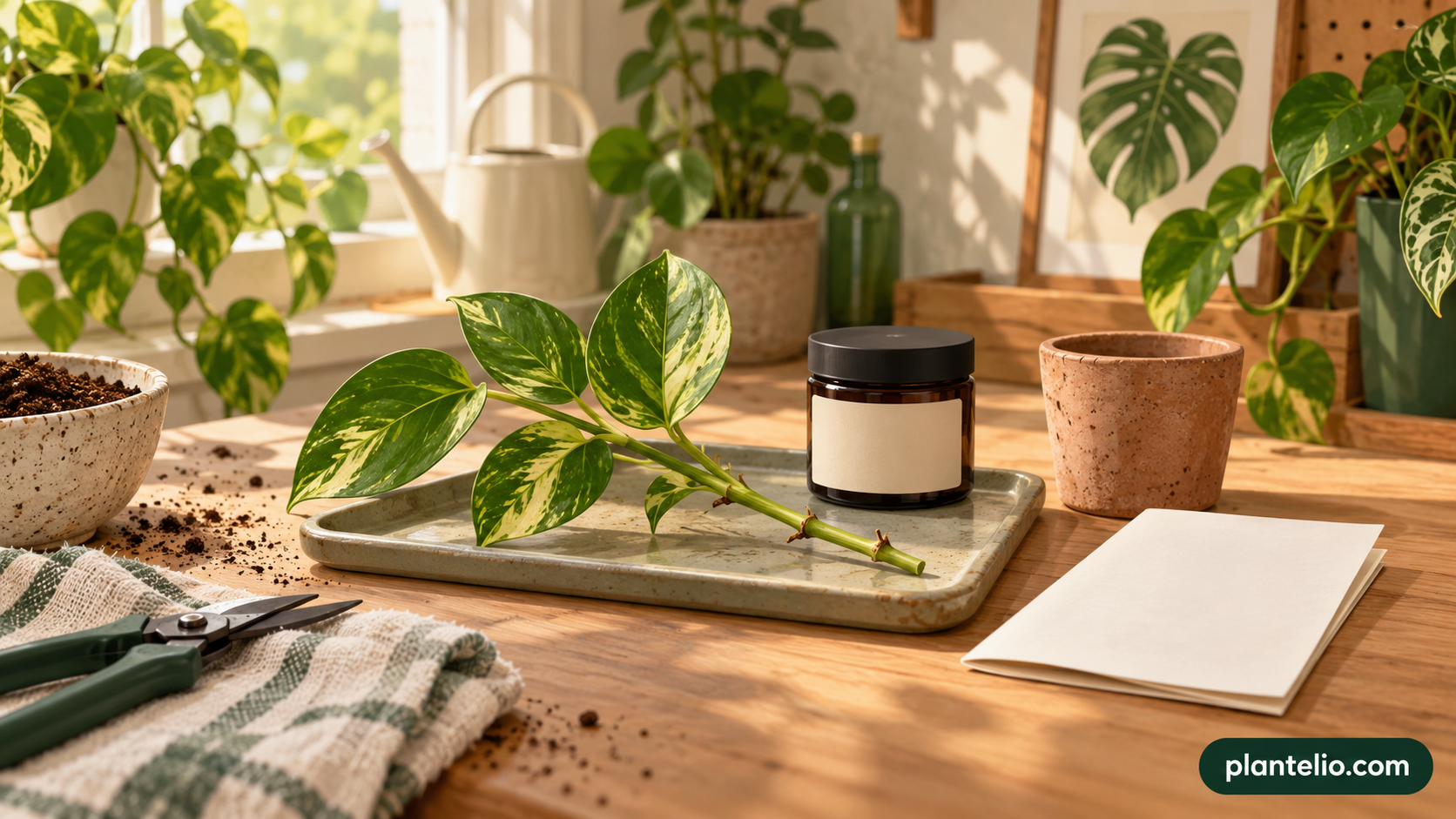
Rooting Hormone for Houseplant Cuttings: What to Check First
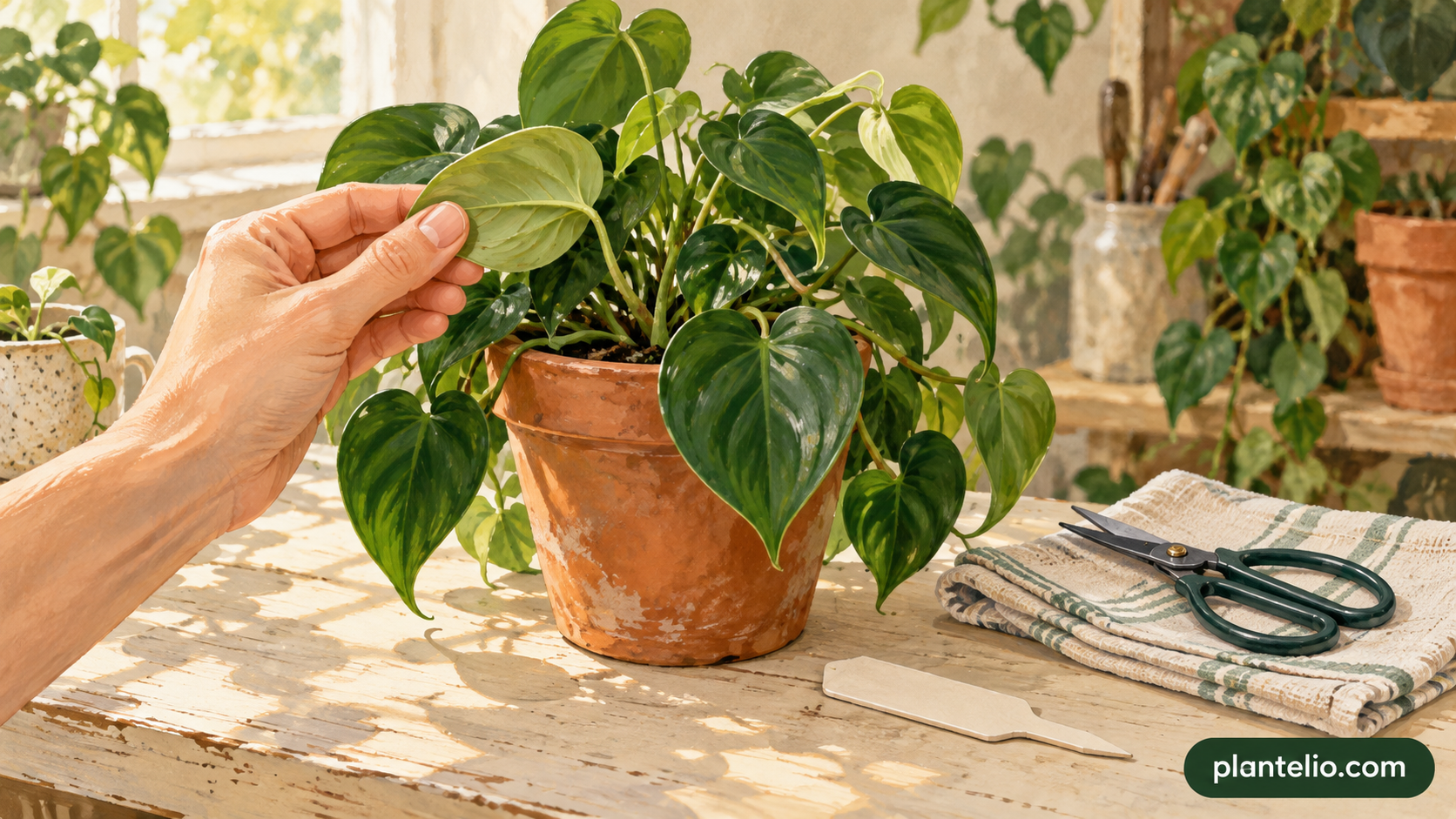
Rooting hormone is a propagation aid, but buying a jar is not the first step in taking a houseplant cutting. First identify the plant and confirm which part can produce a new plant. Then decide whether a product is useful for the method you plan to follow.
What rooting hormone can do
University of Minnesota Extension explains that auxin is naturally present in plants and is used in rooting products. These products come as powders, gels and liquids. Its Monstera guidance notes that cuttings may root without added hormone, although auxin can encourage rooting. That example does not establish a requirement for every houseplant.
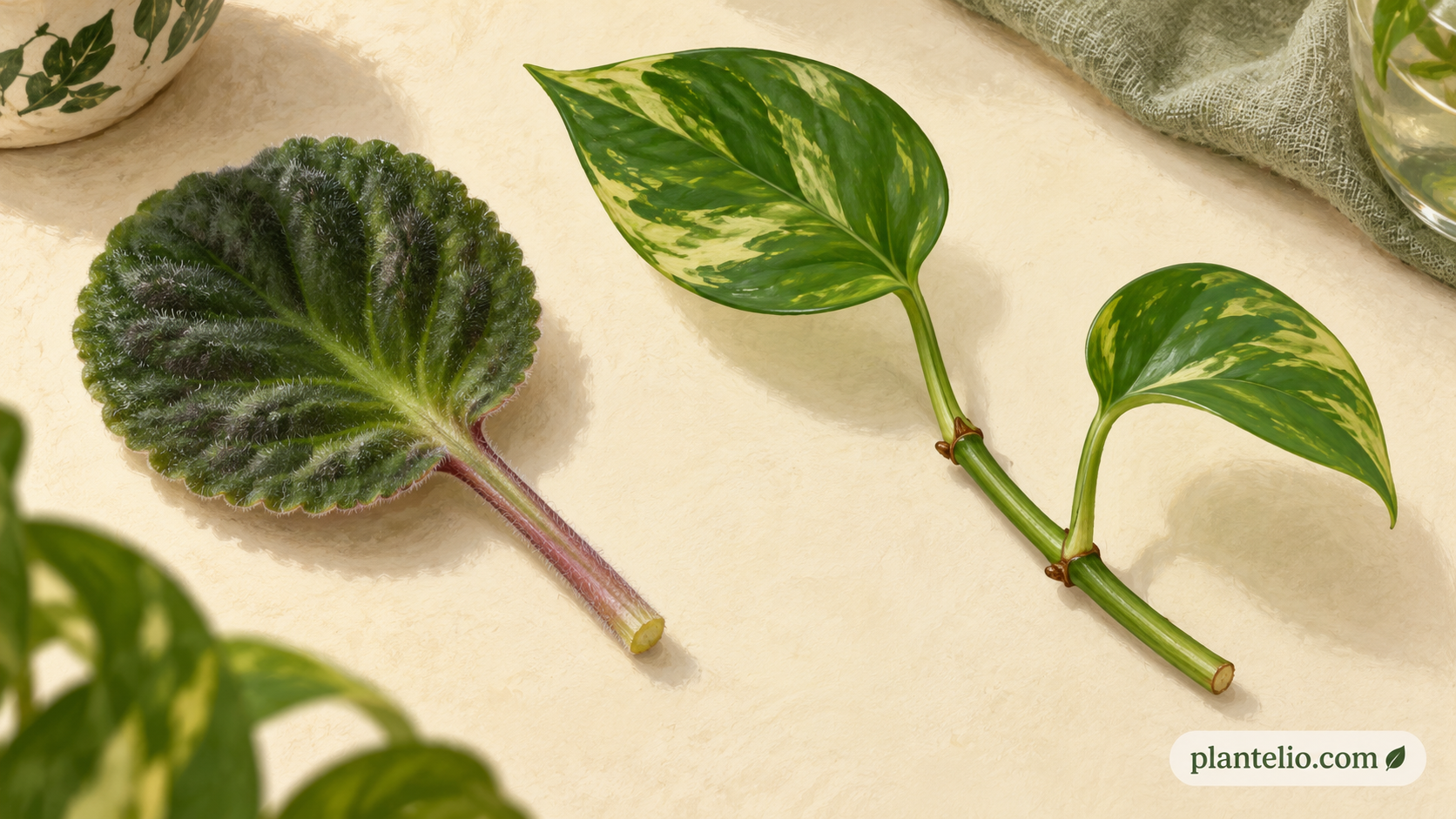
Keep the product’s role separate from the cutting’s suitability. Our leaf cutting versus stem cutting guide explains why the plant’s identity and the tissue you take matter. A product cannot substitute for choosing the right propagation method.
Read the actual product directions
Before opening a container, look for the plants and cutting types covered by its instructions. Check the formulation, application method, storage directions and any handling precautions. Do not copy a dose from a different brand or assume a gel and a powder are interchangeable.
If a guide describes rooting in water, do not automatically add a product intended for another method. Ask the manufacturer or a local extension adviser when the directions do not cover your intended use. More product is not a sound substitute for missing instructions.
Prepare before you cut
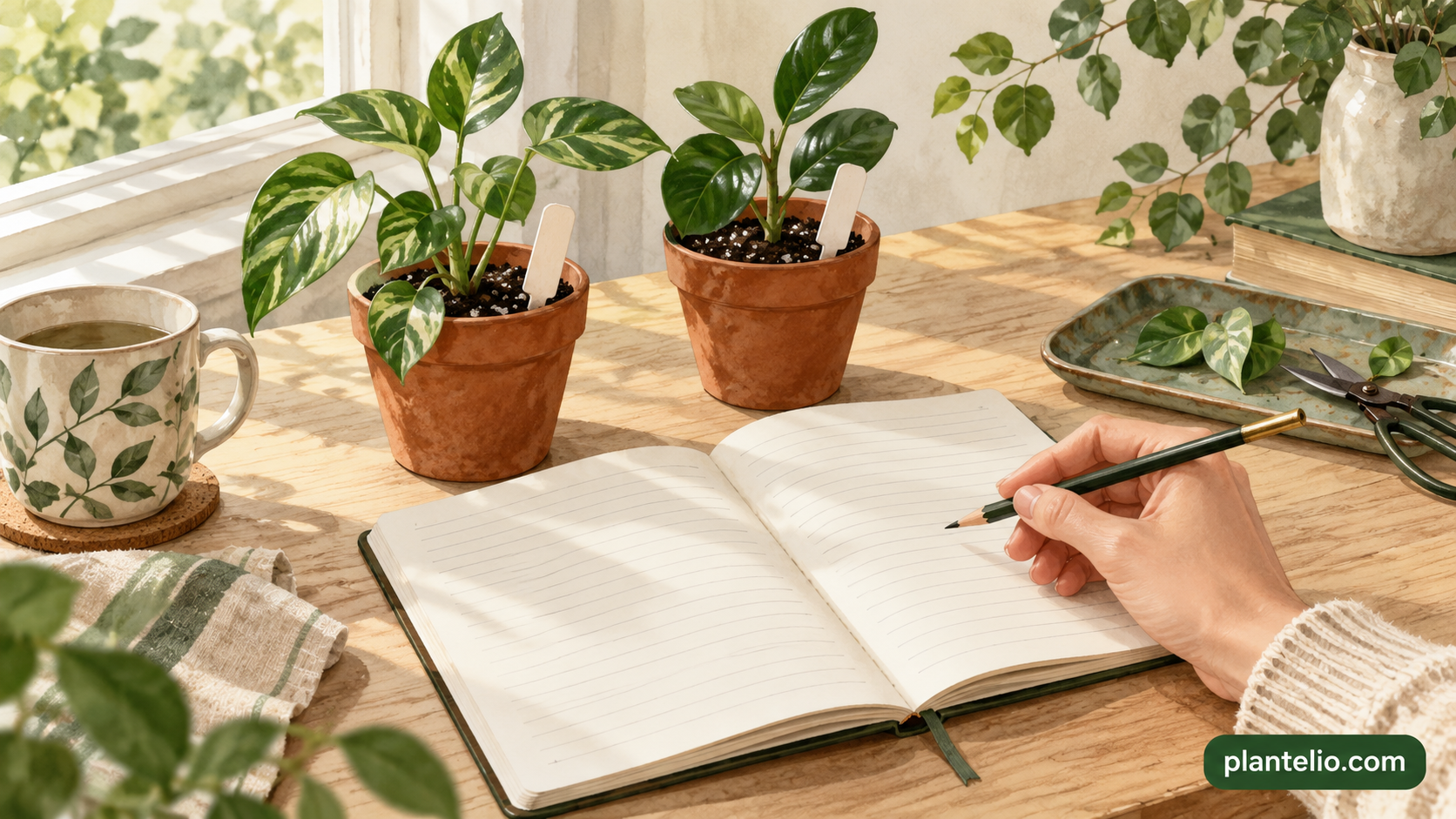
- Write down the plant name and the propagation guide you will follow.
- Set out the suitable rooting medium and container.
- Keep the product directions accessible throughout the task.
- Prepare tools using our pruning-tool cleaning guide.
Keep the original product packaging so you can identify what was used later. Record the date and method beside the cutting’s label. This makes a future question easier to answer than a note that only says “rooting powder.”
Assess the whole setup
If a cutting does poorly, review the plant material, medium, moisture and growing conditions before blaming the absence of hormone. Compare your setup with the species-specific instructions. Avoid repeatedly adding products while changing several other conditions; you will lose track of what happened.

Post Comment