Florist Kalanchoe Care: Watering, Light and the Next Bloom
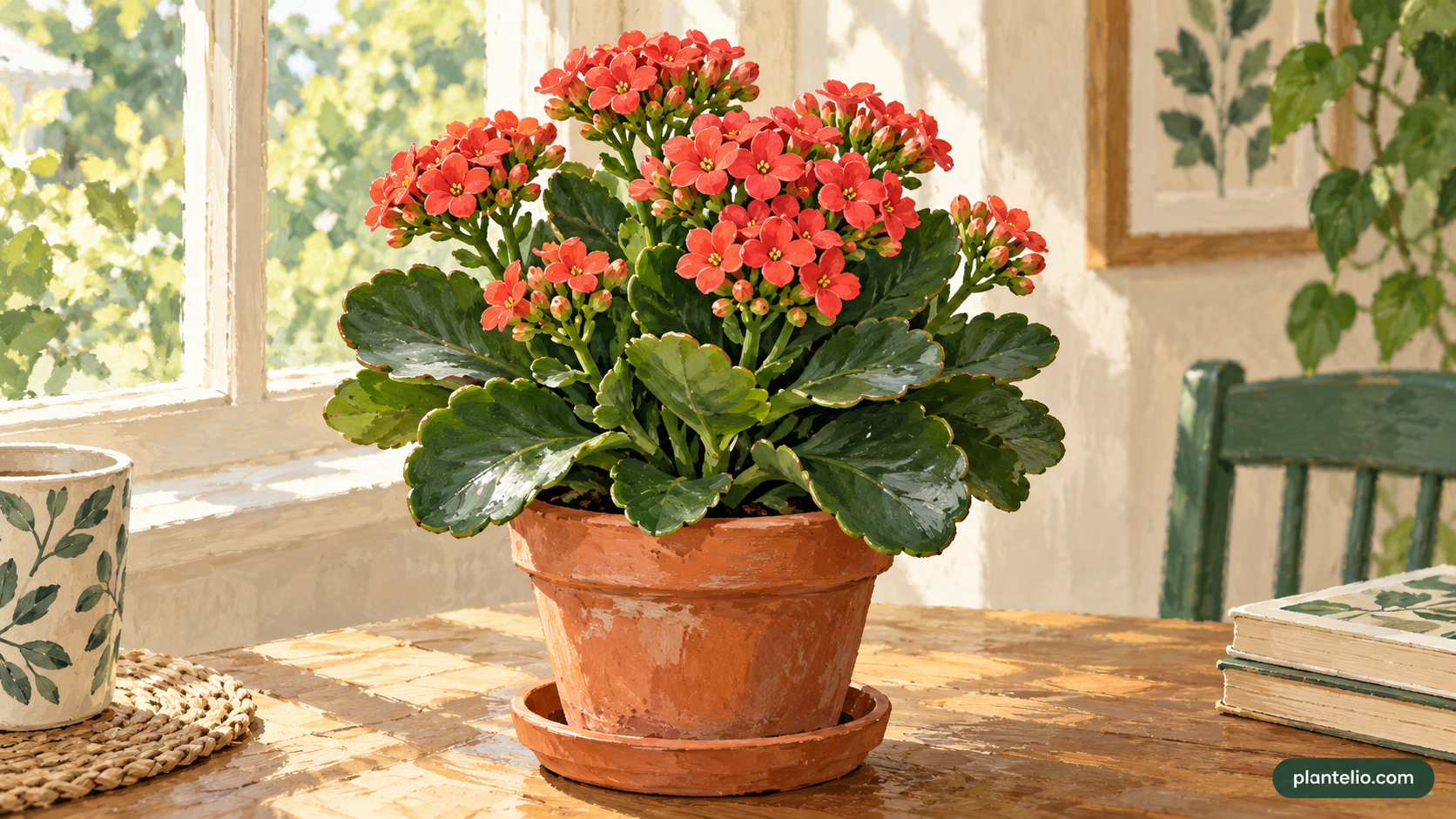
Florist kalanchoe care continues after the colorful flower clusters fade. Kalanchoe blossfeldiana is a succulent with thick, scalloped leaves, and it can be kept for another flowering cycle. Separate everyday care from the long-night treatment used to encourage new buds.
Start with bright light and drainage
Clemson Extension describes kalanchoe as a plant for bright conditions and warns that low light can produce stretched growth. NC State adds that prolonged strong direct sun can scorch leaves. Choose a bright window position, then assess the actual exposure rather than placing a newly purchased plant straight into intense afternoon sun.
Our guide to bright indirect light at home helps distinguish filtered brightness from direct sunlight. Note when sun reaches the leaves so you can compare the location with the plant’s previous growing conditions.
Let the pot dry between waterings
NC State recommends a well-drained cactus or succulent mix and drying between thorough waterings. Clemson also warns against frequent watering and leaving the plant in standing water. Decorative wrapping should not turn a draining pot into a water reservoir.
Use our soil moisture checks before reaching for the watering can. Record the condition of the mix and remove collected runoff. A plant in flower still needs this check; flowers alone do not mean that its roots need more water.
Understand the long-night requirement
Clemson explains that flower buds develop under short days and long nights. NC State specifies about 14 hours of complete darkness daily for at least six weeks, alongside bright daytime light. A living-room lamp during the intended dark period can therefore interfere with the routine.
Before attempting reblooming, choose a place where the dark period can remain uninterrupted. Write down the start date, lights-off time and morning return to light. Treat the six-week period as a bud-development treatment, not a promise that open flowers will appear on its final day.
Keep expectations and placement practical
Clemson notes that flowering may take roughly twelve weeks from the start of long nights under suitable conditions. Remove spent flower stems and continue ordinary care after flowering. NC State advises keeping the plant away from children and pets because it is toxic if eaten.
Keep a photo of the plant at the beginning of your reblooming attempt. If buds do not develop, review the light schedule and growing conditions before restarting the process.
Sources: Clemson Extension: kalanchoe; NC State Extension: florist kalanchoe.











Post Comment