Jewel Orchid Care: Growing Ludisia for Its Leaves
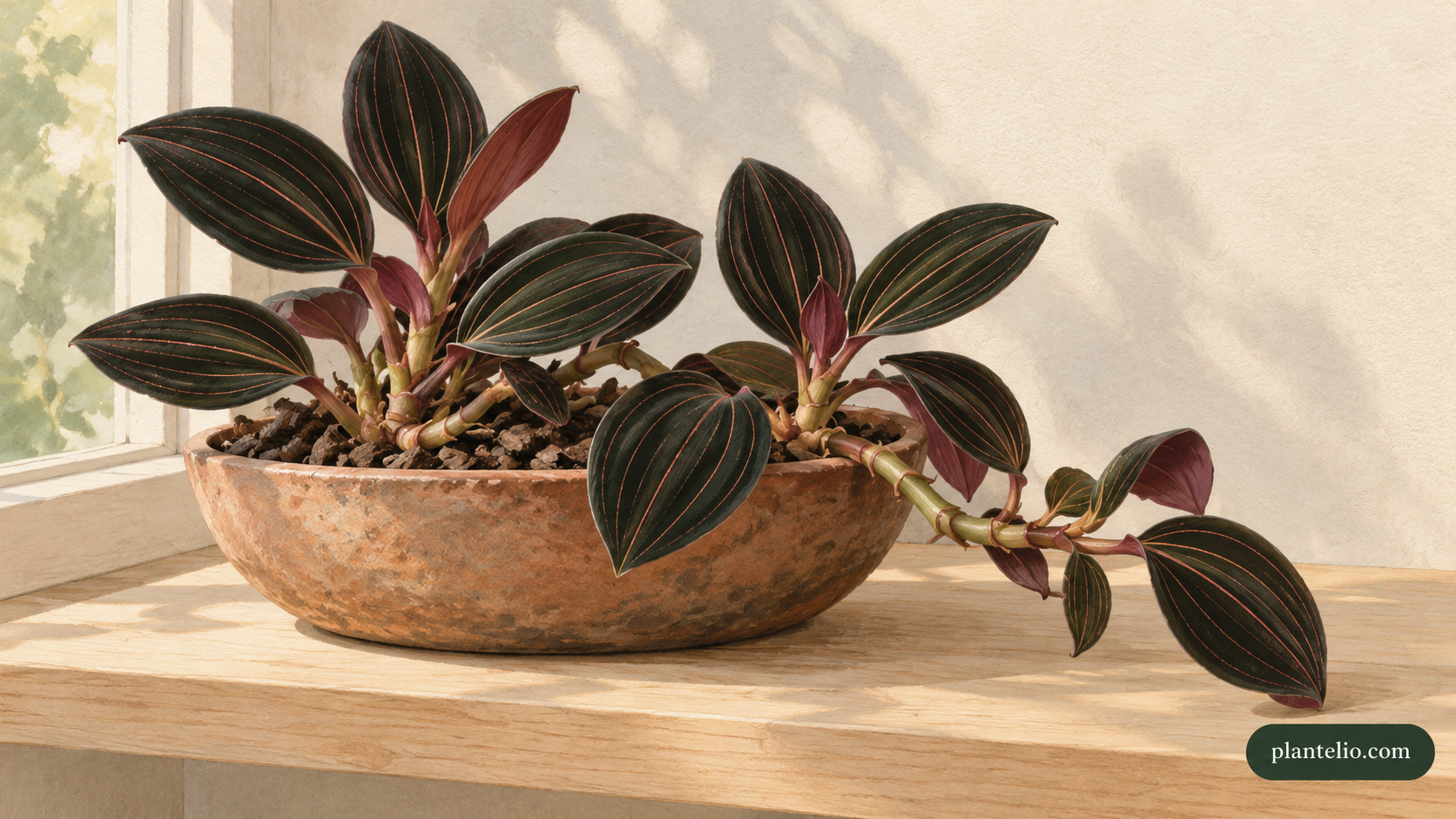
Jewel orchid care starts with understanding what you bought. Ludisia discolor is a terrestrial orchid grown mainly for its velvet leaves and fine colored veins. Its roots grow in a substrate; it does not need the same setup as every orchid sold beside it.
Choose light for the foliage
Give the plant intermediate, filtered light rather than a hot sunbeam. A bright position with protection from harsh direct sun is a useful starting point. Our guide to recognizing bright indirect light at home can help you assess the actual shelf rather than relying on a window label.
Before changing the position, photograph the leaves in ordinary daylight. This gives you a reference for new growth without mistaking a different camera exposure for a change in leaf color.
Keep the root zone moist and airy
NC State recommends moisture with good drainage and warns that wet soil can rot the plant. Use a suitable houseplant or terrestrial-orchid mix instead of assuming that a very coarse basket of bark suits every orchid. A shallow, wide container gives the creeping growth room to spread.
Check the mix before adding water, then let excess water escape. Our soil moisture checks explain how to combine touch and pot weight. Record what you find, not just the date: “still damp” is more useful than a rigid weekly watering reminder.
Handle stems gently
The fleshy stems are brittle. Support the pot from underneath when moving it, and avoid lifting the plant by its growth. Leave enough shelf space that passing sleeves will not catch the spreading stems.
The RHS recommends an airy position with good humidity. It also advises removing flower stems once flowering has finished. Small pale flowers are normal, even though the leaves are the main attraction.
A simple weekly check
Look at the newest leaf, the potting mix, and the stem bases. Note any softening or persistent wetness before adding more water. Keep observations together so you can change one part of the setup at a time.
Sources: NC State Extension: Ludisia discolor; RHS: Ludisia discolor.












Post Comment