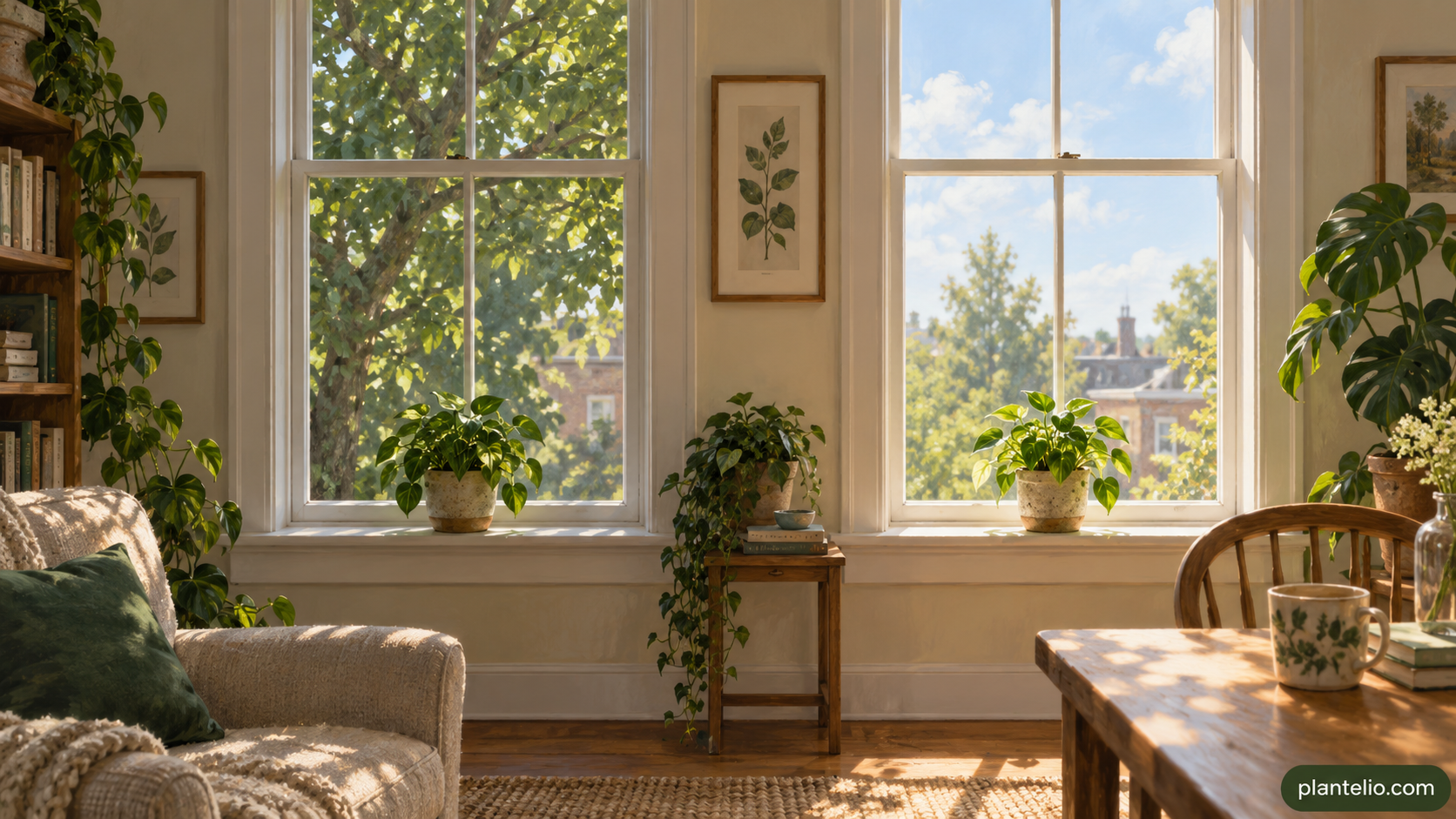
Why Window Direction Is Only Part of Houseplant Lighting
Two windows facing the same direction can offer different conditions. A compass direction cannot describe everything between the sky and the leaves.
Look for obstructions
The University of Maryland lighting guide identifies curtains, screens, nearby trees and buildings, weather, season and window characteristics as influences on light intensity. It also explains that intensity decreases as a plant moves farther from the source.
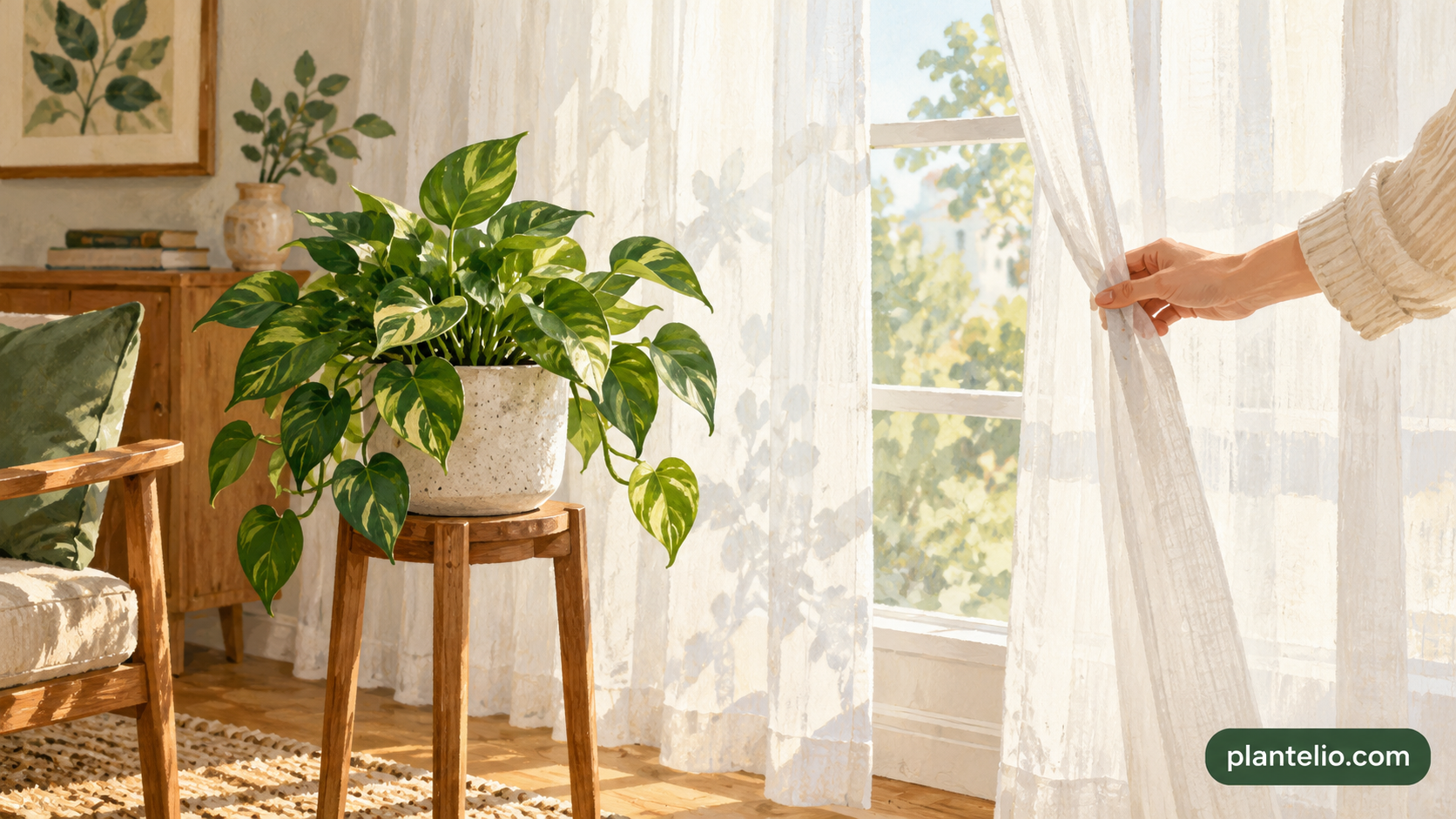
Inspect the actual spot. Is the plant behind a heavy curtain? Does a neighboring building block part of the sky? Is the shelf at window height or below the sill? Record observations rather than labeling the entire room.
Compare positions consistently
Name two candidate locations A and B. Observe both on the same day at similar times. Write down direct sun, curtains and weather. A sunny morning at A and an overcast afternoon at B are not a clean comparison.
Keep this in your plant care log. Photographs document obstructions, but automatic camera brightness is not a light-meter reading.
Revisit the decision
Window direction stays the same while surrounding conditions can change. Recheck when curtains change, a tree changes its canopy or seasonal sun paths shift. Choose a species that suits the observed conditions.
If you later move the plant, continue routine checks including soil moisture. A location description including the window, obstructions and exact position is more useful than compass direction alone.




Post Comment