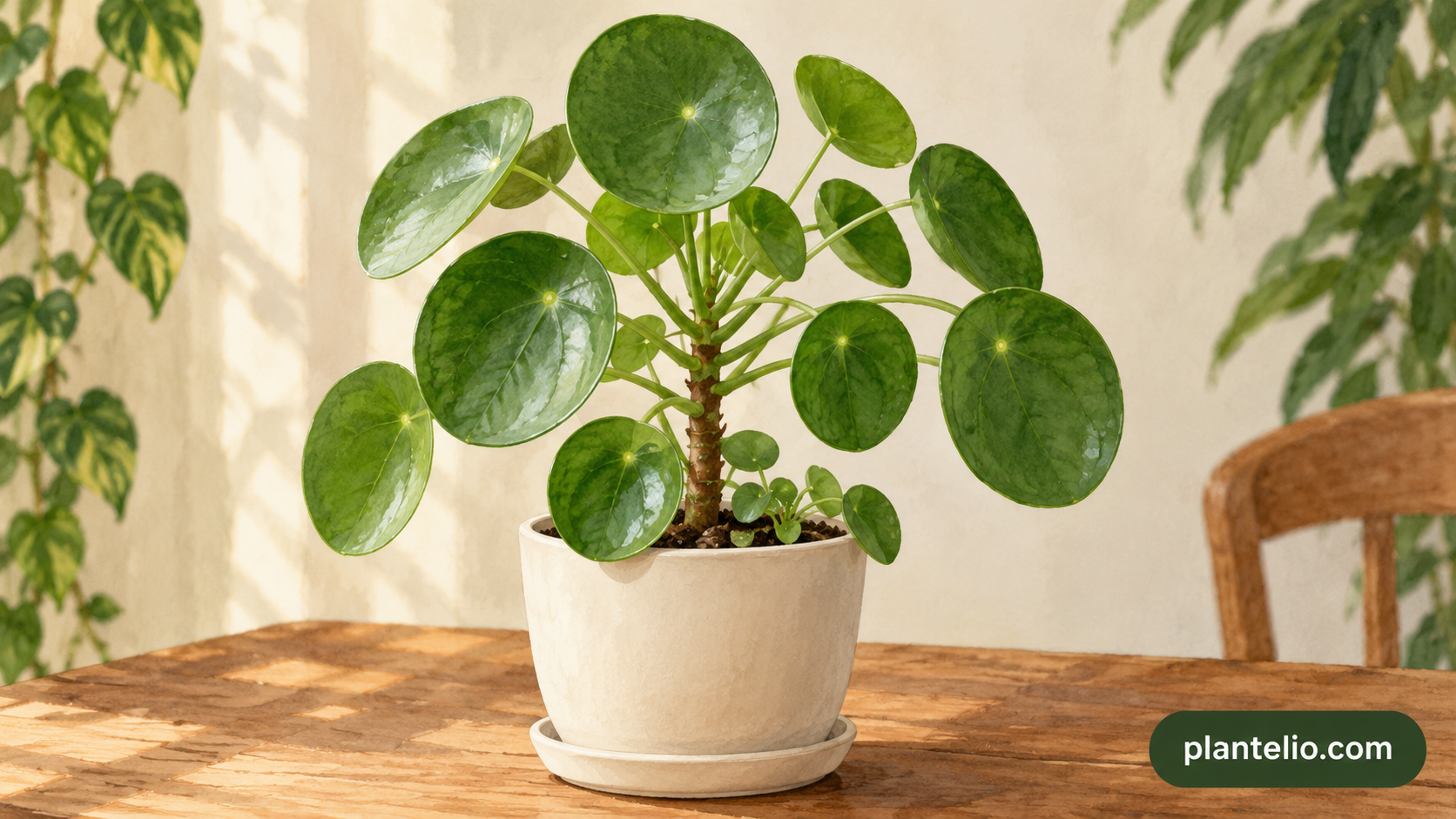
Pilea Peperomioides Care: A Routine for the Chinese Money Plant
Pilea peperomioides care begins with its distinctive round leaves and a location that lets you inspect the plant easily. Often called the Chinese money plant or pancake plant, it makes a recognizable addition to a small indoor collection. Keep its full botanical name with your care notes rather than relying only on a common name.
Recognize the round-leaved plant
NC State Extension’s Pilea profile describes circular, fleshy leaves with their stalks attached near the center of the leaf blade. It is generally a compact plant, around eight to twelve inches tall and wide, although the individual plant and growing conditions matter.
Photograph it from the front and above when setting up your records. Those views make it easier to compare its outline later without treating every change in a leaf’s angle as a new problem.
Start with bright indirect light
NC State recommends bright indirect sunlight and keeping the plant away from cold drafts and heat sources. It notes that inadequate light can produce leggy growth.
Use our bright indirect light guide to assess the chosen position. Record where the pot stands and whether direct sunlight reaches it. When comparing a later photograph, include the location history rather than judging the leaf shape in isolation.
Keep moisture checks separate from the calendar
The species profile recommends moist, well-drained potting mix and warns that overwatering can lead to root rot. It also advises avoiding wet foliage because leaf spots can develop. Aim your watering at the growing medium rather than treating the leaves as the target.
Before adding water, use our soil-moisture checking routine. Compare the condition of the medium with your previous observations. A useful note says what the pot was like and what you did, not simply “Pilea day.”
Observe offsets without rushing to divide
NC State lists offsets, or pups, and stem cuttings as propagation methods, with spring or early summer during active growth preferred. Seeing a small plant beside the parent does not create an immediate deadline to separate it.
For a new owner, it is reasonable to document the offset and keep the existing care routine stable while learning about the plant. If you later choose propagation, use a method-specific guide and prepare before disturbing the pot.
Make problem reports specific
If a concern develops, record the affected leaves, recent care changes and the pot’s moisture condition. Include a clear photograph of the entire plant as well as the affected area. That information helps separate a location question from a watering or pest question without guessing from a single leaf.










Post Comment