Cast Iron Plant Care: Growing Aspidistra Indoors
Cast iron plant care should be simple, but its tough reputation is not a reason to forget it in an unsuitable corner. Aspidistra elatior is useful when you want an upright foliage plant and can provide a shaded indoor position. Start with a place you can reach easily for moisture checks and leaf inspection.
Understand the plant you are choosing
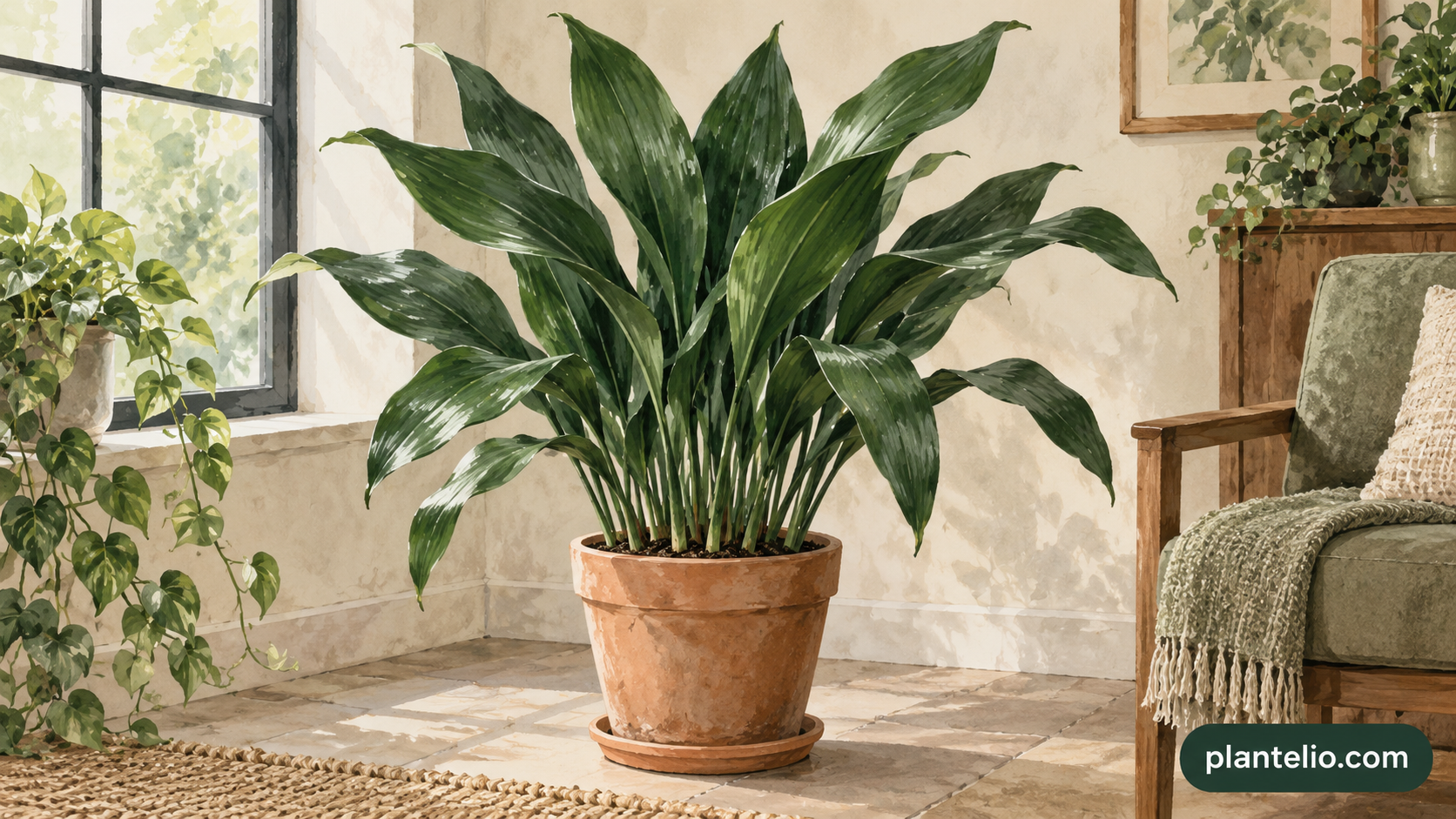
NC State Extension describes Aspidistra elatior as a slow-growing, evergreen plant that forms upright clumps and spreads through rhizomes. Its long, leathery leaves emerge from the base rather than forming a branching tree. Some cultivars have stripes or spots.
Keep the cultivar name if it came with one. Photograph the foliage when you bring it home so normal markings are not later confused with a new problem. Look at the whole clump when choosing a position: a narrow pot does not mean the leaves occupy equally little space.
Choose shade with a clear view of the conditions
The NC State profile recommends partial to full shade and warns against direct sun. Indoors, assess the light at leaf level rather than interpreting “shade tolerant” as permission to hide the plant wherever it fits.
Our guide to describing indirect light can help you compare locations. You do not need to force this plant into your strongest window; use the guide to distinguish direct exposure from a shaded position and record what you observe.
Check the pot rather than relying on toughness
NC State recommends well-drained growing conditions and describes drought tolerance, with reduced watering in winter. Treat that tolerance as resilience, not a target to test by repeatedly neglecting the pot.
Use our soil-moisture check before watering. Write down whether the medium is still moist and what action you took. If it is still wet, the fact that a calendar reminder appeared is not a reason to add another drink.
Set expectations for a slow grower
Keep an occasional whole-plant photograph from the same angle. Compare new growth over time rather than expecting the pace of a fast-growing vine. A quiet week is not, by itself, evidence that the plant needs more fertilizer or a different pot.
If the plant changes noticeably, collect specific observations: which leaves changed, the recent watering history and any move or change in light. That short record is more useful than responding to its “cast iron” nickname with either complete neglect or repeated rescue treatments.










Post Comment