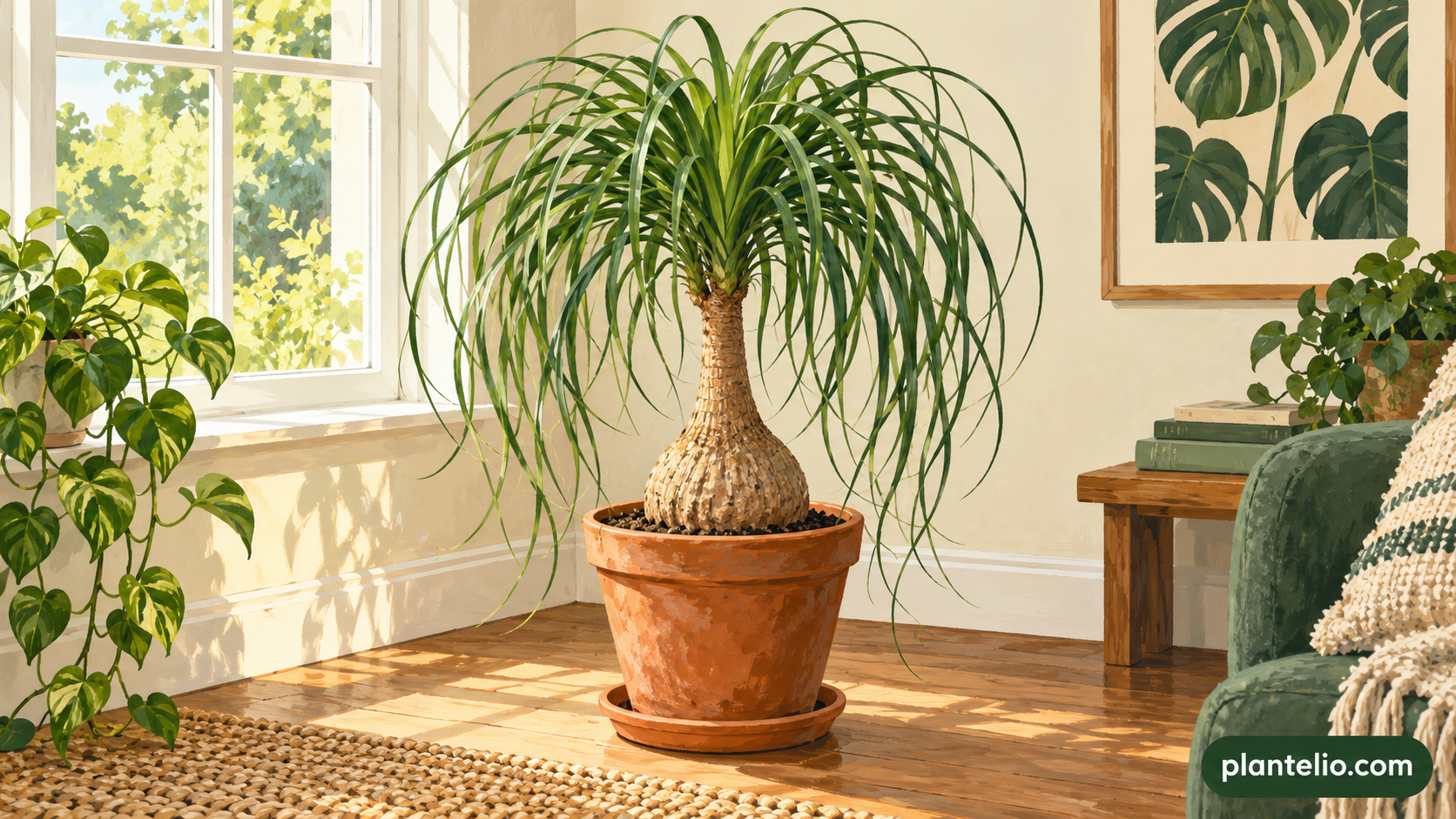
Ponytail Palm Care: A Sunny Position and Careful Watering
Ponytail palm care is easier to organize when you start with the correct plant name: Beaucarnea recurvata. Do not let the word “palm” decide its routine. Use the name on the label when looking up requirements, and make a separate care note for this pot.
Ponytail palm care essentials
NC State Extension describes Beaucarnea recurvata as a slow-growing, drought-tolerant member of the asparagus family, rather than a true palm. Its swollen stem stores water. Give it a sunny window and a freely draining cactus or succulent mix.
During summer growth, water deeply and allow the mix to dry between waterings. Reduce watering greatly in winter. This plant tolerates dry indoor air, and it rarely flowers as a houseplant. Its long, narrow leaves arch from the top of the trunk; the enlarged base is a normal feature.
Assess the window before rearranging the room
Write down when direct light reaches the proposed position. Check the plant’s actual location rather than judging the room from the doorway. If you are comparing shade with sun, our explanation of bright indirect light helps define the difference; the sunny position recommended for this species is a distinct requirement.
Keep a simple sketch of the room with the proposed pot position marked. Include obstacles such as furniture and blinds. This makes future comparisons easier when your daily routine or window coverings change.
Keep its watering record separate
Before adding water, use the steps in our soil-moisture checking guide. Record the result of the check, not just the date. A reminder can prompt an inspection without becoming an instruction to pour.
For example, write “checked Tuesday; still damp; no water added.” That entry is useful even though nothing was done. It prevents a second household member from assuming that a blank watering calendar means the plant has been forgotten.
Build a baseline for this plant
Take a whole-plant photo and a separate view of the base when you start the routine. If a concern develops, compare with those pictures and note recent care changes. Avoid making several unrelated interventions before you have documented the problem. When seeking advice, include pot size, growing mix, window position and the last moisture check so the discussion starts with evidence.










Post Comment