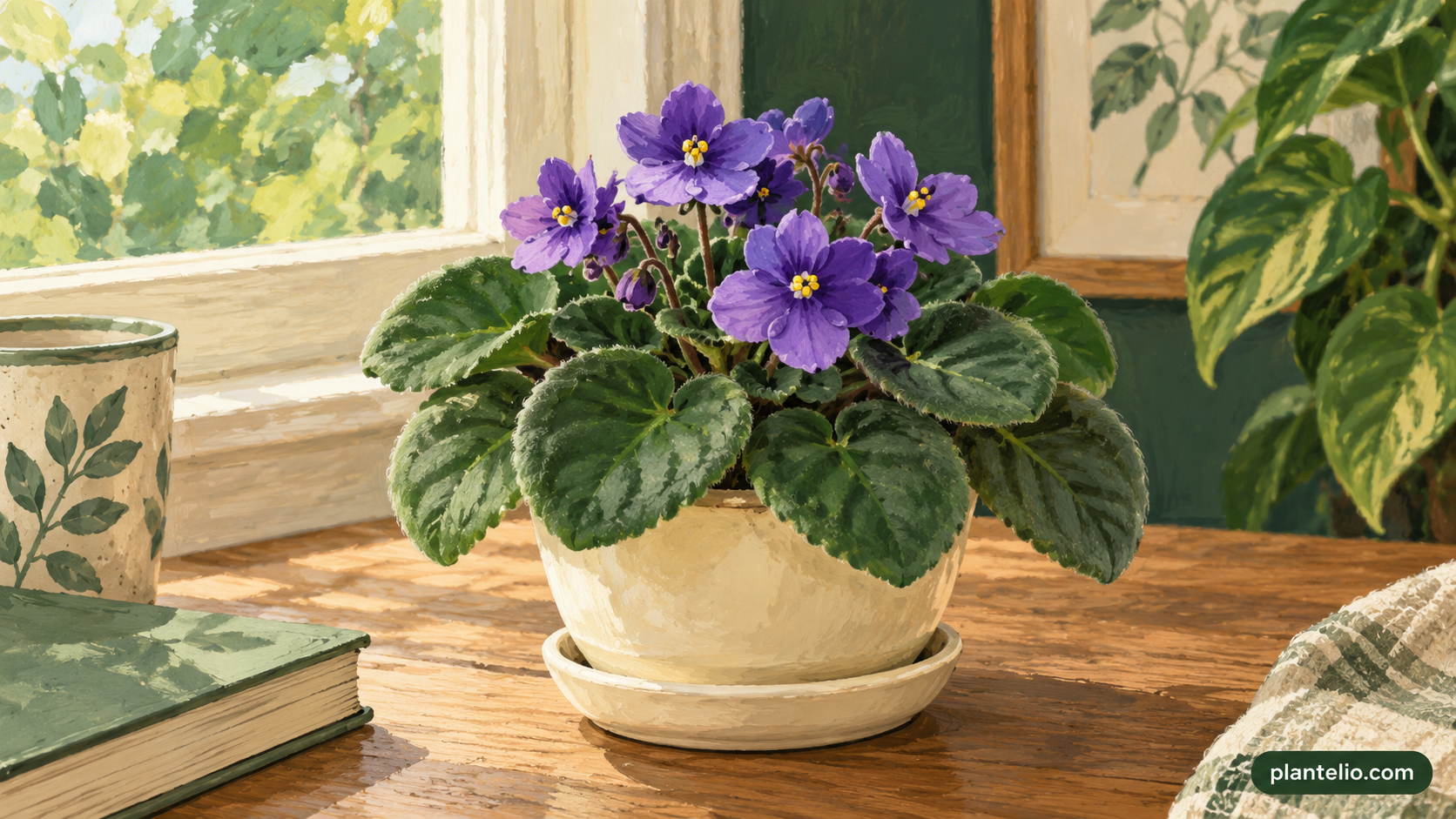
African Violet Care: Light, Watering and Gentle Handling
African violet care starts with a small, repeatable routine. Before buying another product, identify where the plant sits, how you decide to water and what has changed since it arrived. This guide focuses on an ordinary pot with drainage; a wick-fed setup needs its own matching container and growing mix.
African violet care essentials
The University of Minnesota Extension guide to African violets recommends a bright location, well-drained soilless mix and moisture without sogginess. Keep the pot out of standing water. Room temperatures around 16–27°C (60–80°F) suit these plants, with roughly 21°C (70°F) an ideal reference.
Water the mix carefully with a narrow spout, avoiding the foliage. Alternatively, bottom-water and remove the pot once the surface becomes moist, then let it drain. Dust can be removed gently with a dry, soft artist’s brush. Remove spent blooms carefully rather than pulling the whole rosette.
Choose a place you can observe
Start with our guide to recognizing bright indirect light at home. Write down the actual position: for example, “on the side table beside the window.” A room name alone is difficult to compare later. Photograph the plant from the same angle when you begin your record.
Then note when a sunbeam reaches the leaves and when curtains are closed. This turns a vague description into information you can use when comparing two possible places. Make one deliberate adjustment and record its date instead of moving the plant several times without notes.
Make watering a decision
Use our soil-moisture checking guide to separate inspection from automatic watering. Your record can have three short entries: mix checked, water added or withheld, and saucer emptied. Do not copy the amount used for a larger neighboring plant.
Keep a useful troubleshooting record
If the appearance changes, record which leaves are affected, whether the mix is wet, and when you last watered. Include a clear photo of the whole plant as well as the affected area. That is more useful for seeking help than a close-up without context. Keep the cultivar label too: flower color and leaf pattern alone are a poor substitute for the name supplied with the plant.










Post Comment