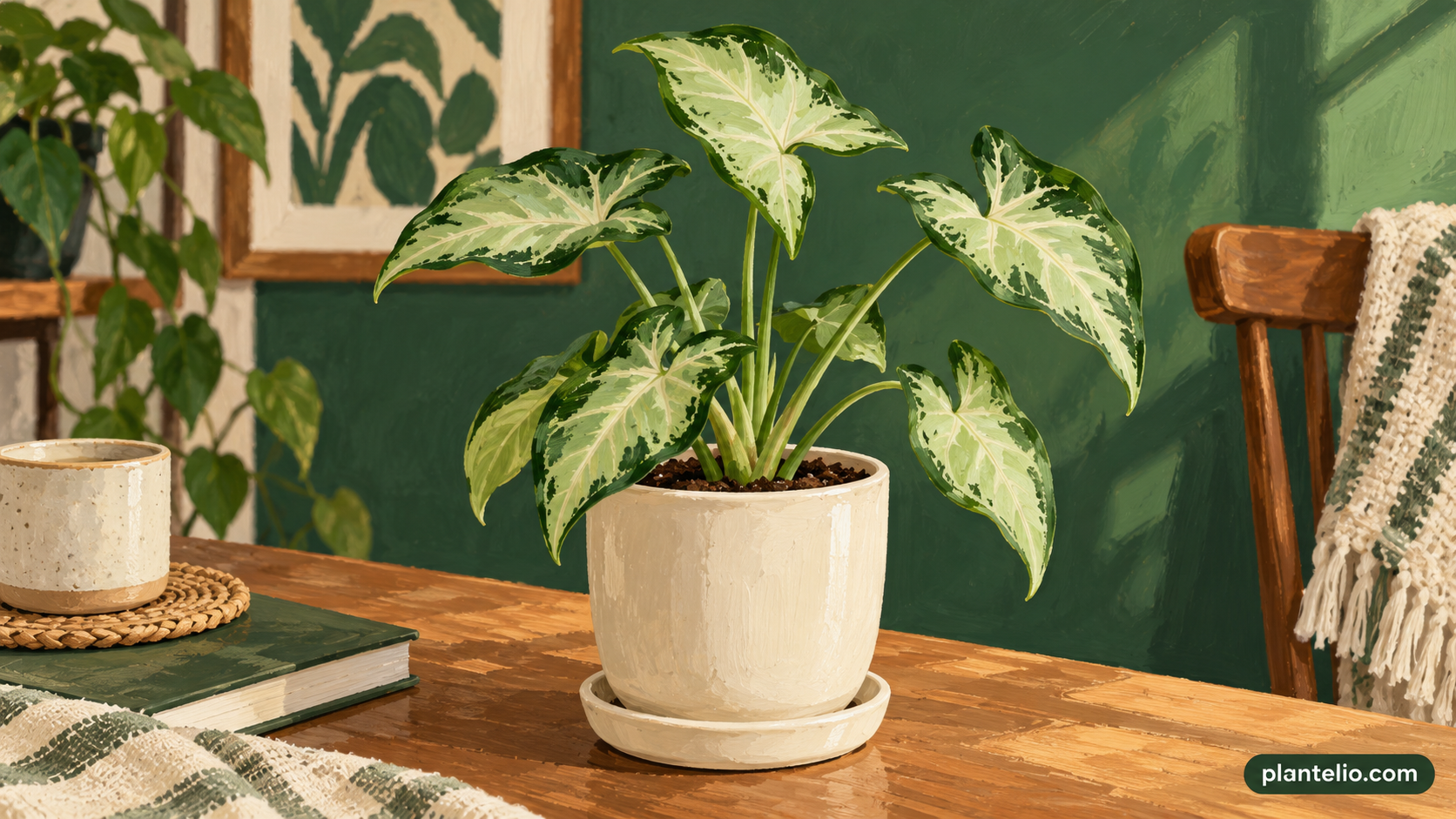
Syngonium Care: Light, Watering and Changing Leaf Shapes
Syngonium care should account for a plant that changes as it grows. The compact arrowhead plant sold on a shop shelf is usually juvenile. Before treating a different leaf shape as a problem, check its identity and growth stage. This guide concerns Syngonium podophyllum, including its cultivated forms.
Understand the changing growth habit
NC State Extension’s arrowhead plant profile explains that young plants have a bushier habit, while older growth can climb or trail. Juvenile leaves are arrow-shaped; mature climbing growth can develop divided leaves. Indoor flowers are uncommon.
Decide whether you want to keep a compact shape or accommodate longer stems. Take a whole-plant photo before changing its arrangement. That gives you a reference for the direction of growth rather than relying on memory.
Syngonium care: light and moisture
The RHS houseplant profile recommends avoiding direct sunlight, which can scorch the foliage. Water when the top few centimetres of mix have dried; aim for even moisture with good drainage, rather than a constantly saturated pot. A warm position around 18–27°C (64–81°F) suits it, away from cold drafts.
Use our guide to recognizing bright indirect light when comparing possible positions. Note the cultivar name, too, so future care searches refer to the same plant rather than a different colored form.
Choose a manageable routine
Before pouring, check the potting mix and record whether you watered or waited. Keep the plant’s own record separate from nearby succulents. A reminder labelled “inspect Syngonium” is more useful than an automatic watering instruction.
RHS advises reducing feeding as growth slows, following the product instructions during active growth, and using clean, sharp tools when pruning for shape. Repotting belongs in a well-drained container; check whether the plant has outgrown its current pot rather than changing containers simply because it is new.
Inspect and handle thoughtfully
NC State lists mealybugs, aphids and spider mites among potential pests. It also identifies irritating calcium oxalate crystals and risks if the plant is eaten. Place it beyond children and pets that may chew foliage, and avoid contact with sap.
If you notice a concern, photograph the whole plant and the affected area. Add the date of its last move and moisture check. Separating what you observed from what you suspect makes the next care decision clearer.











Post Comment