Tradescantia Zebrina Care: Light, Watering and Fuller Growth
Tradescantia zebrina care is about managing a fast-growing trailing plant, not keeping every stem at its original length. Its striped leaves make changes easy to notice, but color alone cannot explain what the plant needs. Begin with the botanical name, its position and a simple moisture check.
Tradescantia zebrina care essentials
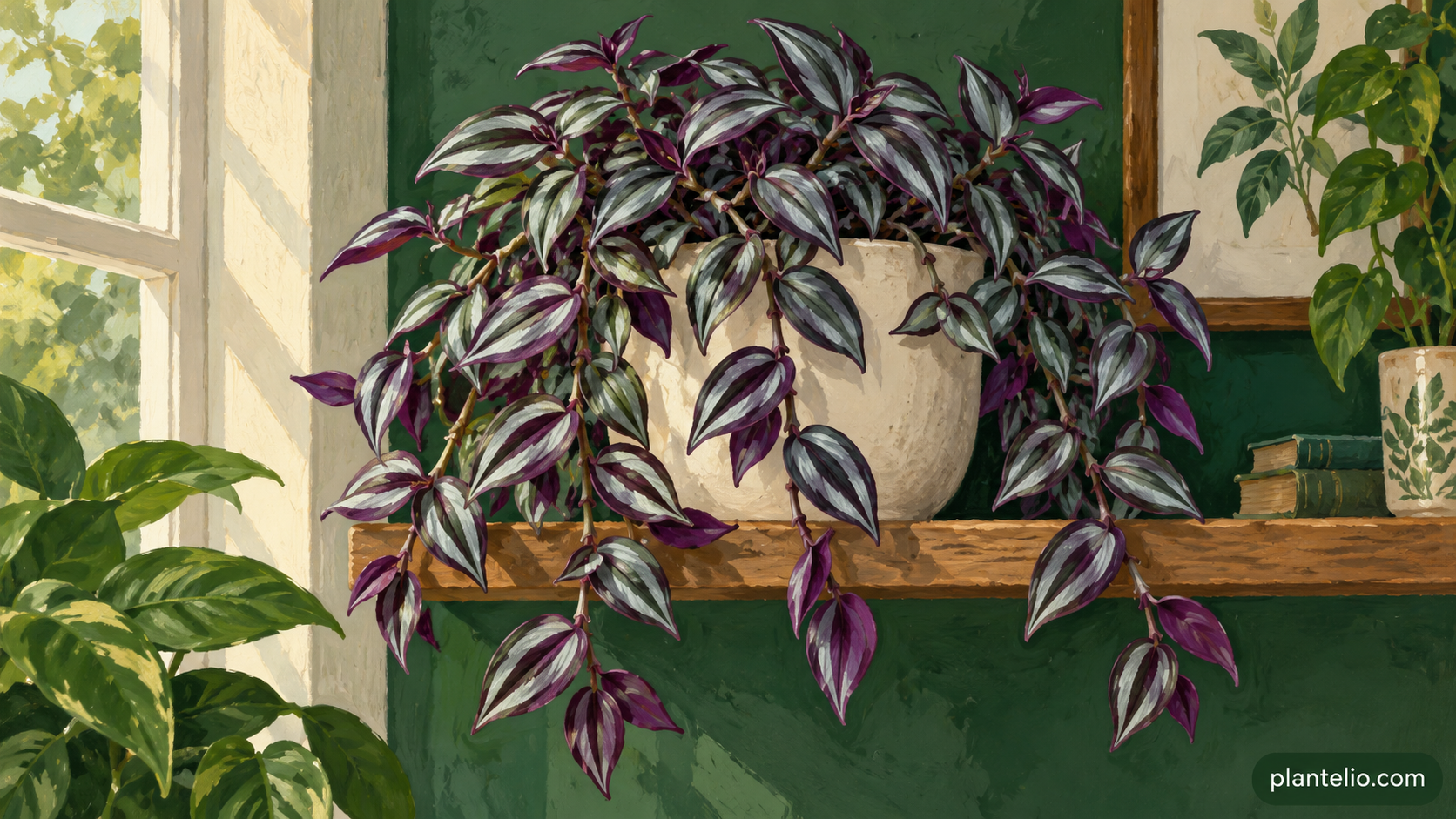
NC State Extension’s inch plant profile describes silver-striped foliage with purple undersides and stems that can root at their nodes. Filtered sun and a moist but freely draining medium suit it. Allow some drying between waterings and reduce watering in winter. Persistently soggy mix can lead to root or stem rot.
Our guide to bright indirect light helps describe the actual shelf position. Record whether sun reaches the trailing ends as well as the top of the pot; “near a window” does not describe the whole plant.
Plan for trailing growth
The RHS Tradescantia zebrina profile recommends trimming or pinching growing tips to encourage a fuller plant. It also describes taking stem-tip cuttings in spring or summer, rooting them in water or cutting compost. You can choose whether to maintain a shorter outline or make room for a longer cascade.
Before trimming, photograph the whole pot and mark the length you would like to keep in your notes. Decide which healthy stems are candidates for cuttings before you begin. This turns a vague wish for a tidier plant into a clear task.
Check the pot, not just the leaves
Check moisture before watering and keep the result beside the date. If a hanging pot is awkward to reach, choose an arrangement that lets you inspect it safely. Do not make access so difficult that watering becomes a guess.
NC State notes that low light can be associated with lower-leaf loss and weaker color. However, record the mix condition and recent changes as well before deciding that light is the only issue.
Handle and inspect deliberately
Both sources identify potential pest problems, while RHS advises gloves because handling may irritate skin. Keep cut material away from children and pets that may chew it. Examine a suspect stem closely and photograph it before making several changes at once.
Keep a consistent comparison view: the same shelf, camera angle and approximate lighting. Your record should show what changed, what you did and when. A new care product is not a substitute for that basic information.











Post Comment